I’m Looking Through You

One of the great enigmas of the suspense genre is how to pull off a huge twist. I have read about a hundred-fifty mystery books and only been able to predict the plot in totality a few times. Is this because the writers are especially gifted or could it have more to do with the reader? It happens that the two most predictable ones were in the last six months. Maybe I’m learning the tricks of the trade?

As far as numbers go, a hundred-fifty books is significant. It’s about the number of books you read to get a Bachelor’s degree, after which you have a halting knowledge of a particular topic. By the time I finished college, I had a grasp on the Western Canon.

I think by now I have a pretty good grasp on the suspense genre as well. For instance, you can expect a double cross. It’s also very likely that someone presumed dead will turn up alive. Don’t trust journals, letters, or scenes involving only two people in a private place. (One could be a hallucination.) Also be aware that the events you’re reading may be non-linear.

Here are two books I could figure out and one I couldn’t.

1.

Simon shows up to detention with four of his classmates: Nate, Addy, Cooper, and Bronwyn. It’s all very Breakfast Club until he falls to the ground, dead from a peanut allergy. Who spiked his water with peanut oil?

Turns out, they all had motives. Simon helmed a Gossip Girl style website, dishing on his classmates. Police discover he had pre-written a juicy column that exposed the darkest secrets of the other four. It was set to be published soon, and someone silenced Simon to get ahead of it.

Despite the familiar themes, I could not figure this story out. It’s partly that I was too distracted by the Nate-Bronwyn romance to dissect the plot. They had actual chemistry, which I often can’t pick up on in YA. The mystery was good, too, if a bit far-fetched.

2.

Summer and Iris are identical twins, heirs to a huge fortune left to them and their five siblings by their late father. The catch is that only one of them will receive the windfall: the one to produce an heir first.

While the twins go a sailing expedition from Phuket to the Seychelles, Summer is hit by a boom and falls overboard. After a two-week search and no body, Iris has the sinister idea to impersonate her pregnant sister and collect the loot. What could go wrong?

If you know the suspense basics, this plot is easy to see through. It also contains the groaner line, “He looked at his wife, as if seeing her for the first time.” I have read this in EIGHT books in the last few years.

Overall, this was entertaining but unoriginal.

3.

Jacob Finch Bonner is a one-time literary phenom now teaching in Vermont. His writer’s block disappears when he learns that a former student has died, leaving behind a story idea he once privately confided to Jacob. Jacob steals it. When the book he writes is a hit, Jacob begins receiving threatening emails from someone who is onto him.

There are many problems with this novel. For a start, Jacob’s crime is relatively benign. If he had stolen someone’s manuscript that would be one thing, but he does actually write the book. It’s his vision of an idea, which hardly meets the plagiarism bar. Also, the plot-within-a-plot is a lot more interesting than Jacob’s plight, which consists of figuring out who is stalking him. This leads us to the biggest problem, which is that it is crystal clear whodunnit. The epilogue is telegraphed from miles away.

The Value of Browsing

Online browsing is such a fundamental of life that it is easy to forget its predecessor. If you are fifty are older, chances are you spent your foundational years discovering books by wandering at leisure through book stores and libraries.

These things still happen, but they have become more antiquated. Indie bookstores have slowly disappeared, and libraries (at least in major cities) now vie with bus stations as temporary shelters for the homeless. The Vegas colors of the Internet pull people in and amount for the vast majority of bookselling and marketing.

I’m not here to lament the last days of indies. Other bloggers can do that. But I do ask you to consider the differences between online and in-person browsing.

You have doubtless had the experience of being stalked online. It happened to me recently when I began seeing post after post about a medical condition I was diagnosed with. I thought it was a strange coincidence until it occurred to me that I had my phone in my bag at a recent doctor’s appointment. Our phones surveil us, like Norman Bates looking through the peephole.

A similar thing happens when we read a book. If we buy it online or log in on social media sites, the algorithms do their work to steer you to similar content. Read a suspense novel? They’re on it. Soon you will be seeing paid advertisements in your feed for similar books and authors.

It’s very particular, too. I have relatively limited tastes. There are entire genres I don’t read. And the less I Google them, the less I hear about them. There are entire pop culture phenoms I know nothing about because algorithms think I don’t care.

In-person browsing is not like this. Sure, publishers pay money for keen placement, just like food companies do. It’s never a coincidence that big house titles come into view first in stores: the marketing departments have handed over percentages of their budget to guarantee visibility.

But algorithms create the equivalent of a pushy bookseller. While browsing at a store, I would have no time to discover new voices if a sales assistant were waving at me with another, similar book. That’s what algorithms do, and it works. But by keeping you focused, you are missing out on other things.

With all of this in mind, here are three books I probably never would have discovered if I didn’t still browse in-person.

1.

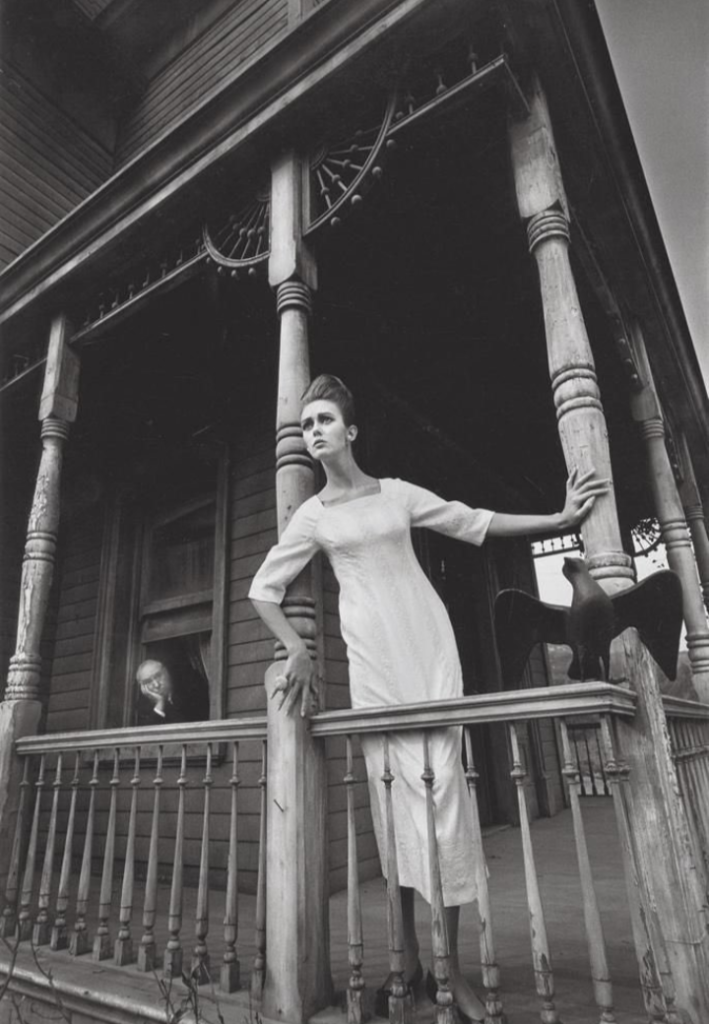
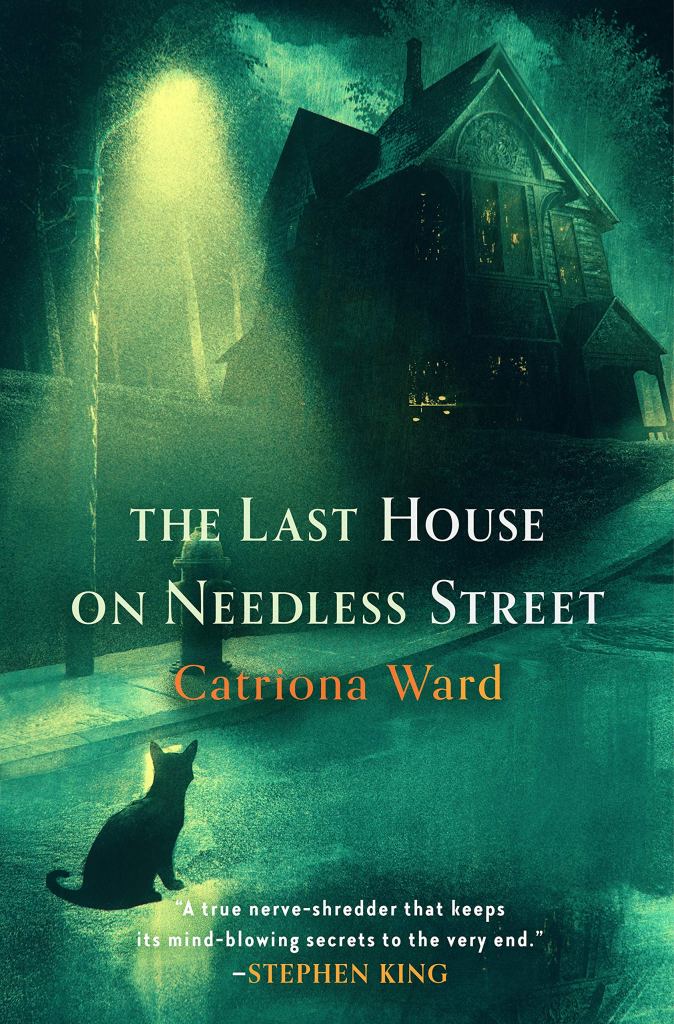
Not only did I thoroughly enjoy this story, but it’s also the first horror novel I’ve read. I recently spotted it in a coffeeshop that sold books. I confess it was the cover that called to me: creepy house with a cat? Sold!

Reading this, what comes to mind is Hitchcock’s iconic Norman Bates. Ted is a lonely man with a cat named Olivia and a daughter, Lauren, who visits occasionally. Something seems off about him: he loses time, has visions of his late mother, and is scarfing pills provided by a therapist. Women seem to be going missing. Meanwhile, Olivia gets locked in an unplugged freezer every time Lauren comes over. It’s hard to tell what is real until the different threads coalesce into a powerful conclusion.

So glad I crossed paths with this book.

2.

This excellent novel is marketed as dystopian YA, two genres I read sparingly. I had never heard of it until I stopped into a bookstore in June and found it amongst a Pride display.

Aaron is a teenager in the Bronx, spending time with his girlfriend and recovering from the shock of his father’s suicide. He hears about a company called Leteo, which offers memory alteration. Aaron is attracted to men, which his father couldn’t accept. Maybe treatments can help Aaron forget about men?

This is a troubling story about self-hate, told in a mind-bending way. It imagines something that is disturbingly plausible, as there are obvious parallels between Lateo and conversion therapy. May we never get to this place.

3.

There was a bookstore on Clement in San Francisco that had an undeniable charm. The bookseller, before offering a recommendation, asked for a patron’s three favorite books. It was from this process that I discovered Mrs. Kimble, an engrossing novel about a man with three different wives. Each section is told from the perspective of a different woman and through their secrets and vulnerabilities, you see the enigmatic Ken Kimble for who he is.

This is the kind of literary experience I long for. I probably wouldn’t have had it without the late and missed Thidwick Books.

Voice Tricks

Some readers have a preference when it comes to narrative voice. The first person is intimate but limited, like listening to one side of the story. The third person is more expansive, like hearing multiple sides of the story from a more objective source. Some writers use multiple first-person narrators, a bridge of sorts between the two.

Every once in a while, an author tries something different. The unreliable narrator became a popular device for a stretch starting in the 2000s. Readers who had been conditioned to trust the voice were suddenly thrown for a loop by literary liars. When that got old, Gillian Flynn introduced the unreliable journal. In Gone Girl, the reader is misled by a dead woman’s diary, thinking that it provides clues into the violent marriage that ended her life. When it turns out that parts of it are falsified, the story turns on its head. Several authors have taken up this conceit since then with both journals and letters.

There are a few other voice tricks that have surfaced. Today I look at three and how well they work.

1.

There are four narrators of this story: a lonely man, his teenage daughter, a suspicious neighbor, and a lesbian Christian cat. Hay? When I first turned to Olivia’s section, I was skeptical. Do I want to see the events through an animal’s eyes? As I read, though, it became clear that Olivia provided the most objective view on the events. When her loving master Ted locks her in a freezer, we know something is off. When she pines for the lovely tabby outside, we realize how confined she is. And when she knocks over the Bible to read a verse, we may have our first clue to unraveling this most peculiar of mysteries.

Needless Street is one of the best books I have read in a long time. Through her different narrators, the author weaves a story that is spellbinding. The character you think of here is Norman Bates. Hitchcock would be both proud and possibly humbled by this update.

2.

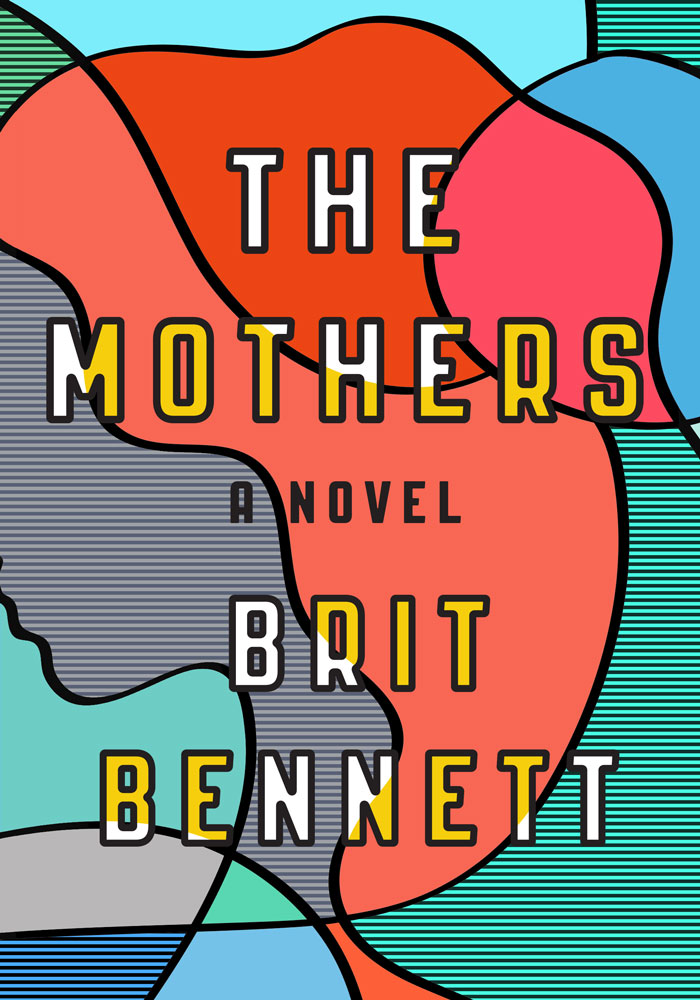
Nadia and Luke fall in love as teenagers. They face obstacles that separate them and twists of fate that bring them back together. What is unusual about their story is that it is told by a collective voice, a group of church women who are observing the events. It’s a curious choice that works well. The Black church has been a strength in struggling communities. Having church elders observe a fledgling relationship creates a sense that others are invested in the success of a particular couple. A Black teenager facing abortion is a community issue, as it raises issues of eugenics.

This is one of those devices that could have failed in its execution but somehow doesn’t, creating a slightly ineffable story that is hugely compelling.

3.

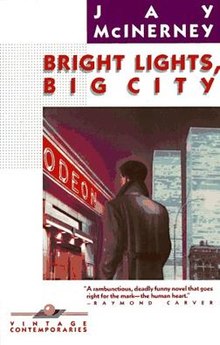
The ’80s are a peculiar time in literary history, the last hurrah before the brutality of the death of the midlist author. At the start of the decade, it wasn’t too difficult to get fiction published, in part because we were still a three-channel culture with more leisure readers. All of that changed with cable TV. Soon legions of authors were having contracts slashed and the big houses were going for a star system.

Enter Jay McInerney, an obnoxious example of crass literary pretention. He embodied a certain type of prep school excess, including an overconfidence in his skills as a new voice.

Who else would have attempted to write a novel written in the second person? Throughout the story, the reader is addressed directly (you are not the kind of person who flies to Las Vegas with blow in your jacket pocket) as if the story of a White libertine on a bender is somehow universal.

I really have to laugh that the big houses thought this was an important story, when in fact it is a tired story of privileged excess, topped by a cringe-worthy scene in which the protagonist breaks bread in the morning light. The fact that the great Raymond Carver endorsed this just shows that cronyism was alive and well in the decade of shoulder pads and insider trading.

Why I Don’t Like Romcoms

If you read this blog, you know that I am not a fan of the romantic comedy genre. I get reflexively judged as snobbish for saying this, so I would like to take a few moments to explain my reasoning.

1. The Movie Is Always Better

When you think of great romantic stories, you will inevitably include movie characters. Harry and Sally. Rhett and Scarlett. Jack and Rose. That’s because movies are uniquely suited for this type of story. Chemistry is vicarious and it works best through actors. The stories also lend themselves to short form. It shouldn’t take six hours for a couple to kiss. You shouldn’t have to waste time on filler subplots. A few hours is a great formula for finding love.

2. The Outcome Is Obvious

Strictly speaking, all fictional outcomes are obvious. The hero will undergo a journey from innocence to experience. A mystery will be solved. An emotional conflict will resolve. That’s storytelling. However, the outcomes of romantic comedies are particularly plain. I can think of only one romcom in which the ending does not involve the two leads getting together. (It’s My Best Friend’s Wedding.) Fans will say it’s all about the pleasure of the journey and they’re right. That’s why I prefer ninety-minute packaging.

3. The Story Is A Lie

The theory of hedonic adaptation had obliterated any credibility this genre has. Social scientists have observed that all people experience an adjustment to good fortune at about the eighteen-month mark, making the sustainment of romantic bliss impossible. You can either accept the change or become a serial monogamist, switching partners every few years to maintain your high. Those are the options.

And while no one is denying that falling in love is sublime, perpetuating the idea that it’s inevitable and true is dishonest. As Anne Lamott says, “Relationships are hard work, after the first trimester.”

My book this week, The Love Hypothesis, embodies the three precepts above and a few more. Olive is a Stanford neuroscience grad student who has never been in a relationship. For convoluted reasons that defy credibility, she randomly kisses Adam, a universally disliked instructor. For his own reasons, he agrees to pose as Olive’s faux boyfriend for a few weeks. The premise could not be more sitcommy, including their weekly Starbucks dates to establish visibility.

When Olive is betrayed by a sexist colleague, Adam transforms into a hero. None of this is terribly believable, and I found myself wondering if a well-produced Netflix adaptation might make it more compelling.

There is also the stock gay best friend, and the mythically tight bond of friendship. These are standard romcom tropes and could use some freshening.

I did like Olive, though. It was nice to read about a woman scientist and I found her romantic insecurities charming. The best part of the book is a consent-heavy love scene which elevates the material and hints at what the author could do if she broke out of this limited genre.

Gangs, Guns, Prison, Poverty

I once attended a publishing panel featuring YA authors of color. The general vibe was downbeat, which can be expected from any discussion of fiction. Nearly 90% of first novels don’t get published, and those that do often make less than 10K for the author. It is a tough industry with a star system that favors an elite few.

It can be especially hard for writers of color. Most of publishing is White and the preferences favor anything that can sell. As one author said that day, “My rejection slips make clear that all anyone wants are books about gangs, guns, prison, and poverty.”

What is especially shameful about this is that for many people reading is aspirational. A trans kid finds a book talking about Indigenous two-spirits and realizes that not all cultures are narrow-minded. A new mother struggling with depression reads a memoir that makes her realize she is not alone. A poor kid reads about a favorite athlete who was bullied by teachers but didn’t give up on his dream.

In seeing how things can be, reading creates hope.

I’m happy to see that YA has branched out a bit since that day in the ’90s when I sat at that panel. Here are three YA books that inspire.

1.

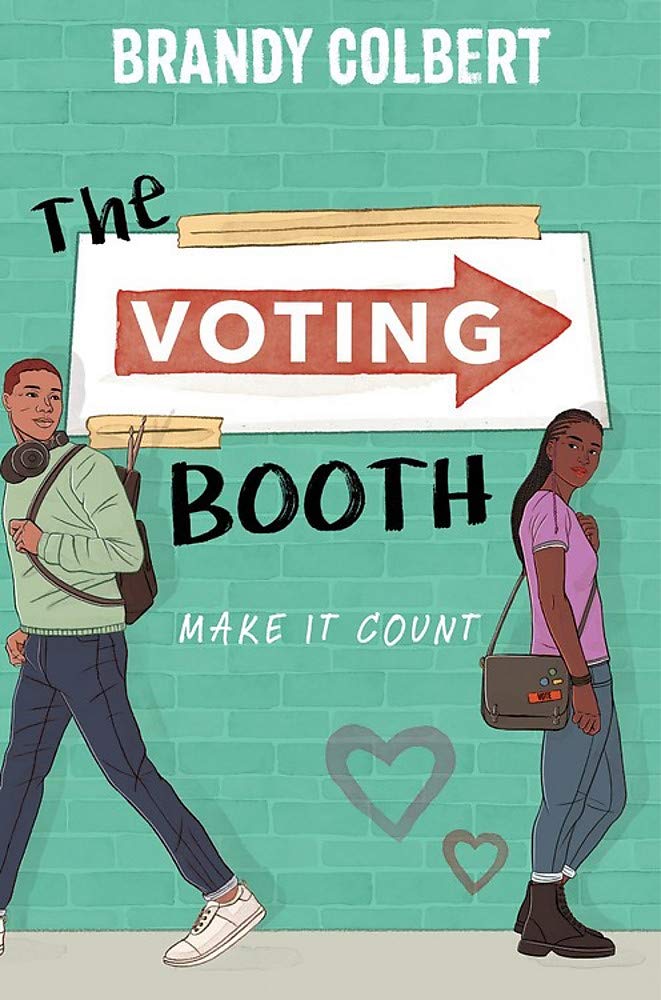
Marva wakes up giddy on Election Day. She is passionate about voting and today is the first chance for her to use her voice at the voting booth. While there, she meets Duke, an ambivalent voter pressured by his mother to show up.

When Duke discovers he is not registered, a single-day narrative unfolds in which Marva helps him achieve his goal. In the process, we learn about voter suppression and voting blocks. (Nearly 90% of Black women vote.)

Marva’s White boyfriend thinks voting is pointless, but his apathy underscores the role that privilege plays in democracy. Her passion is an inspiring story about women’s strength.

2.

Jordan Banks is the new kid at his nearly all-White school. He aspires to be an artist, but first must navigate the caste system at school. His White teacher asks him, “Why are you so angry?” His response: “You seem more upset about my anger than the forces that are causing it.”

This isn’t just about racial issues, but also an uncomfortable reminder of the power dynamics in any middle school. Some friendships form, including unlikely ones, and there is ultimately a hopeful note about being yourself.

3.

Jerome is dead, the victim of a racist cop. He hovers around his grieving family, witnessing the trial that will decide his assailant’s fate. He is visited by the cop’s dead daughter and a boy he doesn’t immediately know. When the boy explains that he was murdered in Mississippi for being too friendly to a White resident, we understand that he is Emmett Till, a teenager whose death galvanized the Civil Rights Movement.

There is an ineffable quality to this story in which the ghosts grapple with racism. Their jobs will be done when not one more unarmed Black kid is murdered. Although the topic is heavy, there is hope in their mission.

Time For Letting Go

It’s the end of the year, and I have been thinking about the books I’ve read, not just this year but for the past few. Four years ago, I decided to keep a book journal to track plot similarities in mystery/suspense books. The aim was simple: since I write in the genre, I was looking for ways to be fresh in my own projects.

What I discovered was a list of eight popular plot points and two language cliches. If you’re a writer, you might try to avoid these as I would imagine agents are getting sick of seeing them. Or put a different twist on them, if you prefer.

Here they are. The number in parentheses is the number of books they have appeared in.

It should be noted that this is a non-scientific poll, based on my own random selection of recent titles. Most were published in the last five years, and while most appear on best-seller lists, the sampling may reflect my own preferences.

1. Male character is the most likely culprit, but in the end it’s his wife who did it. (3)

2. Character hallucinates a plot point. (3)

3. Character presumed dead turns up alive. (3)

4. The protagonist, a lawyer, is hired by an ex to defend him in a criminal trial. (2)

5. Protagonist gets pregnant by a psycho. (6)

6. Character presented as a living person is actually dead. (2)

7. Included journal entries or letters are misunderstood. (5)

8. Pivotal clue is found in the jeans pocket in a laundry basket (4)

And language cliches:

9. “He looked at (character name) as if seeing her for the first time.” (8)

10. “It was hard to tell where [he] began and [I] ended. (3)

The Ten (2021)

I often find it difficult to select “best of” lists based on a numerical limit. Do I really need to cut off an excellent contender just because there were ten more suitable options? (And why ten?)

The next criteria to grapple with is what the standards are for naming something “best.” There are beautifully written novels that put me to sleep, and heart-pounding pulp fiction that can keep me up half the night. How do you judge these two things against each other? Not fair, right?

Truth be told, I don’t care much. I’ll leave the careful scrutiny to professional reviewers. There is no way I am endorsing a book I didn’t like just because the author is poetic. Another thing I leave to them: drawing up top ten lists of books that were published that year. With 300,000 new books released each year, and with my own reads rarely above 60, I’m not going to be able to draw a list from hot-off-the-presses titles. Therefore, my criteria is open to all recent books. I read what looks good and pay very little attention to publication dates.

So, for the last (non-holiday) weekend of 2021, here is my list of five books that I unabashedly loved this year as well as five honorable mentions.

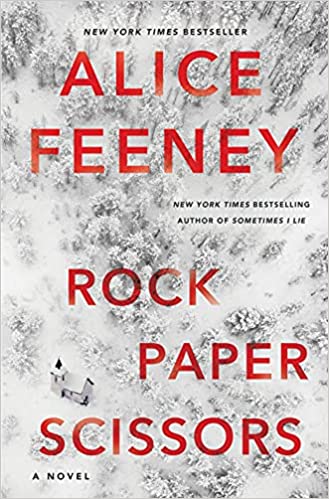
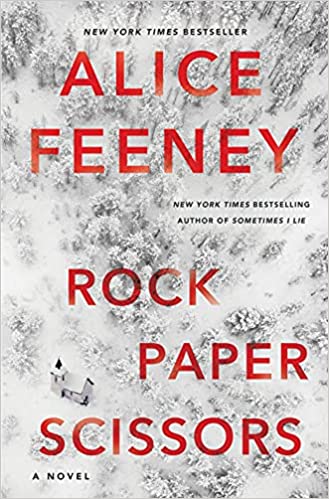
Adam and Amelia drive to the Scottish Highlands at their therapist’s suggestion, a last ditch effort to save their ten-year marriage. A snowstorm hits, and when they discover that their lodging is a ninth century church, things start to get weird. Amelia spots a pair of eyes looking through the window at her. She gets trapped in a cellar after Adam drops the trapdoor in a power outage. And we learn that Adam is crushing up sleeping pills and putting them into her drinks.

I was gripped by this story from the first page. In addition to dual narrators in Adam and Amelia, the reader is given a stack of letters Amelia has written every year on their anniversary. In them, we get a sense of a rocky past, but no suspicion that Adam is homicidal. And, meanwhile, strange things continue to happen in the church. Amelia hears her name whispered three times in the dark. They learn that witches were murdered here in the fifteenth century, along with their children.

I could easily have read this in one sitting. It is a fascinating puzzle of a book, in which you eventually figure out what is going on, but not until the last pages. Feeney’s use of letters (also used effectively in her excellent Sometimes I Lie) is a creative way to provide backstory and also raise doubt about reality. This is one of those rare authors I will read again and again.

2.

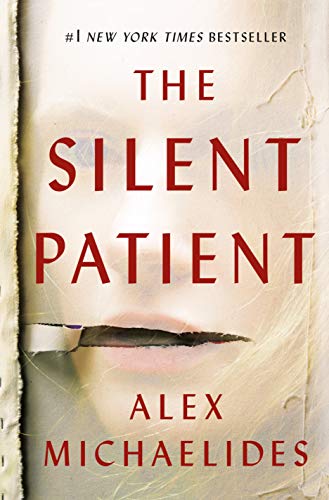
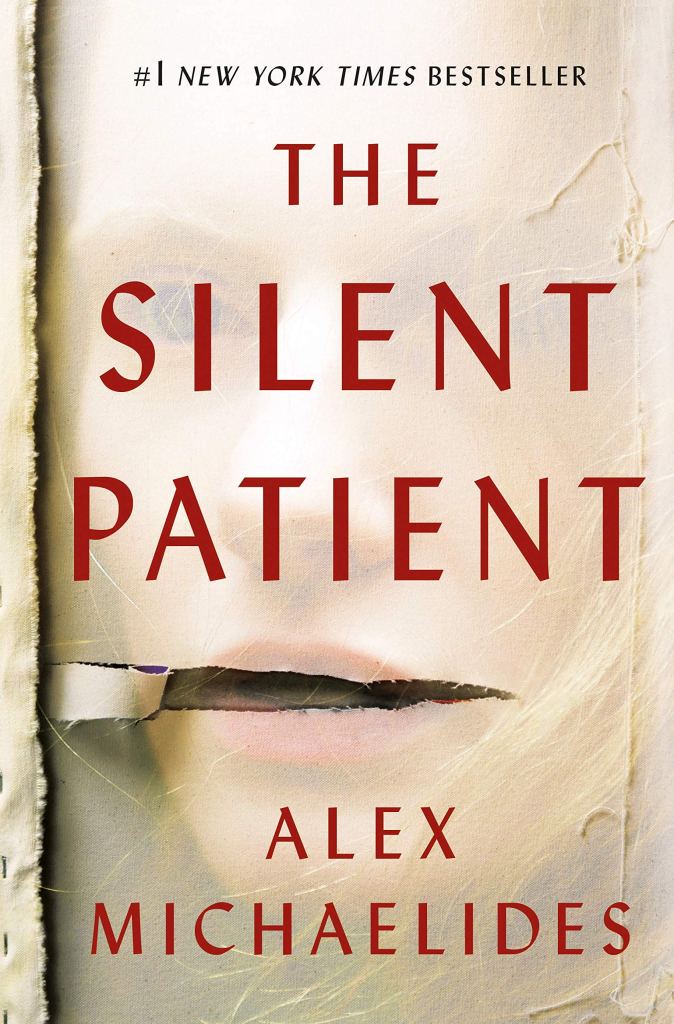
Speaking of twisty mysteries that I couldn’t figure out, Alex Michaelides’ The Silent Patient kept me glued to my seat until I got to the end. Theo Farber is a London psychiatrist who takes a job at the Grove Hospital. He is fascinated with the case of Alicia Berensen, a woman who was struck mute after murdering her artist husband, Gabriel.

We alternate between hospital scenes and Theo’s more idyllic personal life with his wife, Kathy. Like Alice Feeney, Michaelides’ uses ephemera– in this case a journal– to give us additional clues to Alicia’s life and identity. She is being stalked but can’t prove it. Gabriel is abusive. And we learn a bit about her past. But can we trust the musings of a mentally ill woman?

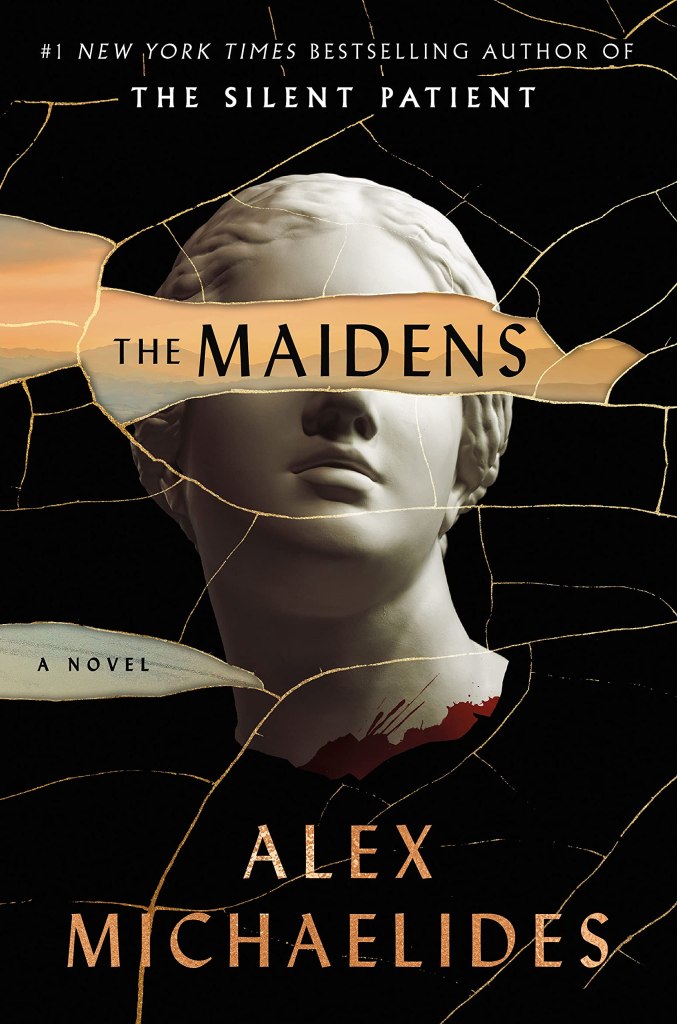
I’m always happy to find books like this: suspenseful page-turners that wrap up in a satisfying way. I liked his follow-up, The Maidens, nearly as much. Michaelides’ has found a way to provide riveting pulp fiction that will lend itself easily to adaptations.

3.

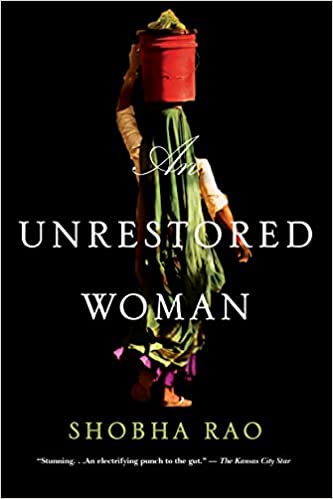
In 1947, after the decline of the British Empire, the Indian subcontinent was partitioned into two separate countries: India and Pakistan. Hindus stayed in secular India, Muslims went to the newly formed theocratic territory. This was one of the largest mass migrations in non-wartime. Up to seven million people were misplaced from their homes. Nearly a million people died in skirmishes as the borders were enforced.

Behind the history, there are amazing stories of women and some men who suffered tremendously during this time. With painstaking, poetic detail, Shobha Rao depicts their lives: a houseboy who foolishly falls for a British colonizer, a lesbian liaison that turns deadly, and a woman who drinks poison because she has no social standing as a widow.

This is the best writing I found all year: lush with details and empathetic understanding, I felt transported to a world unlike my own. It has left an indelible imprint.

4.

Isra is a dreamy teenager in Palestine, reading books under almond trees and avoiding the inevitability of her arranged marriage. She reluctantly agrees to move to Brooklyn after meeting Adam, a dual citizen. After her marriage, Isra has four daughters and endures an abusive domestic situation and an overbearing mother-in-law. Her happiest moments are when she escapes reality through fiction.

Her daughters are bound by the culture they are born into, but a brighter future is possible. Beyond their immigrant neighborhood, a different world exists, accessible by the subway trains and by the education they are getting.

This is an engrossing, sad novel about the limited roles forced on women and the way that books and expression can serve as a passage out. Not everyone succeeds in this story, and you can’t help but grieve a bit for those that don’t.

5.

If you read this blog regularly, you know that I love to kill an afternoon with a trashy novel. Kiersten Modglin, an indie author, has a brilliant formula for twisty stories you can’t look away from.

This one is about a Nashville couple, Peter and Ainsley, who decide, on a whim, to try dating other people. They have ground rules, of course, and are a bit wary going in. When Ainsley’s date turns into a stalker, it is the starting point for a wild ride leading up, breathlessly, to one of the most bizarre endings I’ve ever encountered in this genre. (And, yet, it works.) Like the first two on my list, I could not put The Arrangement down. There are surprises galore (maybe one too many – there is a twist about one of their male friends that I thought was gratuitous) and a storytelling original enough that it earns my last spot of the year.

Honorable Mentions

The Wife Nearby

Tension building is one fundamental of suspense. The reader must feel a mild fear as the plot builds, aware of danger without being able to spot it too easily. A growing sense of unease develops in the narrative with the hint of something about to boil over.

A trio of novels have tried a new conceit, which I call The Wife Nearby. In them, a female character is present in the narrative without being able to communicate directly. She might be comatose, locked away, or catatonic. (To my knowledge, no one yet has stolen the classic soap plot of burying a woman alive.)

What purpose does this device serve? If you can look beyond the mild misogyny, The Wife Nearby serves as a potential menace, someone who can awake at any moment and pivot the plot in a new direction. What if a devoted caretaker is revealed as a killer? An accident turned into a potential murder? What if she holds crucial information, the proverbial final puzzle piece?

Savvy readers know the rule of economy with fiction. No character is purely incidental. They all serve some purpose to the end game, if only to distract from the real culprit. No silent wife is going to remain silent. She’s the new loaded gun in the first act.

Here are three books that feature The Wife Nearby and what I thought of them.

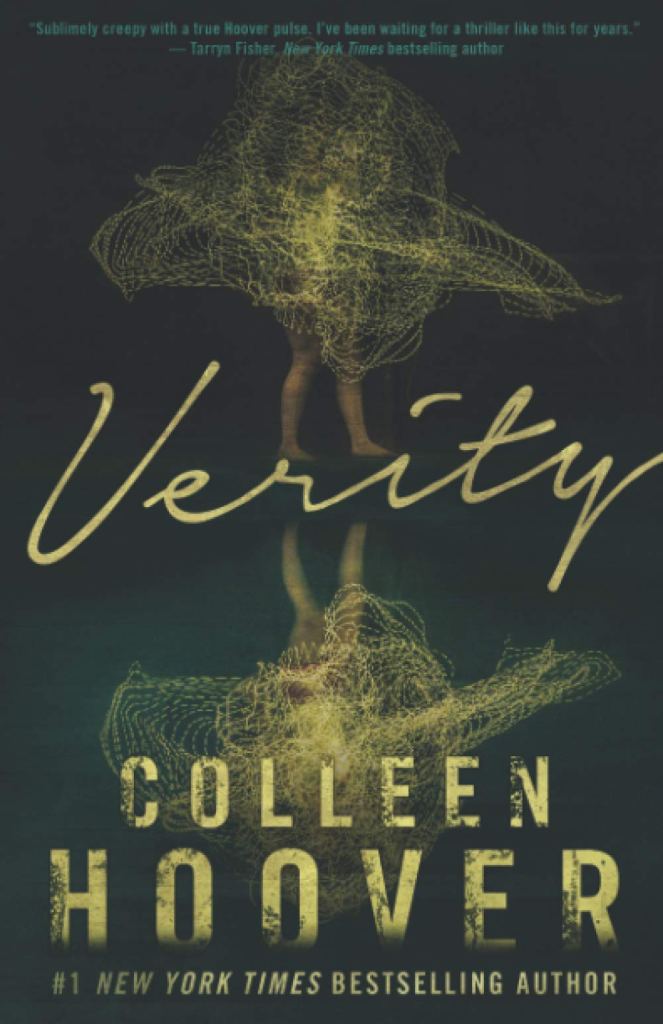
Lowen and Jeremy meet macabre: Jeremy assists Lowen near the Flatiron building in New York after she is covered with blood from a nearby accident. It turns out they’re headed to the same spot: Lowen’s publisher. Jeremy is the spouse of the famous novelist Verity Crawford, and he is here to seek a ghostwriter for her next books. Verity is convalescing at home in a coma after a car accident.

The Crawfords seem to attract tragedy, as two of their children have died. Facing eviction and with no new money coming in, Lowen agrees to complete Verity’s contract by writing her books under a pseudonym. After she decamps at the Crawford home, strange things begin to happen. Lowen swears she has seen Verity blink, stand up, and communicate with the remaining child, five-year-old Crew. Jeremy doubts her. Lowen also discovers a memoir written by Verity, in which she reveals herself to be a terrifying, hateful mother.

This is an engrossing page-turner because the reader knows not to trust a lot of what is going on. Given how awful Verity is in the memoir she penned, the moment of her rising again is inevitable. The hint of it gives the book the can’t-look-away quality needed in this genre.

2.

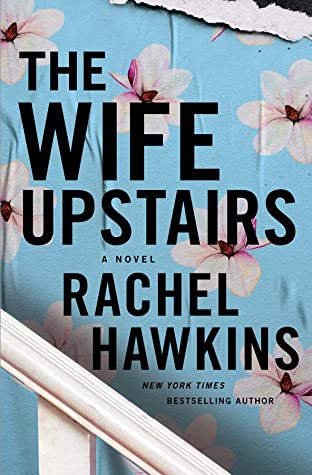
Jane Bell takes a job as a dog walker at Thornfield Estates in Birmingham, Alabama. She falls easily for Eddie Rochester, whose wife Bea died in a boating accident. She doesn’t know that Bea is actually locked in a panic room upstairs, tended to by Eddie when Jane isn’t around.

In contrast to Verity, Bea is conscious for most of the narrative. She only talks, though, when Eddie drops by with food. She is privately writing notes in a paperback novel he has given her for entertainment. If she can slip it out somehow, someone might rescue her.

Bea is the classic abused wife, a twist on the domestic perfection of her surroundings. A measure of security — the panic room — is being used against her, adding to the slightly creepy feel of the estates. (No one is safe here.) And she has a potential ally in Jane, who is also her love rival.

All of this unspools until the final act, which has a love-it-or-hate-it twist. I rooted for Bea’s emancipation. As a mild claustrophobe, I thought the panic room was a formidable obstacle. And there was tension in the buildup, not just to how she would get out, but what she would find on the outside.

3.

Theo Faber takes a job at the Grove Psychiatric Hospital in London to treat Alicia Berenson, an artist who is mute and institutionalized after killing her husband, Gabriel. He discovers a journal Alicia has written, in which she talks about being stalked by a shadowy figure and paints an idyllic portrait of her marriage. Meanwhile, in addition to treating the patient, Theo does some side investigations to figure out Alicia’s and Gabriel’s pasts.

Much of the tension in this novel centers around the enigma of Alicia. The reader doubts her journal, trying to figure out the truth beneath it. What will she say if she awakens?

The ending is effectively surprising, including a twist about the journal that is not typical for this genre. I didn’t exactly root for the characters so much as want the tension to be over, like the reaction I have to the very best cheesy suspense movies. I don’t care what happens to the characters once out of peril, but can’t look away until they’re safe.

The Reading Afflictions

Not everything is joyful when it comes to books. There are experiences that take the fun out of reading, such as the reading rut, the hostage negotiation, and the incessant replay. If you are an avid reader, you have probably experienced all of these.

So what are they? I will attempt to explain.

1. The Reading Rut

This is probably the best known of the reading afflictions. A reading rut is a period of at least a week in which every book you start makes you want to put it back down again. It’s the equivalent of standing at the end of a long line with fleeting hope that you’ll have any success when you get to the front of it.

For me, a reading rut often happens after I’ve read several three-star books in a row. Three-star books are tricky, because they’re neither good nor bad. Often they have intriguing premises, winning characters, and some good writing. They are also way too long, with subplots or repetitive scenes that slow down the pace. You can spot the ending about thirty pages too soon. The forced emotional resolution doesn’t land.

After too many books like this, I begin to lose faith in writers. I remember my teen years, when I could never get past a few pages of any book I opened. I begin to wonder if maybe I’m not a reader after all.

And, then, something worse happens: every book I sample begins to remind me of the experiences I’ve had recently. I’m like a finicky cat, turning up my nose at anything offered. My eyes begin to glaze over. It’s undeniable: the reading rut.

2. The Hostage Negotiation

If you’re like me, finishing a book is important. The lamest line in English is, “I read part of it.” It might flash you back to your college years, when you were too busy procrastinating to get much done in a class that might have shaped your future for the better. Wasted time can be soul crushing.

You may have had this experience: at about the half-way mark of a book, you start to get bored. It’s harder to stay focused, you begin calculating how long until it ends, and you vow to never read the author again. By about the last third, you feel as if you’re being held captive by the words.

And the negotiation begins: just how bad would it be if I abandoned a book? Could I skim to the end? Sweet freedom comes with a price. You can’t add the book to your Goodreads feed unless you’ve made the effort to finish it.

As I get older, I’m having less trouble putting a book down. Life is just too short.

3. Incessant Replay

If you read a lot, at some point the lack of creativity in publishing is laid bare. Although every agent claims to be looking for original voices, you wouldn’t know it from the projects they sell.

Here are just a few of the repetitive plots I’ve encountered over and over. I won’t give away the titles, but the number in parenthesis is the amount of books I’ve read with this premise in the last five years.

  1. A domestic suspense novel in which a protagonist is keeping secrets from the neighbors. The lead is usually a likable mother, the husband is usually flat and possibly adulterous. The takeaway for the reader is to feel safe with their comparatively boring suburban lives. (15)

2. A narrative in which the reader is tricked about the novel’s events by an unreliable narrator, misunderstanding of ephemera like letters/journals, or a clever time jump. These are fun mind bends, and despite the lack of originality, I tend to enjoy them. (9)

3. A work of fiction centered around a “hot topic” like racism, immigration, suicide, or abortion. (10)

It should be noted that this is the most pleasurable of the list, as authors have a unique skill at making these stories seem fresh. When taken in moderation, they are more enjoyment than affliction.

The Best Suspense

I read a lot of suspense novels, but I’m not sure it’s my favorite genre. There is plenty of mediocrity amidst the gems, including some shamefully misogynistic women writers. (Tarryn Fisher and Shari Lapena, I’m looking at you.) What I do know, however, is that when I love a book to the moon and back, it is most often in this genre. I’m a bit in awe of writers who can command my full attention from start to finish with a steady page-turning pace and an ending that feels right for the story.

So with that in mind, here is my list of the five best suspense novels of the last five years.

5.

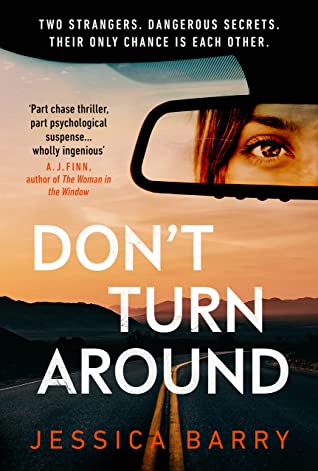
Late at night in Lubbock, Cait picks a woman up from a safe house. As they drive through the desolate landscape, they become aware that a truck is following them. We know from the prologue that there will be a standoff in the desert, but we don’t know why.

In flashback, we learn about the two women and the events that got them to this fateful ride together. Both of the women’s backstories are compelling and topical. The mounting tension of the truck behind them builds the suspense until it is impossible to put the book down.

I have also read Jessica Barry’s Freefall and thoroughly enjoyed it. Definitely an author I will try again.

4.

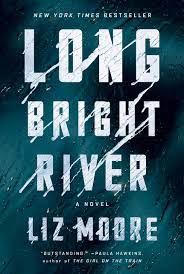
Mickey is a beat cop in a neighborhood in Philadelphia. Her sister is a homeless addict. They were raised by their grandmother after their mother died from drugs. A string of murders lay bare the dark underbelly of the opioid crisis.

In addition to being atmospheric and a good mystery, I genuinely cared about the characters, which is not often the case in this genre. It’s partly that Moore is an excellent stylist and can draw characters through small details and inference. But there is also a grit and reality to Mickey’s struggle that is relatable on a bigger scale.

3.

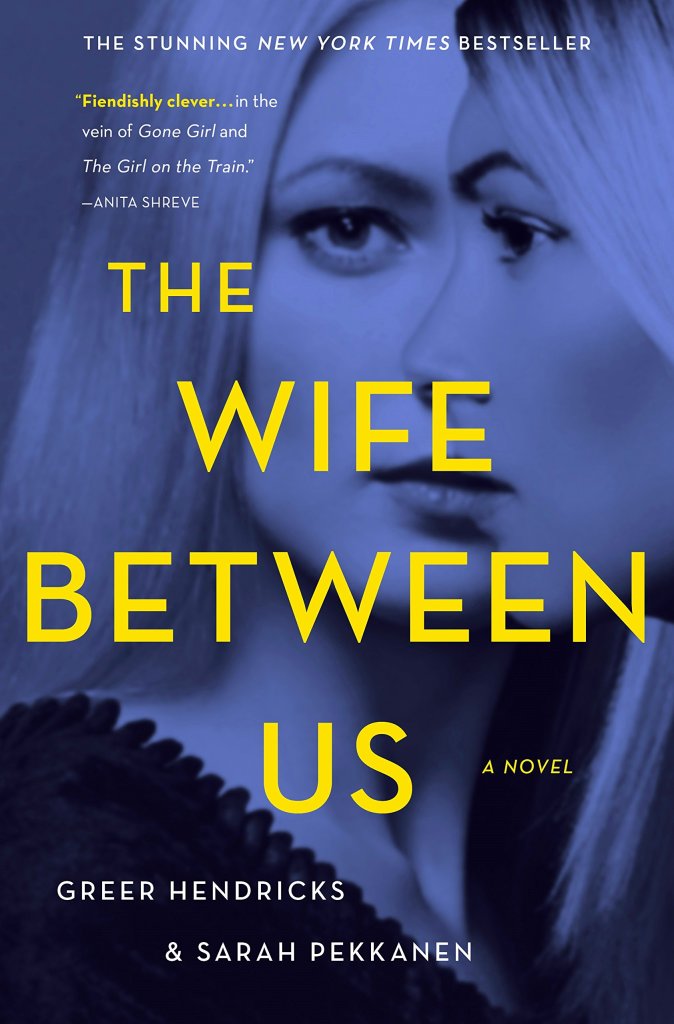
A woman, Vanessa, is stalking the young fiancee of her ex-husband all around New York City. The new girl, Nellie, is a kindergarten teacher and part-time waitress living with a roommate, Sam. Vanessa lives with an elderly aunt and has a part-time job at Saks. Nellie is originally from Florida and is hiding from dark memories there.

This is edge-of-your-seat suspense. The twists are great and seamless. I liked the fact that the women weren’t infatuated with Richard, their shared guy. Despite the stalking, there was a stronger feminist message here than I have come to expect from this genre.

There are some loose ends, such a subplot about Vanessa’s German shephard which is never resolved. (I’m a cat person so it didn’t do much for me.) Overall, though, this is one of the most enjoyable books I’ve read in the last few years.

2.

At their therapist’s request, Adam and Amelia drive to Scotland for a weekend to work on their ten-year marriage. Amelia, a dog rescuer, has won an office raffle for a weekend in a fifth-century church. A snowstorm hits as they approach, and they are creeped out by the lodging. Amelia sees a pair of eyes staring at her through the kitchen window. Adam accidentally locks Amelia in a cellar when the lights go out.

Between the chilling scenes in Scotland, the reader is shown letters that Amelia has written to Adam once a year for their anniversary. Through them, we see a union slowly breaking down to the point that it’s possible they want to murder each other. This is a tantalizing palate cleanser between the Scottish antics.

I was hooked from the beginning and couldn’t wait to see how it ended. I’m giving this a slight edge over the author’s also excellent Sometimes I Lie.

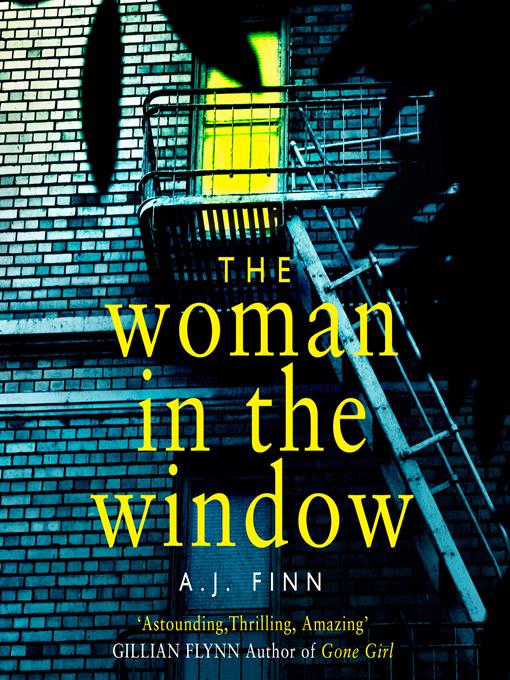
There are quite a few books that attempt to recreate Hitchcock’s famous Rear Window, and A.J. Finn knocks it out of the park with this tightly-plotted page-turner. I read it over a Sunday, barely able to get up for a drink of water between chapters. It was both riveting and surprising.

Annie lives alone in a brownstone in Morningside Heights, between Harlem and Columbia University. She is agoraphobic from an unnamed trauma, and spends most of her evenings drinking wine and watching classic noir movies. A neighbor boy, Ethan, stops by one day to visit, followed later by his mother.

A few days later, Annie hears a scream and thinks she sees Ethan’s mother stabbed in the brownstone opposite hers. Ethan and his father deny it, and the police believe them.

There are probably a dozen twists and I only figured out one of them. I was dismayed to learn in a New Yorker article that the author has been accused of stealing this idea from a manuscript he reviewed while an editor at a major publishing house. I’m not sure who to give the credit to for this masterful novel, but I loved it.