I often find it difficult to select “best of” lists based on a numerical limit. Do I really need to cut off an excellent contender just because there were ten more suitable options? (And why ten?)
The next criteria to grapple with is what the standards are for naming something “best.” There are beautifully written novels that put me to sleep, and heart-pounding pulp fiction that can keep me up half the night. How do you judge these two things against each other? Not fair, right?
Truth be told, I don’t care much. I’ll leave the careful scrutiny to professional reviewers. There is no way I am endorsing a book I didn’t like just because the author is poetic. Another thing I leave to them: drawing up top ten lists of books that were published that year. With 300,000 new books released each year, and with my own reads rarely above 60, I’m not going to be able to draw a list from hot-off-the-presses titles. Therefore, my criteria is open to all recent books. I read what looks good and pay very little attention to publication dates.
So, for the last (non-holiday) weekend of 2021, here is my list of five books that I unabashedly loved this year as well as five honorable mentions.
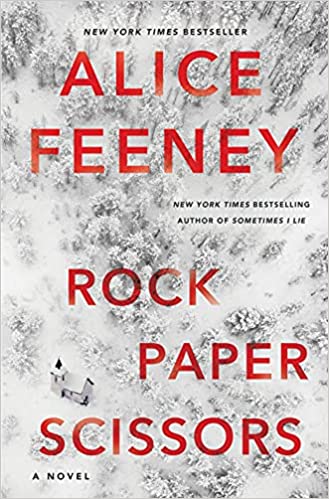
Adam and Amelia drive to the Scottish Highlands at their therapist’s suggestion, a last ditch effort to save their ten-year marriage. A snowstorm hits, and when they discover that their lodging is a ninth century church, things start to get weird. Amelia spots a pair of eyes looking through the window at her. She gets trapped in a cellar after Adam drops the trapdoor in a power outage. And we learn that Adam is crushing up sleeping pills and putting them into her drinks.
I was gripped by this story from the first page. In addition to dual narrators in Adam and Amelia, the reader is given a stack of letters Amelia has written every year on their anniversary. In them, we get a sense of a rocky past, but no suspicion that Adam is homicidal. And, meanwhile, strange things continue to happen in the church. Amelia hears her name whispered three times in the dark. They learn that witches were murdered here in the fifteenth century, along with their children.
I could easily have read this in one sitting. It is a fascinating puzzle of a book, in which you eventually figure out what is going on, but not until the last pages. Feeney’s use of letters (also used effectively in her excellent Sometimes I Lie) is a creative way to provide backstory and also raise doubt about reality. This is one of those rare authors I will read again and again.
2.
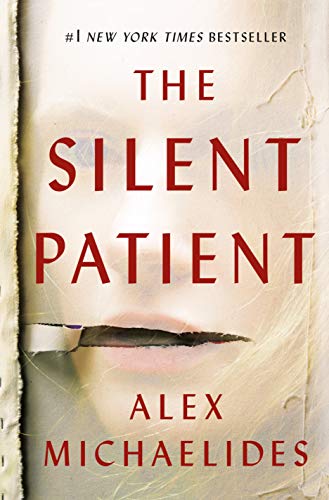
Speaking of twisty mysteries that I couldn’t figure out, Alex Michaelides’ The Silent Patient kept me glued to my seat until I got to the end. Theo Farber is a London psychiatrist who takes a job at the Grove Hospital. He is fascinated with the case of Alicia Berensen, a woman who was struck mute after murdering her artist husband, Gabriel.
We alternate between hospital scenes and Theo’s more idyllic personal life with his wife, Kathy. Like Alice Feeney, Michaelides’ uses ephemera– in this case a journal– to give us additional clues to Alicia’s life and identity. She is being stalked but can’t prove it. Gabriel is abusive. And we learn a bit about her past. But can we trust the musings of a mentally ill woman?
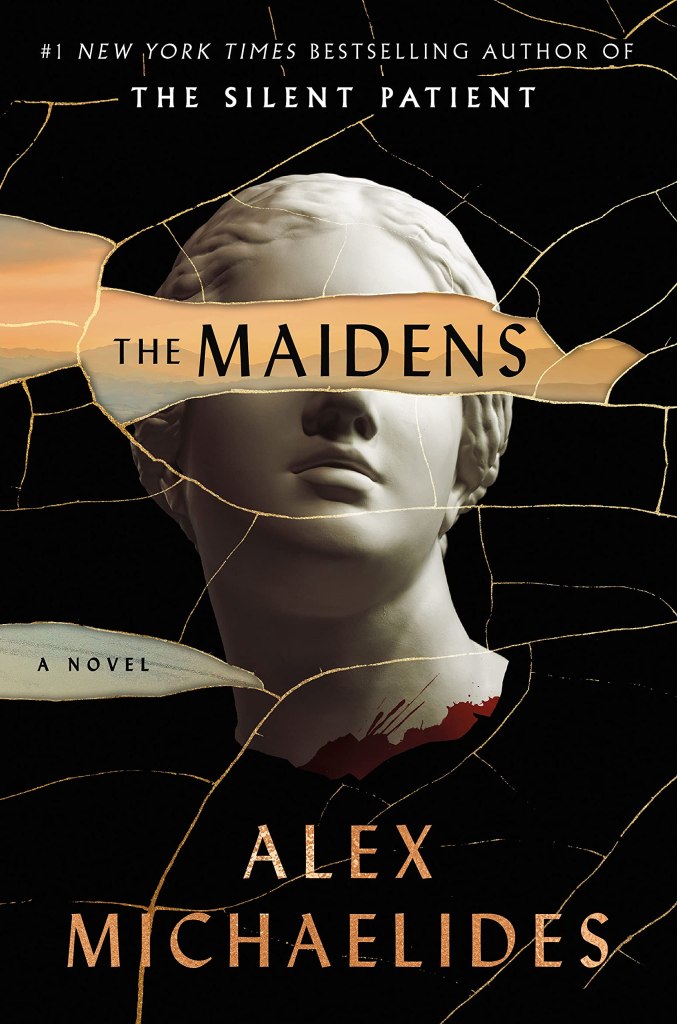
I’m always happy to find books like this: suspenseful page-turners that wrap up in a satisfying way. I liked his follow-up, The Maidens, nearly as much. Michaelides’ has found a way to provide riveting pulp fiction that will lend itself easily to adaptations.
3.
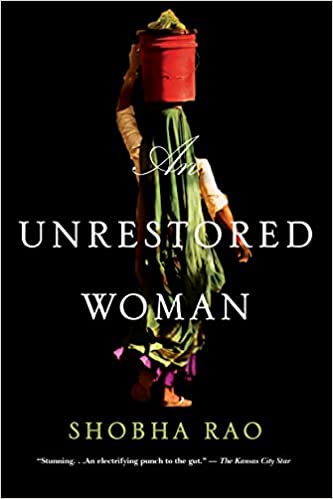
In 1947, after the decline of the British Empire, the Indian subcontinent was partitioned into two separate countries: India and Pakistan. Hindus stayed in secular India, Muslims went to the newly formed theocratic territory. This was one of the largest mass migrations in non-wartime. Up to seven million people were misplaced from their homes. Nearly a million people died in skirmishes as the borders were enforced.
Behind the history, there are amazing stories of women and some men who suffered tremendously during this time. With painstaking, poetic detail, Shobha Rao depicts their lives: a houseboy who foolishly falls for a British colonizer, a lesbian liaison that turns deadly, and a woman who drinks poison because she has no social standing as a widow.
This is the best writing I found all year: lush with details and empathetic understanding, I felt transported to a world unlike my own. It has left an indelible imprint.
4.

Isra is a dreamy teenager in Palestine, reading books under almond trees and avoiding the inevitability of her arranged marriage. She reluctantly agrees to move to Brooklyn after meeting Adam, a dual citizen. After her marriage, Isra has four daughters and endures an abusive domestic situation and an overbearing mother-in-law. Her happiest moments are when she escapes reality through fiction.
Her daughters are bound by the culture they are born into, but a brighter future is possible. Beyond their immigrant neighborhood, a different world exists, accessible by the subway trains and by the education they are getting.
This is an engrossing, sad novel about the limited roles forced on women and the way that books and expression can serve as a passage out. Not everyone succeeds in this story, and you can’t help but grieve a bit for those that don’t.
5.

If you read this blog regularly, you know that I love to kill an afternoon with a trashy novel. Kiersten Modglin, an indie author, has a brilliant formula for twisty stories you can’t look away from.
This one is about a Nashville couple, Peter and Ainsley, who decide, on a whim, to try dating other people. They have ground rules, of course, and are a bit wary going in. When Ainsley’s date turns into a stalker, it is the starting point for a wild ride leading up, breathlessly, to one of the most bizarre endings I’ve ever encountered in this genre. (And, yet, it works.) Like the first two on my list, I could not put The Arrangement down. There are surprises galore (maybe one too many – there is a twist about one of their male friends that I thought was gratuitous) and a storytelling original enough that it earns my last spot of the year.
Honorable Mentions


 Books Smitten