Inspired By…

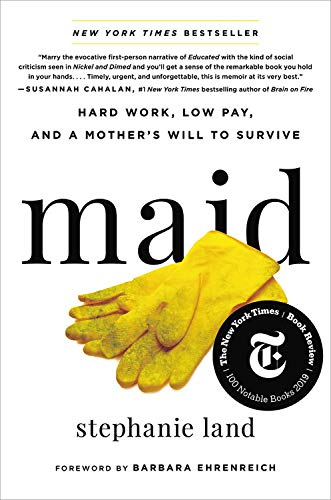
Recently I watched a Netflix series called Maid. In the final credits, the audience is told the the story was “inspired” by a book of the same name by Stephanie Land. It raised a question: what exactly does it mean to be “inspired” by a story? To find out, I re-read the book to compare the two.

The series opens with Alex, played by Margaret Qualley, leaving her single-wide trailer under cover of night. She scoops up her small daughter, Maddie, and narrowly escapes her boyfriend, Sean. We see in flashbacks that he is an alcoholic and has punched his hand through the wall, just missing Alex.

Once safely gone, she is hit with the full force of the odds against her. Her social worker can’t find her temporary housing because she minimizes the abuse. After her daughter drops her mermaid doll out the window, they have a car accident that forces Alex to reach out to her born-again Christian father. Not wanting to lean on him, she opts instead to spend the night with Maddie in the ferry terminal.

Alex procures temporary housing at a DV shelter. She also finds a job, making $12 an hour as a maid for a wealthy lawyer on Fisher Island (a fictional place set in the Pacific Northwest; the series was filmed in Victoria, BC). She struggles with child care and legal problems with Sean. Her mother, Paula (played by Andie MacDowell, Qualley’s real-life mother) is in a manic stage, able to produce art but otherwise low-functional. Especially through this character and the well-meaning fuckup Sean, we see just how little of a safety net Alex and Maddie have.

The series is harrowing, showing the razor’s edge of subsistence living. I felt empathy for Alex and her daughter, as one mess after another endangered their stability. Her tense dynamics with her family were compelling. Alex was never really parented, and it makes her independent enough to survive.

I had less appreciation for Nate, a contrived nice guy character who wants to help Alex and Maddie. I found myself cringing a bit in their scenes. Any savvy viewer knows this is not meant to be a Cinderella story.

Overall, though, Maid is a good production worth seeing.

And the book? At the end of the series, we see Alex and Maddie making the 500-mile trek to Missoula, MT, where Alex has been accepted to a writing program. It’s no spoiler to say she has boffo success writing about her experiences. (How else would the series have come about?) The book was launched to great fanfare and picked by Barack Obama as one of his favorites of that year, in 2019. (What a thrill that must have been for the author.)

Reading it again recently gave me the sense of hearing the same story told by different people. In generality, it is the same but timelines and particularities differ. Maddie is called Mia in the book and is a few years younger when it begins (she takes her first steps at the homeless shelter, but is nearly three in the series.) Alex’s mother lives in France with a British husband, not locally in an Airstream with an Aussie, but the emotional tensions are the same. Sean is called Jamie and their relationship details are similar.

Some scenes are identical, such as one when the author expects her mother to pick up the check for a burger and she won’t do it. Others are omitted from the series, such as one in which she gets a windfall from a tax return.

Like the series, Maid the book is an engrossing story that feels both particular and relatable.

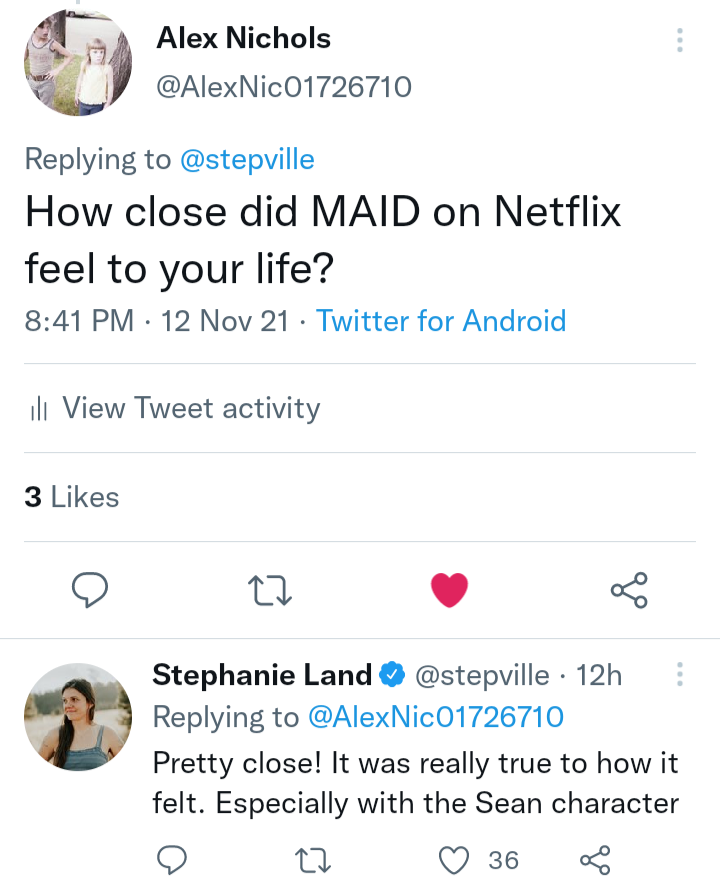
And as for the differences between TV and reading, I’ll give the final word to author Stephanie Land.

I had a chance to talk to the author on Twitter recently and here is what she had to say:
The Financial Incentive

There are a lot of plots that involve money. Often it’s simple greed, such as characters who are driven to murder for financial gain. Sometimes it’s desperation, such as a story in which frantic parents need to fund their child’s medical bills. Others involve characters who take a well-paid job without realizing that the extra cash comes with strings attached.

There are good reasons for financial incentive plots. The urgency of making monthly rent creates its own tension, and the dream of a better life through dumb luck is irresistible to many readers. There is a dark side to these situations, though, as naive women get embroiled in scenarios beyond their control, making the original motivation seem ill-advised by the end.

Here are three books where money creates mayhem.

Sarah Larsen is the proverbial naif in the city. Living in a three-hundred square foot apartment and working in a restaurant with her fiancé Jonathan, she comes across a notice for an Upper West Side family that is looking for a nanny. The reader knows that something has gone awry in the prologue, when the previous nanny witnessed something terrible on her last day.

But, like most people struggling to keep a (tiny) roof over their head, Sarah can’t resist the possibility of a pay bump. She soon realizes the job was too good to be true. She has been hired to play along with a family secret.

Unable to resist another financial offer of free rent, Sarah finds herself in too deep.

The author does a good job of kicking the tension up bit by bit until you can’t stop the pages from turning. Will Sarah escape or merge into this creepy group?

2.

Jessica is a freelance make-up artist, traveling by subway from job to job with her tackle box of cosmetics. Needing cash, Jessica overhears a new client canceling a $500 case study appointment. Expecting a marketing research gig, she shows up at the NYU building in the hopes that no one will notice the mistake. She finds herself in an empty room with a computer. A curser prompt begins asking her questions, and she continues with it, even after the inquiries become increasingly intrusive.

After meeting a promising man outside a coffee shop, Jessica’s life seems to be looking up. However, the person behind the prompt won’t let up, and eventually wants to meet her. She is a therapist named Dr. Shields and we slowly get the sense her interest in Jessica is not purely professional.

This is one of those shout at the screen movie moments, when the reader wants Jessica to get away from this woman or suffer at her own peril. You wouldn’t have much a plot if Jessica were prudent. By the end, the initial $500 has transformed her in surprising ways.

3.

When her mother’s terminal cancer gets worse, Nina is desperate to help her. Looking at six-figure medical bills she can’t pay, Nina has the idea to travel to Lake Tahoe, where she once lived, to befriend the sister of an old boyfriend. Vanessa is an Instagram influencer whose brother is now institutionalized. She spends her days cataloguing a false social media image and is lonely for company. Enter Nina, who rents a guesthouse on her property.

Nina’s real goal is a million dollars cash in the family safe. She bonds with Vanessa with the ulterior motive of getting the lay of the land so she can break in and take the money. The plan is complicated when an Irish guy named Lachlan turns up. Vanessa doesn’t know that this is Nina’s boyfriend and partner in crime.

I liked the initial set-up of this book, including the LA and Tahoe details. However, I was stopped cold by the idiocy of the idea that Nina felt certain she could get into the safe because she remembers the password. It never occurs to her that it may have been changed in twenty years, or that the money may have been spent. There is a satisfying twist at the end, but it comes after too many unnecessary scenes. I especially hated Lachlan, whose every other line is, “I have an idea, yeah?” or “That’s a good plan, yeah?” I began to think of him as Yeah, Yeah, Yeah by the end.

Reading Double: Alice Feeney

In the name of diversity, I usually don’t read a particular author twice. There are exceptions. I have read pretty much everything Anne Tyler, Armistead Maupin, and Anne Lamott have written, and occasionally find an author I want to read more of. In the past few years, Joshilyn Jackson, Alex Michaelides, and Alice Feeney have been repeats.

When you read an author more than once, you begin to see certain similarities in what they do. Writers have quirks and tend to repeat patterns and characterizations. Anne Tyler writes about quirky Baltimoreans, Taylor Jenkins Reid about show business types, and Harlan Coben about missing persons’ cases with a tech twist. Publishers like this, because readers often want to know what they are getting when they pick up a book. Brand authors sell more.

But are the books too similar? If you read enough, and closely together, it can seem that way. I have likened an author’s books to her children, slight variations on a genetic theme.

This week, I will look at two of Alice Feeney’s works and what they have in common. Are they siblings, cousins, or do they share no blood? Let’s examine…

1.

Adam and Amelia travel to Scotland at their therapist’s suggestion, an attempt to repair their ten-year marriage. When they discover their lodging is a fifth-century church, things get eerie. Amelia feels someone watching her. She gets trapped in a wine cellar. Adam, who is face blind, is crushing up pills and putting them into her drink.

The reader is also given intermittent letters from Amelia. Every year on their anniversary, she has written Adam a letter. Page after page, we see the slow deterioration of their union. Both come from troubled backgrounds: Adam’s loses his parents early and Amelia has no family. Amelia has gotten a life insurance policy out on Adam’s life so it’s possible she has the same designs her husband does. Just what is going on between these two?

2.

Amber is thirty-five, married to Paul, and is narrating the story from a coma. In flashbacks, we see the events that lead to the present: Amber met an old-flame, Edward, and had a one-night stand, after which she was struck by a car. Amber works at a radio call-in show for a difficult boss. She has a sister who visits occasionally.

The police discover a journal Amber wrote as a tween. She experienced the loss of both parents and eventually was adopted by a friend’s family. Taylor, her new sister, is a troubled child. Suspicion falls on her as the culprit behind the accident.

Similarities:

Both of these books are effectively creepy. They have characters – Amber and Adam – who are vulnerable due to their disabilities. Adam can’t recognize faces so there is the suggestion that he may be easily deceived. Comatose Amber is being visited in her hospital room by a silent figure who appears to be taunting her. Making a comatose woman aware of her surroundings plays on a common fear of being anesthetized.

Both use ephemera – letters and a journal, respectively – to fill the reader in on the big picture. We learn in the letters that Adam was being unfaithful and that their marriage was on the rocks. In the journal, Amber’s adoptive sister is a scary character who may have something to do with her accident.

Both feature characters who were orphaned, perhaps to underscore their susceptibility to manipulation.

Both narratives are genuinely surprising, which is a feat. Ever since Amy Dunne in Gone Girl, the reader knows that journals and letters can be unreliable. And, yet, Feeney uses them both in creative ways that are hard to see through.

Alice Feeney has developed an irresistable formula for creepy domestic suspense. I loved both of these stories. I will say, though, that she has a tendency to pile on coincidences towards the end, and there are maybe one too many twists.

Conclusion: much like the tenuous bond between Amber and Taylor, these books are similar but share no blood.

A Light Snack

When it comes to fiction, there is no story without drama. Inciting incidents start a narrative in motion, and they always involve something sad, dangerous, or complicated. This is true even when the book is on the lighter side: tragic deaths can start a rom com, a comedy can be centered in the consequences of deception, and there are often betrayals that knock the protagonist off balance.

I recently finished a few pleasant reads in which, after the requisite dramatics, nothing truly terrible happens. With so much anxiety in the air these days, here are a few books that serve as blithe distractions.

After his best friend dies, alcoholic former sitcom star Patrick O’Hara finds himself watching her kids while her husband (also Patrick’s brother) is in rehab for opioid addiction. Living in seclusion in Palm Springs, Patrick strikes a (Auntie Mame) pose and tries his hand at parenting. Complicating the story is the kids’ other aunt, Clara, who wants them in a more stable environment. Namely, hers.

This book is laugh-out-loud funny at times, with witty one-liners landing with ease. There is poignancy to Patrick’s decline and also to his gradual maturity as he sees that he is responsible for someone other than himself. Parts of it drag, too, with a certain amount of unnecessary detail. Overall, though, this is a read that will pull up mainly tears of joy.

2.

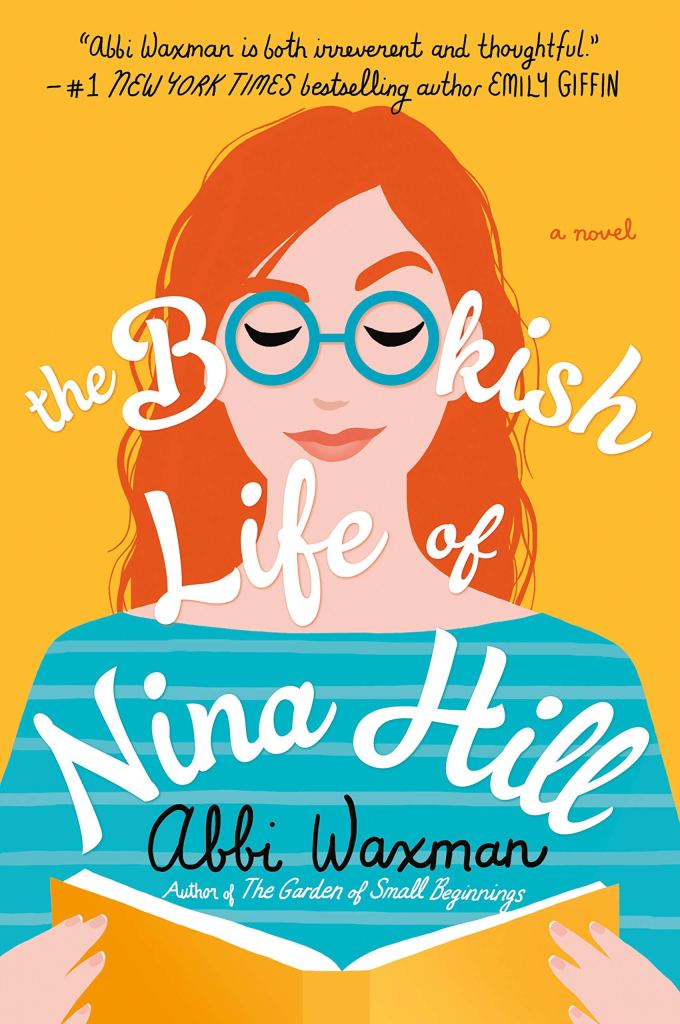
Nina Hill is a bookseller in LA, living with her cat in a guesthouse, happy to attend four book clubs a month and occasional trivia nights. She is taken aback when she learns that her biological father, a man she never knew, has died and put her in his will. Soon, Nina is meeting new family and dating a fellow trivia buff.

Other than the death of Nina’s father, this book is a genial romcom featuring an independent bookworm. It has great observations, such as this one about Nina’s Aussie mother: “She said sockAH instead of soccer or lollies instead of candy, but it wasn’t like she walked around in a hat with corks dangling from it.” Or this one about Nina’s bluntness, “She wasn’t mean; she was painfully accurate.”

I’m not a huge romcom fan, but this one hit the spot, in part because it’s Nina’s love of reading that is the true romance. To wit: “She thought of books as medication and sanctuary and the source of all goods things. Nothing yet had proven her wrong.”

3.

This is a genuine Gen Z romcom, complete with a pansexual supporting character and a protagonist who talks about Health at Every Size. Charlie Vega lives in Connecticut with a mother she can’t relate to, and the memory of better times when her beloved father was alive. Her best friend, Amelia, is the “pretty one” and Charlie struggles daily with her self-image as a plus-size white Latina. She wants to be kissed and sets her sights on a dreamboat jerk. No mystery what happens there.

Eventually, Charlie finds love with a sensitive boy with two moms. It was at this point that the book began to flag for me. Charlie has long self-aware monologues that sound like something off Dawson’s Creek. There is a nice subplot about her and Amelia, and how having a boyfriend changes Charlie, but a lot of her other transformative moments felt forced.

My concern about books like this is that teenagers will read them and expect this to happen to them. I’m not sure that it will. Romcoms often present the world as what the authors wish it could be, not what it actually is.

Reading Double: Joshilyn Jackson

I think of books as authors’ children. They resemble each other, usually not identically, and occasionally you might find two that don’t seem at all similar. They all have the essence of their maker in them, though, which is why I rarely read the same author multiple times. There are exceptions – Anne Tyler, Anne Lamott, Harlan Coben — but for the most part I may read a particular author only once or twice.

I recently read two by Joshilyn Jackson and enjoyed them both. (Not always the case with children.) So how are they similar? Here they are with a side-by-side examination.

Both feature White, middle-class, heterosexual married women with kids. They are a bit beleaguered by their domestic lives: Amy because her teenage stepdaughter doesn’t like her, and Bree because her middle schooler girls are going through a difficult stage. Both also have a newborn.

Bree once trained in theater. Amy is a diving instructor. Both are married to generic men. Bree’s husband is absent from the first half of the narrative so he’s a little harder to grasp. Amy’s husband is a flat character.

Both are harboring secrets: Amy crashed a car in high school that killed a young mother. Bree is hiding from her family that her ten-week-old son has been kidnapped. Both are having flirtations with men: Bree with her high school friend Marshall and Amy with her first love, Tig.

Both have female antagonists: Amy’s new neighbor Roux seems to be onto her, and Bree’s kidnapper, Coral, taunts her over the phone.

There are twists in both stories that I didn’t see coming, and a vaguely conservative attitude towards adultery. You can flirt with someone not your husband, but you shouldn’t go beyond that.

Both were slow burns, taking a while to set the stage before heating up into page-turning suspense. They are about misdeeds in the past that reverberate in the present. Amy and Bree make the proverbial passage from innocence to experience.

My assessment: due to unique supporting characters, these two novels are fraternal twins. The author is skilled at crafting narratives that have emotional resonance.

I do find her style slightly self-indulgent, including too many flashbacks and digressions. (If you zone out for a minute, you time travel.) The phrase “I didn’t want it to end” doesn’t apply to either. I did enjoy them both, though.

When Books Hurt

I once met a woman who had lost two of her children. One had died in a freak accident and the other was killed in a drug deal gone wrong. She said that she endured her grief by a firm belief that everyone has a day to be born and a day to die. There is a plan, she said, and we all have to be OK with it no matter how crushing it is.

These are the kinds of stories I sometimes want to turn away from. Any tenuous faith I hold is deeply shaken by the awareness of cruel injustice. What kind of God would do this to someone, while the wicked seem to prosper? How could someone’s fate be to die from random falling debris from a construction site or from badly cut drugs? My mind can’t quite look into the abyss.

And, yet, I have occasionally read about horrific things only to feel a certain grace on the other side of it. Here are two books that were gut-wrenching but illuminating.

The author, a London economics professor, experienced hell on Earth. The day after Christmas, 2004, she was staying with her family – parents, husband, and two little boys – at a hotel on the southern tip of Sri Lanka. She saw a swelling wave through the window, not aware that in a matter of minutes, everyone in her family would be dead. She was a survivor of the horrific tsunami that killed 227,898 people.

This memoir is riveting. Deraniyagala has a spare style that works well with gruesome events. She doesn’t pretend to be noble. At the hospital after the event, she is awful to a boy sitting next to her. The scene is one of many in which the author is unafraid to make herself look ugly and entitled. Some readers have judged her for this, but I thought it was authentic to who she was and what she was going through. After she sells her parents’ home in Columbo, she becomes deranged with rage that someone else is living in her childhood home. She stalks the inhabitants, blaring her husband’s favorite Smiths’ music while contemplating killing herself by crashing through the heavy metal gates. (Damn you, Morrissey.)

Ultimately, the author learns that she must keep the memory of her family close in order to survive. Life does go on, but it isn’t pretty.

2.

The author, a theology professor at Princeton, came to her faith through agonizing circumstances. When she was a young mother, still in grad school, her six-year-old son got sick and eventually died.

This tragedy framed her academic work, as she saw parallels between the early Christians’ suffering and her own. She became quite famous (inside academia, anyway) for her books about the Gnostic Gospels. In the early days after Jesus’s death, hundreds of communities formed that were following his basic teachings. Many wrote down what they believed, although only four were canonized when the early Church formed. A fateful discovery in the 1940s unearthed gospels from a Christian community called the Gnostics. These were writings that were shunned from the official canon, but they showed that not all Christians believed the same things. There was a Gospel about Mary Magdalene, who was defamed by the official church as a prostitute. (The popular misconception may have been smeared a bit by The Da Vinci Code.)

The mystery of faith becomes central to Pagels’ academic work. Later, she is tested again when her husband dies in a hiking accident. I found myself bawling at times while I was reading this. Pagels has a gift for creating empathy in her readers. Her religious quest is intelligent and interesting. This was a difficult book to read, but worth it.

Crosses To Bear

When you think of Christian fiction, you might conjure up feel-good stories like Jan Caron’s Midford series or the action-packed Apocalyptic best-selling Left Behind books. There is even a large subgenre of Amish mysteries.

As a major religion of the world, Christianity is not just limited to genre pieces. Christians are present in many mainstream books. This week I examine three recent books featuring religious themes.

1.

Gifty is a first-generation American, the daughter of Ghanaian immigrants. As a child at a Pentecostal service in Alabama, she is filled with the Holy Spirit and reborn.

Years later, she is working on a PhD in neuroscience at Stanford, looking at reward-seeking behavior in mice. She has lost her faith after her older brother died of an opioid overdose. Her mother has fallen into a debilitating depression and rarely eats.

Her passion for science has certain parallels to her strict faith.

I wanted, above all else, to be good. And I wanted the path to that goodness to be clear. I suspect that this is why I excelled at math and science, where the rules are laid out step by step, where if you did something exactly the way it was supposed to be done, the result would be exactly as it was expected to be.”

Alas, both science and religion begin to fail her. She is overwhelmed by her losses and the difficulty of life. Eventually, though, she has a moment of transcendence:

“But to be alive in the world, every day, as we are given more and more and more, as the nature of “what we can handle” changes and our methods for how we handle it change, too, that’s something of a miracle.”

This is an excellent work of fiction about how faith can prop people up even in the darkest times.

2.

It is September, 1974, and Addis Ababa is in chaos. Emperor Haile Selassie has been deposed. A doctor’s son, Yonas, is watching his younger brother get pulled into the fray. And his daughter, after a fall, is clinging to life.

Yonas’s wife, Sara, devastated by this latest loss, has returned to her Catholic faith. She takes a taxi to St. Gabriel’s Church, stopping to converse with beggars. “May you be blessed with a life unlike mine,” one says to her.

She walks inside and gets on her knees. There is broken glass on the floor. She kneels on it, wincing in pain. She had been doing this for weeks, as a barter with God:

She would give of herself until he was forced to concede, if not out of compassion and justice, then out of a damning guilt born of having watched his own son die on a cross while pleading to a father who had forsaken him.”

This is a bleak scene in a bleak novel about Ethiopia. Around the city, images of the Lion of Judah appear on flags and statues. This might reference the second coming (Jesus is named the Lion of Judah in Revelation), but it seems like an ironic contrast to the life under its gaze. It’s so well-written that you can’t look away.

3.

Dan is an aspiring photographer from Texas who visits Madrid with his parents. He meets Ana, a local whose parents were killed by Franco. She lives with her two siblings in a ghetto and works at the hotel Dan is staying at.

Through their friendship and through Ana’s family, we get to know Spain under Franco. Many people are struggling to get by. Ana’s cousin works in a Catholic orphanage and has begun to suspect that something nefarious is going on.

Under Franco, Catholicism was mandated. Protestants and Jews are not allowed to worship openly. Their funerals must be private. Information is heavily controlled.

With this as a backdrop, we learn that couples are beginning to talk about strange birthing experiences. Several are told that their baby died. A few have twins but are told that only one survived.

As readers, we are learning a dark secret: under Franco’s direction, more than 300,000 babies were stolen to be raised in Catholic families. Many of the stolen babies were taken from Republican families, his opponents in the Civil War. Others were deemed undesirables, victims of Spanish eugenics.

I had never heard of this, but it is historically accurate. To indoctrinate countries into one religion is nothing new, but this particular application is bone-chilling. And why have we heard so little about it?

Meta Me

There are a plethora of books featuring bibliophile protagonists, with or without a charming bookshop. Since everything these days is about relatability, having a likeable reader propelling the plot is not a bad idea. It’s easier to root for someone you identify with, and who better to invest in this plot than a book person?

The role of reading can take several forms in the stories, everything from a comfort to an escape to a means for human connection.

Here are some bookworm protagonists and the stories that carry them.

1.

Lydia, the protagonist of this thriller, owns a bookstore in Acapulco. She keeps her favorite titles displayed, waiting for the day a customer asks for her recommendations. One day, a suave man named Javier stops in. Lydia discovers they share common tastes in books. When he stops in again with chocolates, they bond over a shared love of Love in the Time of Cholera. Lydia doesn’t know that Javier is La Lechuza, a notorious drug lord.

Lydia’s love of books reappears a few times as she and her son travel north to escape Javier. He tries to woo her back by quoting Cholera. The final scene references the book as well. The title, by Gabriel Garcia Marquez, is a kind of MacGuffin that both propels the plot and symbolizes Lydia’s freedom.

2.

Books provide a less literal escape to Isra and her four daughters. Married young to an American Palestinian, Isra lives a miserable existence in Brooklyn with an overbearing mother-in-law and occasionally abusive husband.

Isra finds a needed escape through books. Her four daughters share her love of reading. One, Deya, eventually discovers the power of her own voice. Expression is her ticket to freedom, in surprising ways.

3.

Emilia is struggling to run the bookshop she inherited from her late father. It acts as a meeting point for many of the locals, who bond over books, or meet up with old loves at signings. In this story, a shared love of Anna Karenina can bring the warmth of a new friend or companion. There is a nice feeling that eventually grows a bit saccharine.

4.

Nina Hill is an only child with a single mother she rarely sees. She lives in a guesthouse in Los Angeles and works for a bookstore, getting out to four different book clubs and ongoing pub trivia nights.

When she discovers that her biological father has died, Nina is thrust for the first time into family relations.

Books are central to Nina’s life, as important as people. There are some hints that her solitary life may be a way of avoiding intimacy, but the author is savvy enough not to insult book people. Nina enjoys her book-saturated life and isn’t sure she wants any distraction.

This is a funny and charming rom-com for the hip-to-be-square crowd.

DNF

There are some readers who have no trouble abandoning a book. If the story isn’t dazzling them, they toss it aside, or drop it down a book chute, or hit permanent delete on their e-reader. Others struggle with the need to push on, to complete a task, to not give up.

I am firmly in the second camp. Half-read books feel like a sink full of unwashed dishes. Hitting delete on my Kindle feels like failure. I calculate the money I have wasted and the incomplete understanding I have of the story.

But, occasionally, I am just not up to it. Here is a list of my five Waterloos.

1.

Sorry to all the fans out there, but this classic is a dud. I don’t know how it became a feminist masterwork. All of the moral preaching from Marmee, shaping her girls into moral pillars, is offensive. Jo is not a compelling heroine. And all the interior formality made me claustrophobic.

Gave up at 33%.

2.

I would give anything to trade places with Danielle Steel. She has a gorgeous house in Pacific Heights, seven children, and a mob of devoted fans who rhapsodize about the joy her books give them. I have tried a few of her titles, though, and they just aren’t for me. Most begin with sunlight streaming through French windows. Her heroines are often rich heiresses living in posh surroundings. There is some central conflict, like a family boarding the Titanic. I don’t know how anyone connects with such flat characters.

Gave up at 45%.

3.

The protagonist is a therapist who takes every August off to go to Fire Island to decompress from the stress of her job. At the opening, she has agreed to see a teenage client at the request of the girl’s parents. The twist is that the client’s parents are both women. Maybe this was shocking in the 70s when the book was published, but the whole plot just didn’t pull me in.

Gave up at 25%.

4.

I can’t deny the brilliance, and prescience, of the premise of this trilogy. Maybe I expected too much from it, but I found myself skimming through a lot of the action scenes. I just didn’t much care about Katniss either. I later watched the movie and ended up fast-forwarding through most of it. Clearly not for me.

Gave up at 60%.

5.

This classic has the distinction of being the only book I have DNF’d twice. The epic Southern story is enthralling and I made it some distance twice before two factors left me cold. First, it is seriously racist. There is an interior scene when Scarlett tells herself that slaves are inherently inferior. I could maybe stomach this (because of the otherwise evocative writing) but the double dose of misogyny did me in. I am baffled as to why Rhett Butler is a romantic hero. He thinks he can read women, and that no means yes. It just all feels so wrong to me.

Gave up at 40%.

Salt or Sweet?

Books are often divided into two categories: serious and fluff. And readers will often align with either camp, touting the virtues of either. It is essential to be well-informed and empathetic, says one side. And the other: I get enough reality just by getting out of bed every morning.

The matter is complicated when the issue of representation is added to the mix. Some communities are struggling to survive. Others rarely see people like themselves depicted in books and TV. Does it benefit people to read aspirational stories that might inspire them or is it better to get a relatable dose of reality? Depending on the person, the answer may vary.

Here are my reviews of three books that provide a slightly sugary spin on their protagonists’ journeys.

Zoe Washington is a winning teenager who loves to bake and is thrilled when her mom allows her to apply to a reality show. She also has heavier things on her mind. Her biological father is in prison for murder. After secretly exchanging letters with him, she sets out to prove his innocence.

Thousands of children in the US have a parent in prison. I don’t pretend to understand what they are going through. While I enjoyed Zoe’s plucky investigation, it didn’t seem terribly realistic to me. I’m also not sure that reunions between long-estranged blood relatives always go so smoothly.

2.

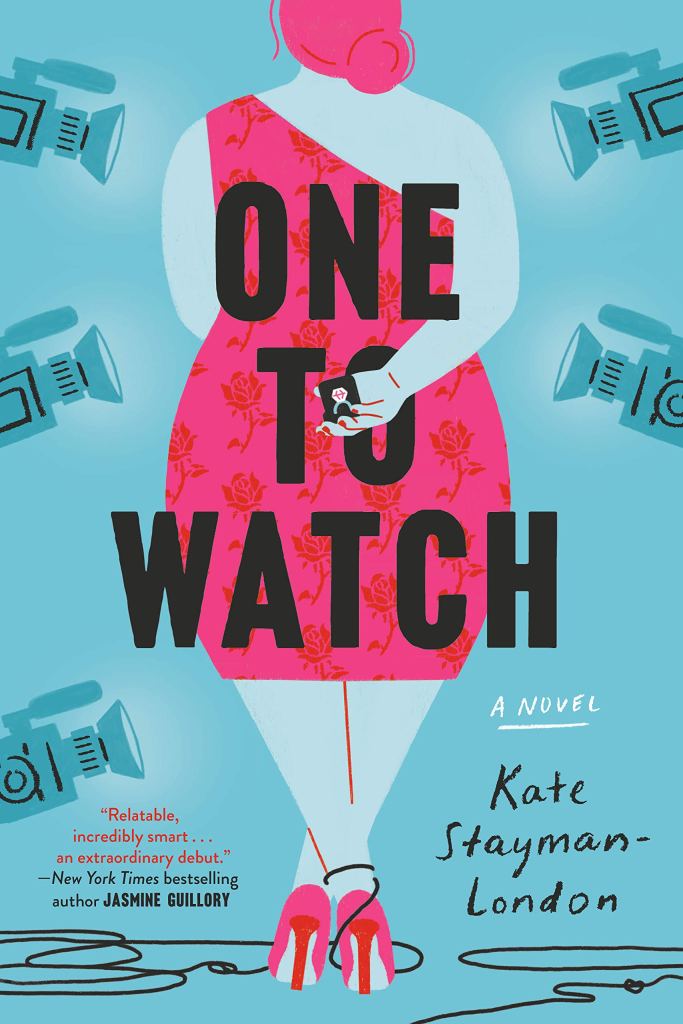
Bea is a plus-sized fashion blogger who is cast on a Bachelorette type reality show. A bevy of eligible men are soon taking her on dates in front of the camera. A few seem sincere. When Bea’s real-life one-night stand reappears, there is some genuine tension about who she will choose.

I’m all for empowered women, of any size, but there was something about this story that left me cold. Reality dating shows have a nearly 90% failure rate, in part because many participants have ulterior motives in appearing on them. I have spent enough time on dating sites to know that sizeism is very real. Many people are overtly hostile to fat women. While I would love to believe that a real-life version of this could happen, it read like pure Nora Ephron to me.

3.

Felix is a typical high school boy, hanging out with his friends and aspiring to study art at Brown. He yearns to be in love for the first time.

He has a crush on a boy and is thrilled when he is invited to spend the weekend at his house. “I have read up on your situation,” the friend says while they are cuddling. “And I think I know what to do.”

In that moment, Felix feels like an alien. His crush appears to be fetishizing him, curious about sex with a trans boy. It is anything but an organic attraction.

This is one of the darker moments in an otherwise ebullient story of a trans adolescence. Felix is a character you can’t help but root for. It left me with that pleasant, optimistic feeling that the best rom-coms do.

Reading is highly subjective. I can’t articulate why Felix Ever After worked so much better than the others. I got caught up in the fantasy and didn’t have time to consider that it might be just as unrealistic as the others.