The domestic novel focuses on the quotidian. Marriage, parenting, and neighborhood concerns center the plot. They are often about preserving these values: protagonists heal their marriages, solve their parenting dilemmas, and restore order to a community. If there is a problem, it is often exposed and cleansed, such as a bad marriage which is upended or a local pariah who is exposed.
There is a subgenre that deviates slightly from the formula. In it, the domestic protagonist escapes from her life for a time, changed forever from the respite. While the outcomes may vary, the journey to self-appreciation is routine. Here are three stories of women getting away.
1.
Charlotte Emory is a bored housewife in Clarion, Maryland. After years of domestic drudgery, she decides to leave her husband. A fateful visit to the bank changes everything when she is caught in a holdup. What follows is a peculiar, delightful story of one woman’s emancipation.
This early Anne Tyler contains all the traits that made her famous. It’s an unusual skill to pull off a romance that originates during a crime, but she does it will her trademark quirkiness. One of my favorite books by one of my favorite authors.
2.
Mary Gooch is a reluctant hero. After her husband disappears on the eve of their twenty-fifth wedding anniversary, she leaves her Ontario hometown and heads to LA to find him.
The introduction of an ally is common to these plots. While in LA, Mary meets a group of people who help her find her worth. I found this story a bit trite, maybe because it’s so similar to Shirley Valentine. I wasn’t as charmed by Mary as I needed to be.
3.
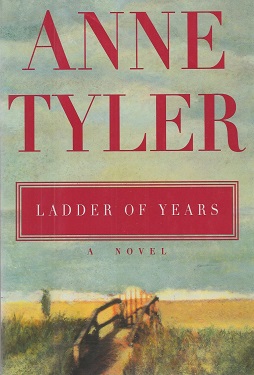
Anne Tyler is the undisputed queen of the domestic novel. Her stories often feature breaking points in marriages with a variety of outcomes. Some couples come apart only to get back together; others split up and find a second chance at love.
In this one, Delia Grimstead walks away from her family while on a beach vacation. She feels unappreciated after years as a wife and mother. In doing so, she encounters a man she might move on with.
This might be seen as a bookend to Tyler’s great The Accidental Tourist. Delia is the opposite of Macon Leary, a travel writer who longs to stay home. By getting away Delia is able to come back to herself. She also makes a different choice from Macon when it comes to new love. Sometimes taking a break leads you back to where you started.
In a wide open field, true-grit memoirs stand out for their brittle tenacity, the ability to survive the harsh terrain. A reader might wince or recoil at times, but these stories offer a kind of bleak hope about human resilience.
The subgenre includes its share of variants. There are brutal personal loss stories, harrowing abuse memoirs, and addiction tales. The reader is given a promise, a barter for engaging with them: if you enter the darkest territory, you will emerge into sunlight at the end. No memoir ends with the writer jumping off a bridge. This is meant to be comforting, somehow.
I read this subgenre sparingly, simply because I don’t always enjoy the bargain. Here are three that were worth it.
1.
In the tradition of Augusten Burroughs’ Running With Scissors, this harrowing childhood memoir depicts a set of parents you can hardly believe exist. The author’s father is a trust-fund Bohemian who disappears to Europe, leaving his kid in the care of a mother who forgets to feed him, is hospitalized for psychosis, and loses him to child welfare. When Io is finally in his father’s care, it’s only marginally better. He has been harboring a secret for years: he’s a heroin addict.
From this scrapheap, Tillet Wright crafts a gripping and beautifully written memoir of the East Village in the ’80s and of the grit required to survive severe neglect. It is not pretty.
2.
This was an accidental true-grit read. Hoping to kill a Sunday with some ’80s nostalgia, I jumped in, not realizing its depths. The author, famous for creating the original mean girl Nellie Oleson, comes from a show biz family with dark edges. All four of them worked in the industry: her mother was a voice-over artist, her father a business manager, and she and her brother were child actors.
Hard to know where to begin with the brother. Imagine Greg Brady as a sociopath and you’ve got the idea. The story of her abuse at his hands, and the family denial of it, was bone-chilling.
This is not just an abuse memoir, but it is hard to classify it more gently. She has been through a lot.
3.
There is no memoir harder to read than that of a bereaved parent. The author and his wife lost their two-year-old in a freak accident when she was out of their care. In addition to the profound loss, they must grapple with the person who was present when it happened.
I knew this would be a brutal read and it was. I cried through the entire thing. There was a catharsis, though: the tears at the end were different from the ones at the beginning. The author takes the reader through the stages of grief.
At certain moments in the mesmerizing spectacle of the Depp-Heard defamation trial, I envied those who had never tuned in. What bliss it must be not to realize that Johnny Depp is a vile misogynist, to have never witnessed the Sweetzer monster, and to have never considered that Amy Dunne might not just be a fictional character. As far as brain-bleaching experiences, this one is up there.
In a split decision, a seven-person civil jury in Fairfax, VA found that Heard defamed her ex-husband in a 2018 op-ed in which she claimed to be a public figure representing domestic abuse. They also found that Depp’s lawyer defamed her when he called one incident a “hoax.” When you split the difference, she now owes him eight million dollars, just slightly more than she got in their 2017 divorce. She also has more than six million in lawyers’ fees.
The decision is puzzling for several reasons. A UK judge reviewed the same evidence in a 2020 trial and determined that twelve of fourteen claims were substantially true. Therapist notes over several years reveal sexual and physical abuse claims by Heard long before their marriage. A nurse’s contemporaneous texts claim that she and Depp’s bodyguard had to physically restrain both of them, contradicting his testimony that he walked away from a fight on a staircase. And, in a final audio recording before they went to divorce court, he doesn’t deny that she could have died by accident in one of their fights.
It appears that the jury was swayed by Depp’s narrative. Testifying over a period of days, he recounted a horrific childhood of physical and psychological abuse at the hands of his mother, Betty Sue. When he met Heard in 2009, she seemed too good to be true. They were happy for a while. Soon, though, Depp realized that he was once again in the hands of a malicious abuser. She was constantly critical, had sudden outbursts of anger, and threw things at him. She started their fights and he never threw a punch. After he left her in May 2016, she filed a false restraining order and embellished claims to make herself look like the victim. His team contends that she has borderline personality disorder, a mental condition in which fear of abandonment leads people to make false accusations.
This is in direct contrast to sixteen incidents of alleged abuse that Amber recounted on the stand. (For some reason, two of these were left out of the UK trial, probably because the tabloid Depp sued didn’t write about them.) They were partially corroborated by photos, contemporaneous therapist’s notes, and texts to friends and family. But it wasn’t enough to convince the jury.
In short, they seem to have concluded that Amber Heard is an unreliable narrator. Or more to the point, Depp is a slightly more credible narrator than his ex-wife. This is remarkable given how much he lied on the stand: about substance abuse, drug orders, infidelity, and a text in which he said a woman’s vagina was “rightfully mine.” (He suggested that her team had fabricated it, a ludicrous claim given that it came from his phone and was submitted by his legal team.)
I wonder if popular fiction is partly to blame for this travesty. Pulp fiction has never fully modernized and relies on many one-dimensional stereotypes. It’s not always about gender but often it is. I have grown tired of the suspense genre for this reason.
There are many possible reasons that people don’t believe Amber Heard. It may be because she is lying. It may be because people don’t want to believe Johnny Depp has a dark side. It may be because of unregulated Internet echo chambers or that people formed opinions too soon. It may be because in complicated times we want simple narratives. It may be about the intricacies of domestic violence and stereotypes we hold about victims. Amber Heard is a strong woman. She isn’t always likeable. Some people may believe she deserved to be beaten.
It may also be because we have all internalized too much far-fetched storytelling. Best-seller lists teem with abusive men, gold-diggers, psychopaths, and femme fatales. Mental illness is used as a plot point to explain motives or trick the reader. Many of these books are made into movies and limited series. The landscape is oversaturated with statistically unlikely pathology.
Here are three books in which someone is shading the truth for psychological reasons or monetary gain, just as Amber Heard has been accused of doing. They are highly entertaining but logically implausible stories. Their effect may be more corrosive than we realize.
1.
Paul Strom narrates this novel, set in Ohio. While on a road trip to a lake house, he recounts his perfect life with wife Mia, their two boys, and his successful career. Paul and Mia are going to have a splendid weekend on Lake Erie. It slowly becomes clear that Paul is a narcissist, then a psychopath. He is planning to kill Mia at the lake house. Most of what he has told the reader is not true.
This is an entertaining page-turner. Parts of it are predictable; others are not. I didn’t like the ending, but overall it’s a wild ride.
2.
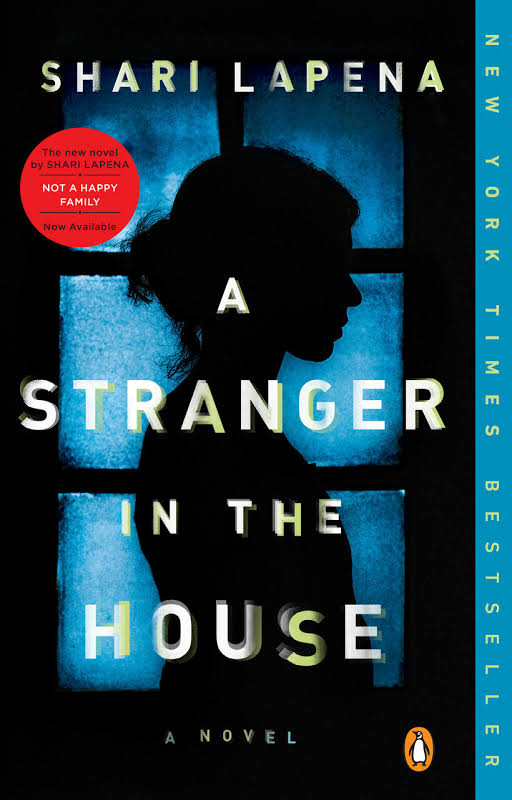
Karen Krupp flees the scene of a murder and crashes her car. She loses her memory of why she was there. The police are suspicious of her. Her husband, Tom, is concerned that his seemingly perfect life is tarnished. We learn that before they met, Karen was in an abusive marriage. These factors coalesce into good page-turning suspense with a surprising twist.
The problem here is the flat characterization. Both Tom and Karen are poorly developed, as is their neighbor Bridget. The author uses the worst possible misogynistic stereotypes to achieve her plot. This one stopped me cold from reading this author again.
3.
Thursday is in a plural marriage. Her husband, Seth, divides his time between Seattle and Portland and the homes he shares with Thursday, Hannah, and Regina.
Thursday visits Hannah and sees that she has bruises. Is Seth beating her? She finds a dating profile Regina had posted and poses as a suitor to reveal her duplicity. And the house Hannah lives in is registered in Thursday’s name. How could that be?
This is all edge-of-your-seat entertainment until a final twist that is so misogynistic and ableist that I wanted to scream. It’s unfortunate that this genre often trades on soapy characterizations of mentally unstable women. Surely there are ways to depict mental illness in ways that humanize the characters instead of ridiculing them.
I ended up hating this book. This entire genre is incredibly limited in nuanced characterization.
Intimate partner violence has been topical lately. COVID lockdowns saw incidents rise, as stressed out couples turned on each other. Johnny Depp’s defamation trial against ex-wife Amber Heard raised the issue of so-called mutual abuse and the awareness that men can be victims too. The excessive attention on that trial skews statistics dangerously: in fact, 85% of domestic homicide victims are women or girls. Only fourteen percent of men experience IPV while thirty-three percent of women do.
When we look to the book world, the topic has been explored with varying degrees of success. Here are three titles that feature IPV.
1.
A rare achievement in memoir, this title lays bare the complexities of abuse between women. The language is pure poetry. Look at all she does with just a brief mention of her roommates:
“When I first met John, he said to me, “I got a tattoo, do you want to see?” And I said, “Yes,” and he said, “Okay, it’s gonna look like I’m showing you my junk but I’m not, I swear,” and when he lifted the leg of his shorts high on his thigh there was a stick-and-poke tattoo of an upside-down church. “Is that an upside-down church?” I asked, and he smiled and wiggled his eyebrows—not lasciviously, but with genuine mischief—and said, “Upside down according to who?” Once, when Laura came out of their bedroom in cutoffs and a bikini top, John looked at her with real, uncomplicated love and said, “Girl, I want to dig you a watering hole.”
Queer love has only recently been explored in books; that is something it shares in common with intimate partner violence. There is also a legitimate question of who gets to tell the stories. Carmen Maria Machado is the real thing.
2.
On the other end of the spectrum is Anna Quindlen’s best-seller, an Oprah pick that was made into a movie starring Mary Stuart Masterson. It has a Sleeping With The Enemy plot, with battered wife Frannie escaping with her son and living with the slow burn tension of her abuser’s inevitable reappearance.
I don’t know Ms. Quindlen’s personal history, but I remember disliking the story and wondering if she were merely exploiting a serious topic with an ethnographer’s eye. I didn’t find it authentic. There are better books and better writers.
3.
I have yet to be compelled by the contemporary Irish writers. I haven’t cracked Sally Rooney, either of the McCourts, or Anne Enright. I even – gasp! – don’t love Tana French.
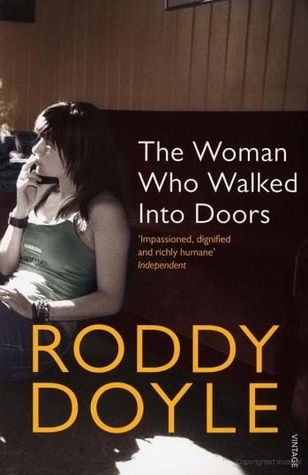
One exception thus far is Roddy Doyle. I enjoyed The Commitments movie and read this short novel about Paula Spencer, a likeable protagonist who endures physical abuse and alcoholism. It’s not hugely memorable, but is another voice in the Canon of intimate partner violence.
If you aren’t watching the defamation trial against Amber Heard, consider yourself lucky. It is a vile spectacle of Hollywood excess, complete with private islands, drug orders, and security guards who are paid 10k a day. Heard’s ex-husband, the A-lister Johnny Depp, is suing her over an op-ed she wrote in 2018 naming herself as a public face of domestic abuse. He has denied that he ever assaulted her.
The trial, which began in April and is set to wrap up on May 27, has revealed a story far darker than simple headlines. She was caught lying in a 2016 divorce deposition when she claimed she had only hit him once in self-defense; he was caught raging in their kitchen while slamming cabinets and breaking glass. They were both heard on audio in an argument that plays like a contemporary Who’s Afraid of Virginia Woolf? Depp sent numerous texts using vile misogynistic language, including a threat to fuck her corpse. (He claims it was dark humor.)
As their divorce hit a fever pitch, Johnny sent an email to his agent vowing a scorched earth “global humiliation” for her. So far that seems to be happening. From the vitriol being directed at her, you would think she was a serial killer. In fact, it is still less than clear what happened. Depp lost a U.K. libel trial in 2020 when a judge reviewed the evidence and determined that it was substantially true.
A little background: Johnny Depp and Amber Heard met on the set of a movie in 2009. Both were in relationships with other people so the romance didn’t gel until two years later. Both were from abusive homes: Depp’s mother beat her kids and verbally taunted them; Heard’s father was an alcoholic who hit Amber and her younger sister.
By both accounts, their relationship was initially happy. In 2012, though, Amber began confiding to a therapist that Johnny was abusive. She was concerned about his drug use and began occasionally snapping photos of him passed out from drugs or nodding off from opioids. Some of their fights were witnessed by others, but no one ever saw him assault her first. In an audio recording, he says he is afraid that their next fight will be a crime scene.
Amber has detailed numerous moments of abuse, including being slapped to the floor and hit with a cellphone. In an acknowledged fight in Australia, he wrote in blood and paint on the walls, accusing her of adultery. He has denied that he ever hit her, though, and is claiming that she was the aggressor. There is evidence to support this. In audio clips, she urges him not to walk away from fights. She admits that she hit him once and calls him “a big baby” for not taking it. (In the deposition, she said she only hit him when her sister was present and in danger.) She is overbearing and critical of him while he seems the more reasonable of the two.
He is also alleging that Amber and several friends staged a final fight that led to the first and only 911 call. One of Johnny Depp’s lawyers has made potentially defamatory statements about these events, calling it an “abuse hoax.” If she wins her countersuit, it will be because of this phrase.
A few notable books have come up in the course of the trial. Here are two and what they add to the case.
1.
In a depressing new tactic, Gillian Flynn’s suspense masterpiece is now being used to create doubt about domestic violence claims. Last summer Gabby Petito was accused by Internet warriors of faking her disappearance until she was found strangled by her boyfriend in Wyoming. Now Amber Heard is being accused of setting Depp up with false abuse claims in a bid to secure money in a divorce settlement.
In order for this to be true, Amber would have had to begin lying in 2012 to a therapist whose contemporaneous notes corroborate the claims. (The book was published around that time.) She also sent texts to friends and family making vague references to trouble. There are also texts between Amber and Johnny talking of a “bloodbath” and other fights. Meanwhile Johnny has sent emails at times telling of “shame and regret” and apologizing to her, including one after the final event, the so-called abuse hoax. If he had just witnessed a scam, as he testified, why would he be apologizing to her?
The alleged abuse hoax may be dream-team smoke and mirrors. It is far-fetched and difficult to explain logically. Three of Amber’s friends have testified that they saw Amber with a facial injury after Depp showed up in a rage. There are also texts from him apologizing the next day. There is a chance, I suppose, that Johnny was so horrifically gaslighted that he blamed himself for what Amber did. One problem with his credibility, though, is that he has clearly lied about his drug use. Her narrative – that when he used heavily he became violent – fits.
A single peculiarity remains. In their final taped call, she says she thought in one of their fights he might kill her “on accident.” He doesn’t contradict her or deny it. It’s another acknowledgement from him that they got into knock-down drag out conflicts. And, yet, he has claimed under oath that he never assaulted her.
2.
Depp was close to the late journalist; he allegedly spent millions to shoot Thompson’s ashes from a cannon. In 2009 his production company made a movie version of this fiction work, the story of a journalist working in Puerto Rico in 1960.
Depp cast Amber Heard to play Chenault, the bombshell wife of a colleague. The best scenes showcase the beauty of the island and the era. It is one of those irritating films, though, where the only female character is a docile flower, cutting pineapple and making coffee for her man. She has almost no dialogue. They have a semi-hot love scene while political events unfold.
Here we get a hint of what may have doomed the stars. Amber Heard was a young stunner who could play a ’50s ingenue. Johnny Depp was a middle-aged man who wanted a traditional wife. He fell in love with the fantasy of what he thought she was and was rudely awoken to discover she was something quite different. What happened next will soon be in a jury’s hands to decide.
With a week left of the trial, I don’t know what conclusion I will draw about it, if any. One thought persists, though: in an effective direct examination early on in the proceedings, Johnny talked about his admiration for his father, who stoically endured years of abuse without ever making a counter punch. He would like people to believe that he is the same man his father was. But by engaging in this relentless revenge against Amber, which has gone as low as it can go, he has revealed a petty, vindictive, and possibly sinister quality that does not track with his heroic self-image.
Many literary agents won’t consider projects shorter than 90,000 words. It’s simple, or so they say: books have to fit comfortably with others on shelves and endcaps, so a minimum word count is necessary to produce a certain heft. Fair enough. With only 20% of books being read in a digital format, there are ergonomic considerations that can’t be denied.
There is also a cost to this, though. Stories have a natural ebb and flow that can be interrupted by unnecessary detail. Imagine if your favorite short novel needed to be stretched out: The Catcher in the Rye would be tedious if it went on that long; To Kill A Mockingbird would not have the same punch with additional subplots. The business side of publishing can get in the way of storytelling.
A lot of popular writers seem to reach this requirement by having an excessively long third act. A standoff between rivals, an epilogue with years passing, or a drawn out kidnapping can hit the necessary word count, but it can also harm an otherwise strong narrative.
Here are three books that would have been better with fewer words.
1.
After meeting her husband at a restaurant for an anniversary dinner, Claire witnesses his murder. She soon discovers files on his computer that hint that he has a secret, disturbing habit.
Claire hasn’t had the easiest life. Years ago her sister was murdered and the killer was never found. These two plots merge together into highly effective suspense, complete with a record-scratch twist at midpoint. I loved the first 70% of this story. Unfortunately, though, the pace slows towards the end as the protagonist faces off with her sister’s killer. This is supposed to be deeply satisfying, but the showdown goes on so long I found myself wanting it to be over. A five-star read gets knocked down by too much action.
2.
Grace is a likeable heroine, balancing the demands of life with the obligation to care for her Down Syndrome sister, Millie. When she meets affable Jack, her life seems to be taking on a romcom glow.
Alas, this is not a romantic comedy. Jack is controlling and abusive and has sinister motives that go beyond just his marriage. The tension here is awful as you root for Grace and Millie to get away.
I read about half of this in thrall to the story. It was a solid four-star book. At a certain point, the story reaches its natural conclusion. The problem, though, is the book doesn’t end there. There is an unnecessary escape plot that goes on way too long, especially since the outcome is clear. A gripping read is ultimately disappointing. It would have been better if it were fifty pages shorter.
3.
Popular fiction at its best, this is an epic coming-of- age story set amidst unforgiving terrain. After her father returns from Vietnam, Leni and her mother move with him to Kaneq, Alaska to try homesteading. Helped through their first summer by locals, as the first winter hits the stakes rise considerably.
This is a story where you can taste the fresh salmon and hear the birdsong. I loved all the local detail and the cast of characters. Regrettably, the book doesn’t know when to end. After Leni leaves the tundra for the city, her dislocation is palpable. I would have preferred a quieter ending than the extended epilogue we get. Sometimes less is more. Here we get everything and the kitchen sink.
Fictional representations undeniably shape the way a reader sees the world. Accuracy is critical. A reader can’t connect to a character if the writer doesn’t understand the core issues facing a protagonist, or if the psychological details are wrong. Jonathan Franzen’s depictions of female sexuality leave me cold; I simply don’t think he understands women. The same was true for me in Robert James Waller’s The Bridges of Madison County. Robert Kinkaid’s sexual prowess was comically hyperbolic. And the suspense genre is notorious for creating ableist stereotypes of the mentally ill.
Popular fiction often sacrifices characterization at the altar of plot contrivance. In order to pull off a twist, characters take hard lefts. Optimistic endings shade harsh realities. Writers simply don’t understand the complexities of past times and present, trenchant social problems. If you’re looking for accuracy, quality fiction will better serve you.
Here is a look at recent popular fiction that makes some questionable choices.
1.
I am both gratified and puzzled by the popularity of this novel. With over a million ratings on Goodreads, the book earned five stars from 60% of readers, almost unheard of on that notoriously snarky site. Fantastic.
I am always thrilled to see an LGBTQ story go mainstream. Evelyn Hugo is bisexual, with her most significant relationship taking the form of a decades-long love affair with fellow actor Cecilia St. James. Evelyn’s unwillingness to be out leads to numerous fraudulent marriages, including to a gay man who fathers her child.
The smoke and mirrors plotting is clever. I enjoyed the book a lot. But is it accurate? I have my issues with some of it. For one thing, it is written from a contemporary perspective. With the exception of Evelyn, the other LGBT characters are mostly confident in themselves, doomed only by others, less so by themselves. Where is the famous self-hatred that characterized early queer storytelling? Evelyn and Cecilia are even confident enough to have sex in public places.
Evelyn also says things like, “Now that’s not fair, Cecilia, I am bisexual, not gay.” Given the times, I found her clarity of identity implausible. I suppose Evelyn’s gritty upbringing might explain her strength, but I also think the author doesn’t always understand the times she is writing about.
2.
An elderly dandy writes a heartfelt essay about his loneliness and leaves the notebook in a public place, encouraging others to reveal themselves. Monica, a cafe owner, follows suit, admitting in her entry that she desperately wants a child. Hazard, an addict, stuffs the journal in his carry-on and takes it with him to Thailand.
Slowly the diary connects six disparate people. They form a community of choice centered at a London coffeehouse.
Hazard is depicted as a cocaine sniffing womanizer who beds women and just as quickly forgets their names. So it’s a bit of a record scratch when, newly sober, he morphs into a romantic hero. I was not compelled by his transformation and was troubled by the book’s sunny take on addiction.
Are we supposed to believe that Hazard’s intimacy issues are suddenly cured by sobriety and the right woman? This is a genial rom com with the emotional depth of a fortune cookie.
It’s only May, but I have already read enough stellar books to compile my annual Half List. When it comes to naming the best books of the year, I tend to have a short memory. A list drawn together at the end of the year would inevitably favor recent reads. In the interest of fairness, I have begun splitting the job in two.
Here are the five best books I have read so far this year.
5.
Telling stories nonlinearly is nothing new. Charles Baxter’s First Light is told backwards, The Time Traveler’s Wife jumps around over the duration of a relationship, and The Wife Between Us uses a time jump to pull off a surprise.
Every year on her birthday, Oona wakes up to a different stage of her life with no memory of what has come before. (Or sometimes what happens after. She can be twenty one year, but fifty the next.) The reader is as confused as she is. What happened to her boyfriend? Is her mother still alive? Where is her assistant this round?
What impressed me about this book is the execution. By only getting snippets of the heroine, we slowly put together her life. It is a clever puzzle, and a poignant one.
4.
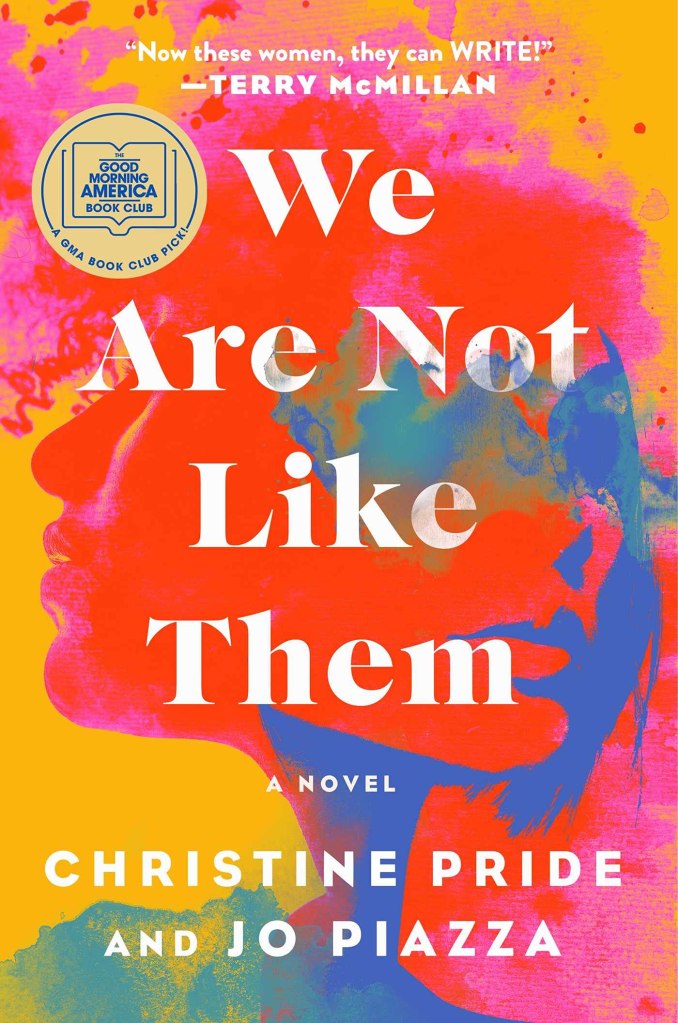
Riley and Jen grow up together in a working class Philadelphia neighborhood. Jen’s mother is neglectful and Jen leans on Riley for support. Years later, her friend pays for Jen and her husband, Kevin, to achieve their dream of having a child through IVF.
When Kevin, a cop, shoots an unarmed Black teenager, Riley is in an awkward position. A reporter for a local TV station, she finds it difficult to support Jen and her husband as the story gains national attention.
The twist here is that the book is written by two women, one Black and one white. By embodying two sides of a mixed-race friendship, we see different lenses on the current debate over racism and policing.
I wasn’t crazy about the ending, which turns one character into a martyr, but I was so engrossed up to that point that this remains one of my favorite reads of the year.
3.
Combine the tact of Sheldon Cooper, the cluelessness of Adrian Mole, and the romantic delusions of Evie Decker and you get pretty close to Eleanor Oliphant, the earnest heroine of this page-turner. An abused child with a dreary office job in Glasgow, Eleanor endures office bullying and weekly phone calls with her incarcerated mother while dreaming of romance with a local musician she has never met.
I was easily drawn into the engaging narrative voice and seemingly insurmountable challenges of the heroine. This is a fun, slightly dark story that reminded me at times of Mike Leigh’s early films. There is an unnecessary twist at the end, but even an occasional misstep doesn’t keep this from being of the year’s best reads.
2.
My first ever horror read, this well-crafted novel is made up of different pieces that don’t seem to fit until they do, walloping the reader with a chilling bit of social commentary that would make Hitchcock proud.
Eleven years before, a young girl went missing in a Washington town. In the present, a loner lives with his cat on Needless Street, visiting a therapist for meds and hosting occasional visits from his teenage daughter. The sister of the victim moves into a vacant house next door, bent on solving the case.
This is a book I couldn’t put down, except at night when I was too afraid to read it. My first book of the year, it has stuck with me even months later.
1.
It’s hard to believe I will find a better book this year, but I am up to the challenge. I hadn’t read Erdrich in over a decade and had forgotten what a master stylist she is. Her writing is pure poetry, worth the cost of admission alone. But it’s her characterization that blew me away reading this.
Tookie is an Indigenous woman who doesn’t even know her legal name. Crushing on an acquaintance, she is compelled to commit a bizarre crime that lands her in prison for sixty years. Paroled after a good lawyer finds a loophole, she takes a job at Birchbark Books in Minneapolis. When COVID hits, she is haunted by a ghost of a former client.
This is a book about Indigenous people, bookstores, the criminal justice system, and chosen communities. More than anything, it’s about how books can save a person’s life. One of the best books I have ever read.
After the murder of George Floyd in May 2020, books about racism and race relations dominated best-seller lists for the first time. The term white fragility entered the lexicon along with critical race theory and antiracism. A reckoning with history took the form of dialogue about the social obligation to accurately represent Black lives in fiction.
Since that time, several books have been published that may reflect the new focus on representation. This week I look at three new titles about Black lives and what they add to the conversation.
1.
Nella is a twenty-something editorial assistant at Wagner Books in New York. She has been tasked with reading a new title her boss has aquired, a gritty depiction of the opioid epidemic. Nella is uncomfortable with a racially stereotyped character in the manuscript and tells her boss as much. After that exchange, Nella feels ostracized for her candor. A new Black assistant joins the ranks who is savvy in ways Nella is not. Will Nella be pushed out in favor of Hazel?
From that premise, a story unfolds of the social interplay between Black and white co-workers. Hazel is skilled at code-switching, the ability to change gears depending on social cues. Nella flails, Hazel excels, and the reader is forced to consider what this says about white denial of racism. Do Black people have to deny their truths to assuage white defensiveness? The conclusions here seem to point to that.
2.
Jen and Riley grew up together in working-class Philadelphia, a friendship that endures into the present. Riley is an on-air reporter for a local TV station; Jen is expecting her first child with her cop husband. Riley is more financially stable and has paid for the IVF treatments that made the pregnancy possible.
Jen and Riley’s friendship is strained when Kevin, Jen’s husband, shoots an unarmed Black teenager. The story gets national media attention and Riley and Jen find themselves on opposing sides.
This topical story alternates between the two women, each character written by a different author. We see both sides, even if one is considerably more understandable. The authors wisely avoid the white savior stereotype, but also opt for a resolution that makes one character an ideal. I might have preferred a darker ending. I’m not sure a friendship would or even should survive something like this.
3.
This is a short memoir by a Black woman looking back on her childhood in Fort Wayne, Indiana. Her mother supports four children on a modest salary, helped by family members who live in the same apartment building. The author’s formative years are shaped by an overbearing grandmother and the awareness that her father is incarcerated for a heinous crime.
There are some powerful scenes in the book. In one, the author is living on a farm in Missouri after her mother kicks her out. Her grandmother pours gasoline on a group of snakes and they stand over them, watching them burn. “They love on each other, even when they’re dying,” her grandmother says. “Just like us.”
In another, the author visits her father in prison and gets his blessing to tell the truth in the book she’s writing, even if it hurts him. There is poignancy in this bargain, given the current representation of Black men in the media and the fact that her story might just reinforce stereotypes. I felt empathy for her dilemma.
I am encouraged to see new voices emerging on these issues. I can’t help but think, though, about a scene in The Other Black Girl in which a nearly all-white group of editors self-congratulate while launching a racist book that they think is hard-hitting truth. Are these books helping or hurting our understanding of Black lives? Time will tell.
When you hear the word epistolary, you might think of novels told through letters, such as the classic 84 Charing Cross Road or its successful knockoff The Guernsey Literary and Potato Peel Pie Society.
Books written in journal form can also be called epistolary, though. They might be seen as letters to the self, a confession of private thoughts not meant for prying eyes. Diaries are often associated with young people, the angst and uncertainty of the formative years lending themselves to navel gazing. Youth is primarily about identity formation and wishful thinking. Kids have time to ruminate in a way adults don’t.
Here are three diary novels and what I thought of them.
1.
In an early example of publishing subterfuge, this novel was marketed as the true diary of a fifteen-year-old who overdosed and died. It was not true: the author was a therapist who has written other epistolary works.
The unnamed heroine, after moving with her family to Utah, drinks a Coke at a party laced with LSD. She loves it so much that she quickly slides into a life of sex, more drugs, and delinquency. She and a friend run away to San Francisco where things get worse.
This has the feel of a heavy-handed PSA meant to terrify people. The lead is not an engaging character and I didn’t care much about her. It’s an easy, forgettable read.
2.
A better spin on teenage debauchery is Allison Burnett’s Undiscovered Gyrl. Katie Kampenfelt is a bored teenager just out of high school. While trying to figure out her next step, she works at a bookstore and blogs about her misadventures.
While no less cautionary than Go Ask Alice, the writing is witty and substantive. The danger of the anonymous Internet feels more foreboding than Alice’s San Francisco. (As a longtime resident, I get very tired of libertine stereotypes of my city.) The final moments of this story chilled me to my bones.
3.
Sue Townsend creates an unforgettable protagonist in Adrian Mole, an earnest naif growing up in England during the Thatcher years. While fending off bully Barry Kent, Adrian pines for first love Pandora and copes with life lessons. He has high hopes that will undoubtedly be dashed by the British class system.
It is impossible not to root for this kid. Townsend has captured something that every adult knows: kids don’t understand the world, so they say funny and endearing things.










 Books Smitten