The Confused Witness

There is an element of suspense called the perception plot. It involves protagonists who witness something traumatic and then come to doubt what they have seen. This could be considered a subsidiary of the unreliable narrator plot with one key distinction: while the unreliable narrator intentionally deceives, the confused witness does it unknowingly.

A.J. Finn’s The Woman in the Window is one example of this. He creates a narrative in which the reader isn’t certain what the protagonist is really seeing. Anna is a heavy drinking agorophobic who stays up late in her Morningside Heights brownstone watching film noir. One night, in a scene ripped from Rear Window, she witnesses a woman murdered in the apartment across the street. Or does she?

Until the plagiarism scandal that roiled the author, I was an unabashed fan of this book. It was well-crafted, gripping suspense with a satisfactory ending. The author further messed with minds by giving a split ending, in which Anna had been right about some details but not others. That is a good way to both reward and tease readers.

In a similar vein is Penny Hancock’s A Trick of the Mind. Ellie is driving from London to the English coast for a New Year’s get together with friends. While on a dark country road, she thinks she has hit a dog and gets out to investigate. When she finds nothing, she continues on. Later that night, she is horrified to hear on the radio that a man was hit and hospitalized around that time and in that area. Could Ellie have blocked the trauma from her mind?

Until its over-the-top finale, this is a twisty, enjoyable plot that raises questions of whether we have moral obligations to those we’ve injured.

My most recent read in this area is Andrea Bartz’s The Lost Night. It combines a lot of appealing elements into a good read. Ten years ago, Lindsay was living with a group of friends in Bushwick (a section of Brooklyn) when Edie, the waifish center of the gang, shot herself. The trauma of this event caused Lindsay to lose touch with the remaining others. In the present, she decides to have dinner with one of them. During the catch-up, Sarah and Lindsay have noticably different memories of what happened in the hours before the suicide. This pushes Lindsay to investigate and come to terms with what happened to their friend.

Bartz smartly uses technology to fill in the gaps of Lindsay’s memory. With the help of a pregnant techie friend, Lindsay pulls up deleted emails and flip phone videos to recreate Edie’s final hours. In doing so, she discovers that she has in fact blocked out certain unpleasant truths.

The Lost Night has an edgy, nihilistic tone that reminded me of Gillian Flynn’s darkest work. She has some insights into friendship and the kind of angst that accompanies the adulting years. If you don’t have time for it, I hear that Mila Kunis will be starring in the movie version.

The Art of the Overshare

The best memoirs have the appeal of a night out with a dazzling raconteur. Good storytellers have natural editing skills: they understand that there is an arc to a narrative – foundation, tension, payoff – and they leave out the details that don’t serve it. Not everyone can pull this off, of course. Unlike its fraternal twin the autobiography, a memoir is supposed to focus on a season of life, not a chronological life review. This narrow focus can result in some awkward oversharing.

Years ago, my book club read A Round-heeled Woman by Jane Juska. It had an intriguing premise: a seventy-year-old woman placed a personal ad and wrote about her late life sexual escapades. At a certain point, though, the author began revealing cringe-worthy thoughts about how these experiences boosted her physical self-confidence. In one memorable scene, she strutted around her living room, half-naked under a bulky sweater, and admired her body in a full-length mirror. What was meant as a reflection on empowerment came across as painful vanity.

So does it follow that memoirists should hold back a bit on the private revelations? I’m not sure it’s that simple. In Kiese Laymon’s Heavy there is a moment when the author makes a surprisingly effective overshare. While in a friend’s kitchen, he takes a swig of blue cheese dressing from the bottle. Although my reaction was discomfort, it was an effective choice that underscored the chronic poverty he was facing at the time.

In a slightly different category is Lisa Taddeo’s Three Women. It is neither memoir nor autobiography but instead a nonfiction narrative. The author interviewed three subjects – Maggie, Lina, and Sloane – and proffers a detached ethnography of the women’s romantic lives. While the individual stories are interesting, the author’s clinical distance sets a strange tone. Her idiosyncratic style also left me cold. (Sample sentence: So he took a position as a courier at a hospital, hallwaying around interdepartmental mail, manila envelopes with red string.) In the end it felt like a proxy overshare. I wonder what the three subjects think of it.

Girl, Revisited

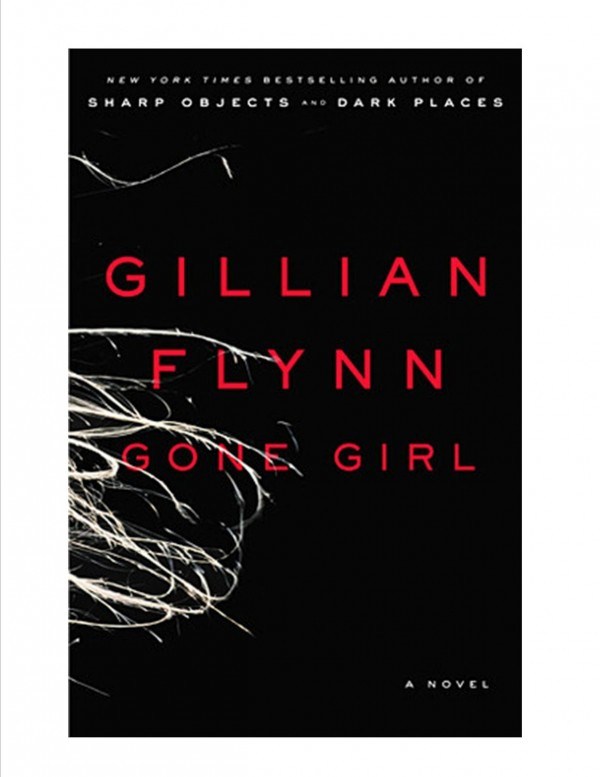
One of the greatest disappointments of my reading life involves Gillian Flynn’s Gone Girl. Back in 2013, curious about this hot new title that I hadn’t yet started, I perused the Amazon reviews, unconcerned about spoiler warnings. Because of my impetuosity, I will never experience the pleasure of reading this seminal work without knowing beforehand its shocking, game-changing twist. Mistake made, lesson learned.

If you haven’t read this book (or seen the 2014 movie version), you have probably seen it referenced. It is one of those literary phenoms that launches a plethora of imitators. Many fall short of the bar. So what does this book have that so many others do not? I recently re-read it in an attempt to understand. Here is what I uncovered.

  1. The story is a finger-on-the pulse social satire. Long before Trump talked about American carnage, there was Gillian Flynn illustrating it. Nick and Amy’s idyllic life is shattered by the same forces that gave rise to MAGA and the Bernie Bros. Carthage, MO, a small Midwestern town where Nick and Amy are forced to move, has been ruined by online retailers and tech forces. A group of homeless called the Blue Book Men (named for the local shuttered factory which used to produce exam booklets) wander the streets and camp out at the deserted former mall. When Amy goes missing, opioid abuse is an early police theory. Considering this was published in 2012, her insight is impressive.

2. The famous twist is hidden in plain sight. As the novel opens, Amy and Nick are celebrating their five-year wedding anniversary. We learn that every year on this day, Amy creates a list of clues that Nick must solve to eventually reach his gift. While clever in its own right (the first clue leads to a pair of Amy’s panties in Nick’s office; we later learn he is cheating on Amy with his student) it also sets up the inevitability that Amy is playing a game with Nick.

3. It’s a suspense story, but it’s not just a suspense story. In addition to meeting the requirements of the genre, the book is also an insightful look at male-female relationships. If you took the genre aspects out, you would be reading decent literary fiction.

4. Gillian Flynn is a good stylist. Even without her considerable strengths at plotting, she has some good turns of phrase. Look at all she does with this early introduction to her main character: Carmen, a newish friend – semi-friend, barely friend, the kind of friend you can’t cancel on – has talked me into going out to Brooklyn, to one of her writers’ parties. Now, I like a writer party, I like writers, I am the child of writers, I am a writer.

5. Finally , the brilliant opening line – when I think of my wife, I always think of her head – sets the whole thing up.

Stepford Fantasies

I read a lot in the women’s suspense subgenre, searching perpetually for the next satisfying story. Broadly speaking, women’s suspense fiction involves a female protagonist experiencing escalating tension that arises from some kind of uncertainty. Sometimes murder or the hint of it is central to the plot, but not always. Infidelity, domestic violence, and infertility play a more central role in the plot than in the general suspense genre.

It’s never difficult to find new titles in this category. I have read over fifty without hitting the same author twice. They beckon with shiny blurbs comparing their wares to Alfred Hitchcock and Gillian Flynn. Often the praise goes something like this, “A high-octane thrill ride! Buckle your seat belt. You’ll never see the final twist coming!”

The best of them, of course, deliver on this promise. I read The Woman in the Window over a single Sunday. I was so enthralled by The Wife Between Us that I kept stealing away from my nephew’s football game to read snippets here and there. There are others that absorbed me just as much: The Silent Wife, Sometimes I Lie, What Was Mine. It is a genuine pleasure to be held captive by a narrative.

Alas, there is also a tendency in this subgenre to peddle in cheap misogyny. Authors often take the easy way out by engaging in crass female stereotypes. As a seasoned reader of this genre, I have seen women sold out more times than I can count.

Knowing all of this, I approached Tarryn Fisher’s The Wives with some trepidation. The basic premise was a flashing warning sign. It was the #1 book in the country last week, though, and I just couldn’t resist the thrill ride.

The narrator calls herself Thursday. She is a nurse in Seattle who drinks Coke for breakfast and was primed for marriage by an antifeminist mother. At 28, Thursday is madly in love with her husband Seth. The problem is that, due to his Mormon upbringing, Seth insists on having two other wives. This isn’t Big Love, where the sister wives all live in adjacent property and help raise each other’s kids. Instead, Seth commutes between Seattle and Portland spending parts of each week with different women. They know of each other but they don’t know each other.

From this intriguing premise, the plot takes flight. There are twists and turns that cause the reader to question everything they know. A central dilemma is revealed at the two-thirds point and it’s quite clever.

The pacing is breakneck. I didn’t want to get up from my chair until I clicked the last puzzle piece in place. There was a stretch towards the end where I thought I had found another one of those rare, completely satisfying reads. My hopes were dashed, though, by the final sequence in which the author tries a final twist that causes the whole structure to collapse. Why is it that authors so often fall back on this kind of tired misogyny? Women deserve heroines whose identities are not solely dependent on male approval and attention. This particular author had a chance to write a plausible narrative that does not hinge on women fighting over men. And she blew it by trading in on some of the worst stereotypes of women.

Women deserve better than this.

All’s Not Well

There is an undeniable appeal to stories that end well. Fiction has been described as life minus the boring parts, but it often is missing the unfair moments as well. Likeable protagonists end their trials on an upnote, any hint of trouble faded from the reader’s mind. The thwarted couple are reunited, the anguished soul is at peace, the hero is at rest.

But what of the characters whose stories end badly? It’s easy to forget in the age of the romcom that many of the greatest romantic stories end tragically. Rose and Jack are permanently parted, Robert and Francesca’s encounter lasts only a few days, and Scarlett is left alone at her front door.

Jennifer Wright puts her own spin on this topic in It Ended Badly. She handpicks thirteen gruesome stories of love gone wrong. She takes quantum leaps through history – everyone from Anne Bolelyn to Oscar Wilde – and examines the dark side of romance.

The stories are more or less chronological, starting with ancient Rome, moving into the middle ages and ending up in the mid twentieth century. The early chapters are all straight out of Game of Thrones. Nero killed his pregnant wife and then hired a lookalike teenage boy to dress up as her, Eleanor of Aquitaine conspired with her ex-husband to overthrow Henry the second (father of eight of her children), and we all know how things ended for Ms. Boleyn.

Later stories are less bloody but no less sad. Oscar Wilde went to hard labor prison for being gay (then a punishable crime) and never fully recovered. Norman Mailer stabbed his wife and then, bizarrely, gained the sympathy of the literati. And Eddie Fisher pulled a gun on Elizabeth Taylor when he learned she was unfaithful.

In some ways, this book is a chronicle of domestic violence. As such, I am not sure that the author’s tone is merited. She affects a jokey, “Amiright, girlfriend?” persona that sometimes clashes with the serious subject matter. She ends on an optimistic note (look how far we’ve come!) but even that underscores the peculiar premise of this project. These are very sad stories and the author can’t seem to settle on a point that connects them all. As individual chapters, the book is engaging but the overall theme needs some work. I’m not sure it’s fair to compare arranged dynastic marriages to modern ones and I’m not sure there is any less domestic violence in today’s world. And should any of us be feeling comparatively superior because our situations are brighter?

Nanny-cam

There is a distinct pleasure to discovering an original voice. You pick up a book and suddenly you’re in an altered frame of mind because the author has done the hard work of articulating something in a new way.

Kiley Reid is the proverbial fresh take. Her novel Such a Fun Age takes a topical subject and puts a new spin on it. Emira is a young Temple University graduate working part-time for Alix, an influencer. One night while Emira is babysitting Alix’s small daughter, an unpleasant encounter happens at the local market. It’s the kind that you have probably seen in videos on your social media feeds, a handheld camera capturing white people overreacting to innocuous behavior by people of color. The plot point itself is not new, but it’s what Reid does with it that makes the book such a pleasure. The story that unfolds from that initial setup is surprising in many ways.

Early on, a character is introduced who seems at first glance to be minor bystander, a woke Good Samaritan who films Emira’s encounter with a security guard. Later when Emira runs into him on the subway, the story takes a different turn. And, by chapter’s end, there is a twist that puts everything we know about him in doubt.

The characterization isn’t perfect and some aspects of Alix’s frenzied life are trite, but overall this is thoughtful social commentary. Destined for many “Best of 2020” lists, I’m sure.

Fluff Appeal

There is a bookstore in London that shelves all its books by region. Instead of finding a guide to the American South in the travel section, for example, you will find it next to works of fiction by Harper Lee and Margaret Mitchell. This is my kind of place. When I select a new book, I ask myself, “Where do I feel like going today?” Often the answer to this is geographic: an English village, a neighborhood in Brooklyn, a Sydney suburb.

Other times it is less about physical location than a mood that a place evokes. Years ago I lived in NY but I haven’t been back since before the towers fell. These days, for a hit of nostalgia, I read a lot of books set there. Other times I choose a title because I feel like being somewhere foreign. Everything I know about Iran has come from a handful of books set there. (Persepolis; Not Without My Daughter) I love reading travel memoirs to get a sense of countries I will never get to. I have never forgotten the Africa depicted in The Shadow of the Sun: a place with insects the size of snapping turtles and changing light that dropped like a curtain unexpectedly.

I don’t know if all people read this way, but I find that my selections have a psychological component. The New Year is always a bit depressing so I like to start with something transporting. It helps if it’s light as well. And so I found myself selecting How to Find Love In A Bookshop as my first read of 2020. It is set in a charming English village near Oxford, the type with a high street filled with independent businesses like a cheese shop and a butcher and framed on either end by a bridge and a church. The locals, about twenty of whom appear in the story, are likeable but imperfect. The protagonist, Emilia, inherits a bookstore after her father dies. She faces financial and personal hardships while the villagers stop in for books to distract themselves from their problems. There is the shy teacher who runs a restaurant out of her cottage, a matron with a secret, and the handsome local trying to make things right with his estranged family.

This is one of those books that delivers what it promises: an escape to a cinematic world where any setback is just a pause before a change for the better. I enjoyed it without believing it. Life is, of course, much more complicated than a series of movie moments. There isn’t someone for everyone and all things don’t turn out for the best. Every once in a while, I read books like this to forget that.

Manners Maketh Man

Over the years, I have attended a lot of book signings. Often it’s as a fan, but I have been to others as a professional courtesy. While the vast majority were unremarkable, I have also witnessed some puzzling behavior from writers.

When I was nineteen, I spent a summer on the Upper East Side of Manhattan. At the time (and I hope still) there were several charming independent bookshops near the park. One night I attended a signing for an up-and-coming author, who had just published an acclaimed book of short stories. When I offered my copy to her and said, “Sign it to Alex” she responded, “We don’t know each other so I can’t sign it to ‘Alex.’ Give me your last name.” She then signed my book to my full name and I moved along. I remember being taken aback by this encounter. What did it matter how the book was signed? Her self-importance rankled. (I later learned that she was dating JFK Jr at the time, so this may have been my first ever encounter with a blue blood.)

There have been other moments like that one. I stopped reading the books of a famous Bay Area author after I saw numerous abrasive encounters between her and unsuspecting fans. One of my favorite authors was overtly rude to me after I told him how much his book series had influenced my life. (I chose to believe he was just having a senior moment.) But nothing beats a book signing a friend and I went to a few years ago. The author was not well-known, but we had both read and loved his most recent work so we gamely met up. At Q & A time, an audience member asked him how he felt about his book tour. He responded, “Oh, I hate doing these things. The best part of my day is the hotel gym.”

So what can be made of these encounters? Why do some writers act like suitors on a first date, put off by outward displays of eagerness? Perhaps it is true that many writers are introverts not suited to diplomatic tasks. Or maybe there is something about the book signing that creates a feeling of awkward exposure, like a crowd of strangers have read your diary and now you have to face them.

Have you ever had a strange experience with a favorite author? Tell me about it in the comments section.

A New Year In Books

Like most avid readers, I have an impressive TBR pile. This has only been exacerbated since the advent of e-readers, of which I am an unabashed fan. My Kindle currently holds hundreds of books, about half of which I haven’t finished. By contrast, my physical bookshelves hold about 150 titles, most of which I have completed. (Why is it that I have read more of the cloth books than the electronic ones? I would guess it proves the out of sight, out of mind theory. It’s easy to forget the content on my Kindle.) I pretty regularly scroll through the e-stacks, surprised that I own a copy of certain works. One of my favorite mental games is trying to figure out what compelled me to buy some of these books. I have a thick tome called The Portable Atheist. What made me to think I would relinquish 14 hours of my life (530 pages) to this topic? I was also being fanciful when I purchased a copy of The Mueller Report (736 pages). I did get about 25% of the way into it, but I think it’s fair to say it is the opposite of a desert island read. Other, longer books I’m more certain I will get to someday. I have been meaning to read The Poisonwood Bible by Kingsolver for fifteen years. You can double that number for Rebecca by du Maurier. Nothing beats The Winthrop Woman by Anya Seton. A friend of mine recommended it to me in middle school. I still haven’t gotten to it, but all three of these titles seem more likely than some of the others. This new year, 2020, I plan to tackle my real and electronic stacks of books. In fact, the goal is to see how long I can go without buying a new book. (My guess is 45 days.) In the meantime, I’ve got plenty already to distract me. First up: How to Find Love In A Bookshop by Veronica Henry.