Ready to Retire

Writers borrow heavily from each other. There is nothing new under the sun, after all. There is a tipping point, though, where some language and ideas are overused. I notice this especially in the suspense category. So in the interest of keeping things sparkly, I have compiled a watch list of sorts. The ideas here haven’t reached cliche status yet, but could stand to be taken out of circulation for a while.

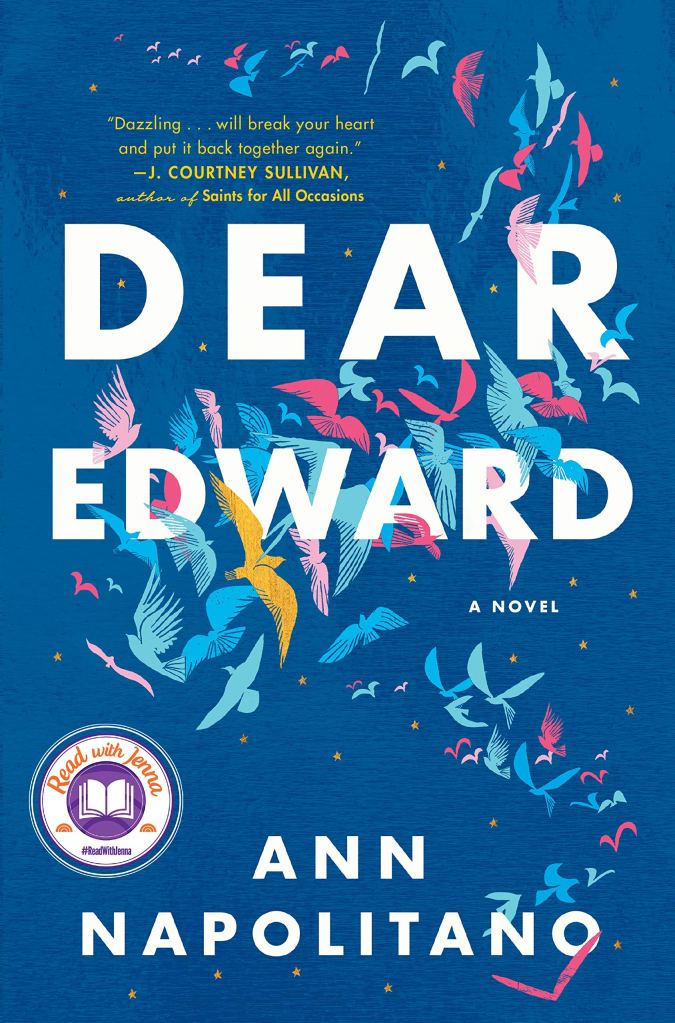
  1. She looked at him as if seeing him for the first time.” I don’t know who gets the original credit for this line. It’s not a bad turn of phrase. At the point where I have seen it in three books in under a year, though, it’s time to refresh. (The Wife Between Us, The Wives, and Dear Edward are the offenders.)
  2. “It was hard to tell where he ended and I began.” I recently saw the movie Liar, Liar for the first time and was surprised to hear this line used. I associate it with fiction. It’s time to create some emotional space and ditch it. (The Lying Game is where I saw it most recently.)
  3. Her arms pinwheeled as she fell…” Not a bad Hitchcockian image, but it is becoming overused.

As for plotting, let’s examine:

  1. I have read three books in the last few years in which the book ends with an epilogue in which the female protagonist is pregnant by the psycho who terrorized her in the book. I wonder if this is an homage to Polanski’s famous final scene in which Mia Farrow sings a lullaby to Satan’s spawn in Rosemary’s Baby.
  2. I have also read three recent books in which the husband is presented as the most likely culprit only to turn out that his wife did it. Are the authors Scott Turow fans? I first saw this in Presumed Innocent.
  3. I have also read three books where someone close to the narrator misrepresents themselves. In the era of Breaking Bad, I’m not sure it’s hugely surprising.

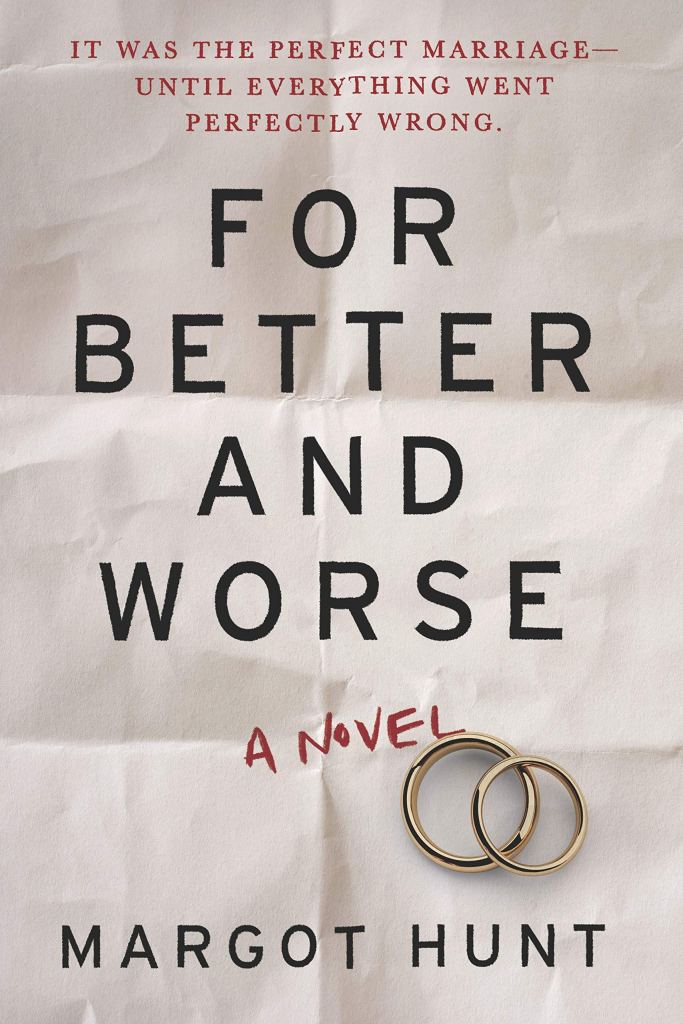
This week’s book is good example of how to sidestep all this. The first half so strongly parallels a famous, recent true crime case that it’s a genuine surprise when the story pivots at midway, essentially becoming a totally different novel.

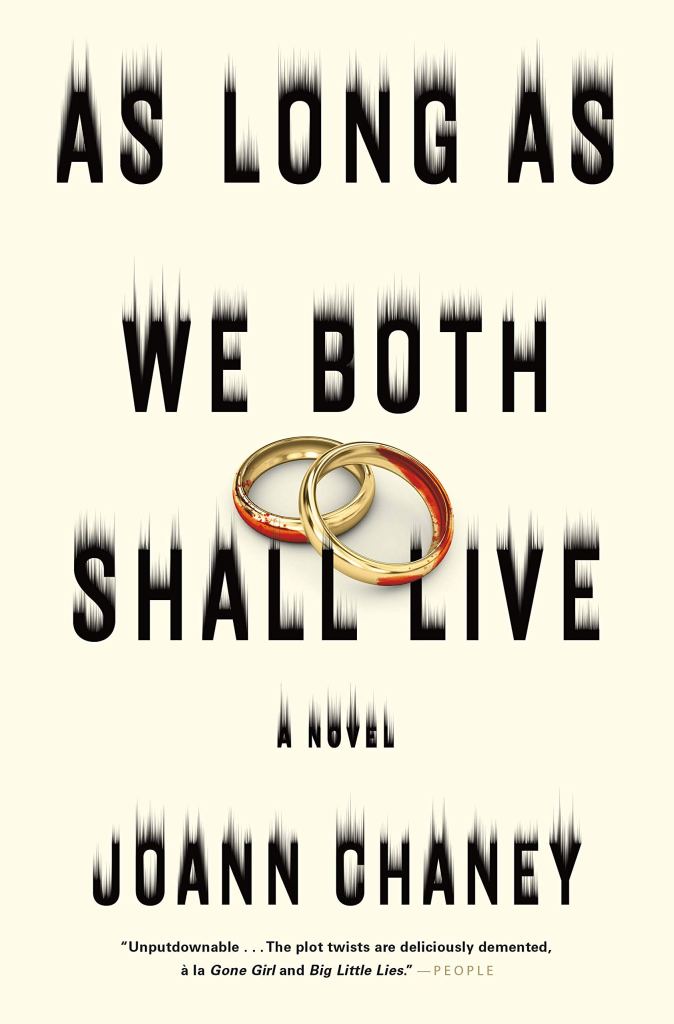
Matt Evans is a successful car dealer living with his wife in Denver. They are empty nesters with two daughters in college. One day on a hiking trip, his wife falls to her death. The reader knows something the police do not: Twenty-three years ago, Matt’s first wife died under mysterious circumstances.

The whole thing has a meta feel to it. The author skillfully plays around with readers, anticipating and then upending expectations. All of this is a gamble, though. If you figure out what she’s doing – and I think some people will – the fun is over.
The Liane Canon

Of the many reasons to read, few pull to me quite as often as the desire to break up a monotonous afternoon. There is a whole genre of books published to entertain away a boring Saturday. Perhaps because I read them regularly, I am often struck by their lack of originality. In fact I have come to think of a whole subset of my reading as the Liane Canon.

If you’re reading a book blog, you probably know who Liane is: Liane Moriarty, the Aussie phenom behind Big Little Lies. I don’t know if it’s fair to give her credit for inventing this genre, but she was the one I discovered first. In my reading, I have discovered a boatload of Liane imitators. Their plots include four essential elements which I will describe briefly.

  1. The harried protagonist. Always a white, affluent, suburban woman who is married with small children. There is usually some humor about her imperfections as a wife and mother. Sometimes there is a hint that her husband is harboring a game changing secret.
  2. The relatable dilemma. This is always centered in some kind of domestic drama. If there is a murder plot, the victim is a neighbor or relative of the protagonist. If it’s an ethical dilemma, it usually involves the kids.
  3. Yoga moms. There is often an antagonist who is a yoga enthusiast.
  4. The Rock Reveal. The heart of these stories almost always boils down to a moment when the protagonist looks under a metaphorical rock and sees something she wishes she hadn’t: murder, domestic violence, a criminal secret.

This week’s book hits most of the points on the Liane Canon. The protagonist, Nat, is a married defense lawyer living in a charming Florida tourist town. Her husband, Will, mocks her for being too uptight. He is also checking his locked phone more than Nat would like. Nat adores their son, Charlie, a fifth grader. (Maternal love is a big part of these plots, too.)

One day, scrolling through her husband’s camera, Nat sees a photo of Charlie looking troubled. This is the rock she shouldn’t look under. But what mother wouldn’t?

What unspools from there is a rather dark revenge story. The author does not properly lay the foundation for the vigilante theme, making it a bit over the top. I enjoyed the book in a trashy, time killing way. If you are looking for character-driven crime fiction, though, look elsewhere.

Learning to read

I only learned how to read a few years ago. Before that I was stuck in a contentious battle between my own particular preferences and a greater sense of obligation to read many books that I did not like, always assuming that the fault lay with me.

I’m not entirely to blame for this. I think much of academia take a shaming posture to those who don’t connect with certain great works. For me, it started in middle school. My English teacher taught from a standard curriculum that probably hadn’t changed in twenty years. We read Treasure Island, The Call of the Wild, Tom Sawyer. I hated all of them. I could not identify with the boy protagonists and the often outdoorsy themes.

At some point I internalized the idea that there were “good” books, like good foods I should be eating. This led to many years blaming myself when I didn’t enjoy certain works.

What I didn’t realize until about ten years ago was that reading is about chemistry. You click with books and authors just as you do with people. Imagine if someone forced you to spend time with someone who is not on your wavelength. I was doing this to myself every time I slogged through a book I did not appreciate.

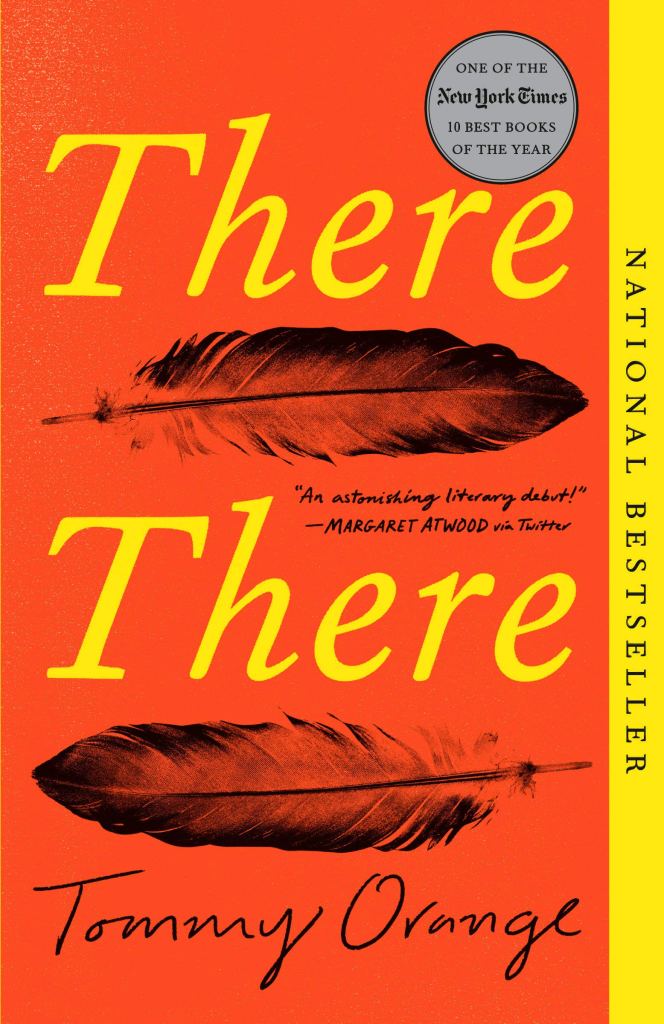
Which leads me to this week’s book, There There. After sampling a few acclaimed titles that didn’t grab me, I opened this one and felt the proverbial click. Any story about the Native experience promises to be harrowing, but I immediately trusted the narrative voice to carry me on.

This set of interconnected stories tells of twelve Native Americans with ties to Oakland. Some live there, others did at one point. Their lives reflect the many injustices their tribes have faced. Some are homeless, alcoholic, impoverished. As the stories progress, and the characters converge on a powwow, we learn of connections between them.

I was reminded a bit of Louise Erdrich’s Love Medicine, another collection of stories where it takes a bit of effort to keep everyone straight. I liked all the Oakland detail and the spare style.

The overall mood I was left with was bleakness. As one depressed housebound character says, “There is something about seeing Johnny Depp fail so badly (as Tonto) that gives me strength.”

The Death of the Handsell

A group of strangers board a flight unaware that it is doomed to crash. Before it does we learn the backstories of ten of them. No, I am not talking about the hit show Lost. Instead it is the premise of Dear Edward, my first crack at a Read with Jenna selection (Jenna being Jenna Bush Hager, former First Twin and current morning TV co-host.) It has gotten me thinking about where we get our recommendations.

Since the steady decline of independent bookstores began in the late ’90s, there has been a frequent lamentation about the death of the handsell. If you are not familiar with the term, it means simply that people buy books based on local recommendations. Your neighborhood bookseller has a reading history and a knowledge of your preferences. Local was better. This was especially true at the level of buying. A bookstore in Alameda might highlight a local author or create a window display of books based on local interest.

And it’s true that with fewer localized stores, books are being hand sold at the national level. I’ve now got Reese Witherspoon and a president’s daughter determining my book choices. I wouldn’t be surprised if these ladies have assistants who are doing most of the preselection. So to make it weirder, we have a kind of shadow bookseller whose identity is unknown.

And, yet, I am enjoying these choices for the most part. Dear Edward is not a perfect book. I think it is being slightly over hyped. But I did enjoy it.

Emily the Strange

I love to be transported by a novel, both to foreign places and unfamiliar psychological spaces. Alexis Schaitkin’s Saint X does both. An affluent couple take their two daughters for a New Year’s vacation to a tropical island. The older girl, a Princeton first year, attracts the attention of many men, both locals and visitors to the resort. By week’s end, she has vanished.

If this sounds familiar, I don’t think that’s a coincidence. One of the novel’s themes is the casual exploitation that occurs when photogenic young women are murdered. The American press crassly profits from the tragedy and the island officials obfuscate so no one is ever charged. Schaitkin does a nice job showing the impact of both sensationalism and hagiography. As the person Alison really was is lost to speculation, her younger sister says, “I had to find a way to understand how truth and untruth make each other.”

In the present, the victim’s sister is in her twenties. She has changed her name to Emily and is living a strange double life. Working for a publisher, she becomes obsessed with her sister’s death. The lengths she goes to provide some of the best parts of the novel. Another strength is the vivid depiction of her Brooklyn neighborhood. I found myself Googling words like buss-up shut and accra to understand what she was eating. (They’re torn flat bread and fish fritters, respectively.)

There were other parts that didn’t work as well. I could have done without the occasional island dialect (“To hell with she. You don’t need no mum.”) and I think the frequent changes in perspective might confuse some readers. Overall, though, this was a good read. Much to appreciate.

American Publishing

A few weeks ago, on the strength of a single glowing review and numerous high profile endorsements, I bought a copy of Jeanine Cummins’ American Dirt. After I had read the first ten percent, I got curious and Googled the author. If you have heard of the book, you know happened next. A few keywords revealed a literary scandal of epic proportions. I am not here to rehash it – there are some excellent blogs that have already done that. But it has got me thinking about my own experiences with the publishing industry.

I am old enough to remember the gilded age before publishing was taken over by the bottom line mentality. All of that changed with the mid-eighties death of the midlist author. When I worked in publishing in the late ’90s, the mantra was “fewer titles, more sales” a profitable but obnoxious business plan that in some ways lay the foundation for the brand marketing that is so common today. To sell a lot of books, the author became a more central part of the publicity. It wasn’t enough to have a good concept, the author had to be interesting as well. In some ways, publishing paved the way for reality TV, which perfected the “solid talent, no story” rejection.

I have some experience with this. A student of mine got to the second round of a TV singing competition (let’s call it Swiss Idol) before being rejected because her biography wasn’t dramatic enough. This happens in the publishing world, too. Years ago, I knew a talented fiction writer who was going through round after round of crushing rejections from the big houses. What she heard over and over was that high quality fiction doesn’t sell. At the same time, I knew a much more modestly skilled woman who got a multi-book deal because she had a brilliant concept that lent itself to TV rights. Today that second author is on bestseller lists while the first died unpublished.

Knowing all this, it doesn’t surprise me in the least that the industry heralded American Dirt as a literary masterpiece. It is just the latest example of how shallow marketing lifts up mediocrity.

Gold Dust Women

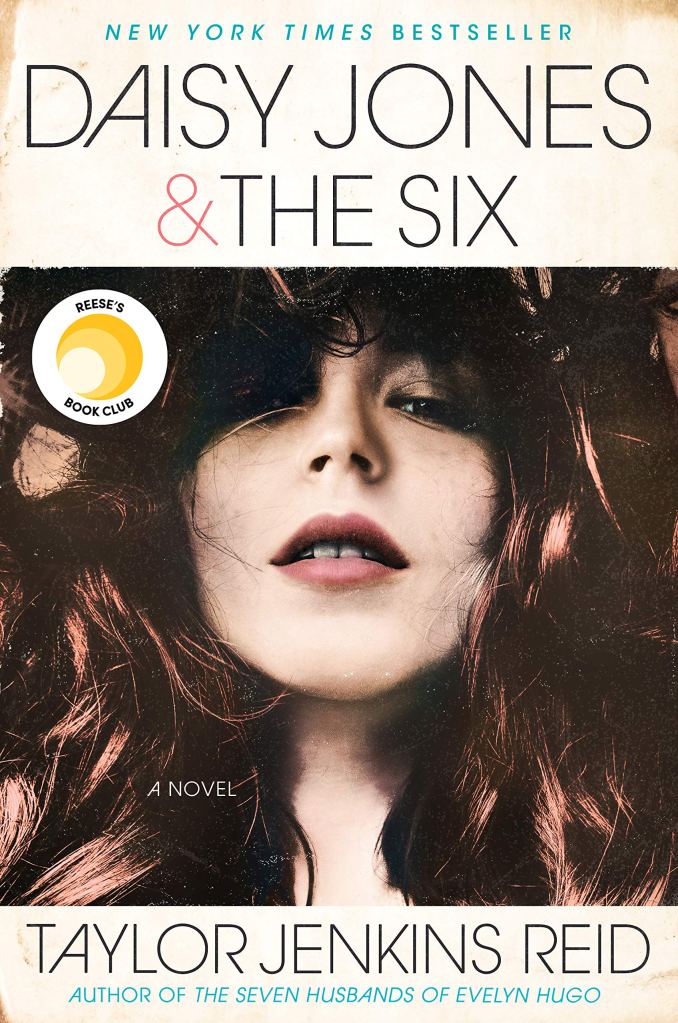
The collective publishing rejection heap must be piled high with fiction efforts that fail to execute what Taylor Jenkins Reid achieves in Daisy Jones and the Six. In an industry that strives for original voices, there is no story more predictable than that of a rock star. If you’ve ever seen Behind the Music, you know what I am talking about. Every narrative starts with a child born to impossible odds (poverty, prejudice, fractured family) who catapults to improbable stardom based on their unique drive and/or talent. They are then tested by a standard trajectory of industry treachery and indulgence. Many die young. What lives on, always, is their music.

What is remarkable about Daisy Jones and the Six is that it takes many of those basic ingredients and creates something that feels fresh. Daisy Jones and her band mates resemble Fleetwood Mac. There are some key differences (I won’t spoil the fun by saying what they are) but you would be forgiven for missing them. Daisy Jones is also very much the archetype of the underappreciated female songwriter. And the LA setting, with its famous music venues and rustic bohemian communities, is also familiar.

And, yet, the story is completely riveting. I sat down to check it out and didn’t get up from my seat for another four hours. I was hard-pressed at times to wrap my mind around the fact that these were fictional characters. I can’t wait for the TV production which will bring these songs to life. And I can’t wait to see these characters embodied by actors.

Highly recommended.

Reese’s Pieces

I currently have at least four Reese Witherspoon book club picks on my Kindle. The only one I’ve finished is Ruth Ware’s The Lying Game. It was a logical first choice as I had read the author’s previous The Woman in Cabin 10, a derivative but enjoyable suspense story.

What exactly compelled Reese Witherspoon to start a book club? You’d have to ask her. I would imagine it was a smart decision related to brand marketing. Like most actresses over forty, Reese is working less than she would like to. If people begin to associate Reese with their favorite reads, they are that much more likely to see the TV productions based on the books and to begin to associate her with their entertainment choices. It’s really quite savvy of her.

There is risk in all this, too. What if you don’t like her book choices? You could begin to negatively associate unsatisfying reading experiences with an actress’s productions.

I thought about this while I was reading The Lying Game. It has a strong premise that will lend itself to television. Four teenage girls were expelled from an English boarding school after the father of one of them was found with inappropriate drawings. In the present, human bones have washed up on a beach near the school. The girls, now women, return to the area to face the past.

What follows is a story with some Gothic twists. I can imagine that a well cast production will bring this setting and these characters to life. The book itself didn’t do much for me. For one thing, it was way too long. I also didn’t strongly connect to any of characters. “It was hard to tell where my flesh ended and Thea’s and Luc’s began,” the narrator says at one point. This is a cliche that I have read one too many times in books like this.

Dear Diary

Have you ever read a novel written in diary form? By my estimate, there aren’t too many of them. It’s a peculiar choice for an author, an offshoot of the epistolary novel. Instead of writing to another, the protagonist is writing to himself. And how does it serve the story to frame the events this way? I will look at three reasons writers do this.

One of the best examples of this conceit is Sue Townsend’s The Secret Diary of Adrian Mole. It’s a book series which begins when the protagonist is nearly fourteen, finding his way in class-conscious Thatcherite England. I first discovered these books when I was a bit older than Adrian, studying for a semester in Germany when I was seventeen. I could relate to Adrian’s earnest optimism and painfully awkward yearnings. The reader slowly figures out what Adrian does not, which is that it will be nearly impossible for him to achieve his romantic and social goals. He has been born into a rigid caste system from which a love of books and learning is his only escape.

This series wouldn’t work nearly as well if it were written in the third person. A key part of its charm is Adrian’s lack of self-awareness and the reader being in on that. He has a naive faith in equity that will be dashed again and again. The reader can see what he can’t. It’s heartbreaking.

So shading a character is one reason to write in diary format. Another reason to do it is to dupe the reader. I have written before about Gillian Flynn’s Gone Girl. In the first section of the novel, the narrative shifts back and forth from Nick’s first-person to diary excerpts from his missing wife. This is an effective choice for two reasons. First, the reader gets to know Amy’s backstory, which makes her more than just an absent crime victim. Second, it’s a creative way to show flashbacks of Nick and Amy’s courtship and early marriage. And then, because Gillian Flynn is a first-rate writer, she uses the diary format to upend the narrative. Turns out Amy wrote the semi-fictional entries to frame Nick. Gotcha!

In a similar vein, Alice Feeney’s Sometimes I Lie uses a diary to trick the reader. Amber is thirty-five, married to Paul, and in a coma. While she is unconscious, we get a narrative from her about the events leading up to the car accident which put her there. Included in it are journals from when she was a teenager. In another brilliant twist, the reader learns that the police have made a mistake. The journal they uncovered does not belong to Amber but to another character close to her. The use of a nickname in the entries has thrown everyone off.

While not a common conceit, journal entries in fiction can strengthen both characterization and plot. In the three examples I offer, the narrative wouldn’t work as well if written in a more standard format.

Fly Girls

What is one job you are certain you would be bad at? For me, the answer is easy: flight attendant. I don’t like to fly, I would look terrible in a uniform, and I have no idea how they stay so fresh looking over long hauls. Somehow I still associate glamour with the job, a holdover from the “just below Hollywood standards” days of Pan Am stewardesses that I have seen depicted in period dramas. I had never thought much about the mechanics of the job before I read Heather Poole’s Cruising Attitude.

First, some fun facts. Vladimir Putin and Benjamin Netanyahu both married flight attendants. One large airplane, the DC10, has an elevator. (It leads to a galley.) And the length of a flight attendant’s skirt can indicate her seniority.

How does a person get to this place? Turns out it’s not so simple. Ninety-six percent of applicants never get a callback for a flight attendant job. In 2010, Delta received ten thousand applications for a thousand job openings. Those that do are sent to training (nicknamed the charm farm) where they learn how to be presentable. Their clothes, handbags, and rollerbags are all regulation and deducted from their first paychecks.

Poole recounts the class of sixty she trained with. Day after day, they received medical and weapons training, memorized the complex floor plans for different aircraft, and learned how to quickly serve food and beverages. This last one can be surprisingly stressful given the time constraints of short flights.

Once trained (many candidates are eliminated before graduation) the beginning class must navigate their reserve years, in which they are often called on with a moment’s notice to assist other cabin crews. Poole vividly depicts a crash pad in Queens shared by dozens of crew. Sleeping in bunk beds and showering in ten-minute shifts, they had to race off to find their flight with the aid of the local taxi service.

This entertaining memoir gave me a whole new appreciation for this job. The next time I fly, I will make a point to thank my crew. What I won’t do is address them by name. According to the author, this is always a telltale sign that the passenger wants a favor.