The Problem With Book Clubs

I have been a part of three book clubs and have yet to find one that seemed like a perfect fit. I judge myself for this. In my darkest moments I wonder if my participation comes across like Meg Ryan in that double date scene in When Harry Met Sally when she turns away from Bruno Kirby, after he has waxed rhapsodic for a few moments about his favorite author, and says “Let’s just say I’m not a big fan of Jimmy Breslin.”

Reading is highly personal. To immerse oneself in a book is a commitment of time. If the book grabs you, it is a great pleasure to be held captive by it. If it doesn’t, it can be like being trapped in an endless, boring conversation. Given the intimate nature, I think it’s only natural to be rankled a bit when others don’t see things your way.

To make matters worse, the clubs I have belonged to tended to be hosted by the person who selected the title for that month. What happens to normal etiquette under these circumstances? Is saying you didn’t like the book the hostess selected the equivalent of pushing your food around the plate?

Of course the whole point of a book club is to discuss the story’s merits and you can’t do it effectively without stepping on a few toes. I envy those who can disagree diplomatically and not let it affect how they view others.

Finally, can we make it a universal law that you can only belong to a book club if you make an effort to read the damn book? I must thank Noah Baumbach for creating a hilarious scene in his movie Kicking and Screaming that illustrates the absurdity of trying to talk about a book you haven’t read. Discussions work best when everyone participates on equal ground.

For these and other reasons, I have dropped out of book clubs with a sense of relief. That’s not to say that I don’t miss certain aspects of them, though. I have discovered many good books through my participation.

And so I close with a list of five excellent books I probably never would have read without book clubs.

1.

This was a crowd-pleaser and led to a decent conversation.

2.
You’ve probably never heard of this book. I don’t know why it never found an audience. It is an engrossing and beautifully written story. Completely original, too.

3.

Funny, I do not remember anything about the discussion about this book. It’s a beautifully written, transporting story.

4.

I will never forget the experience of this book. The author is a journalist who spent years in Africa. His descripions of third world conditions and savanna life just put you there.

5.
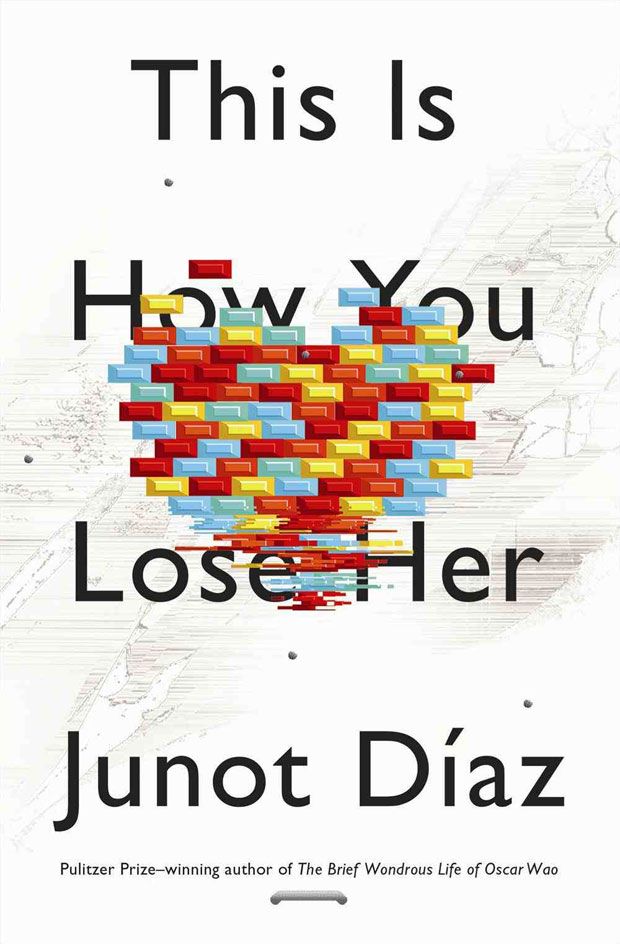
I absolutely loved the vivid original voice of a man doomed by his own cluelessness to romantic misery.

Siding

The first rule of reading memoir is to expect an unreliable narrator. Even the most gifted writer can be forgiven for some manner of curation. Memoirists also face potential blowback from their supporting players. Imagine how anyone might feel if their marriage, parenting, or friendship skills were laid bare in someone else’s book.

I think it’s fair to say that truth might be more easily found in fiction than memoir. It’s much easier to get away with a thin veil and a composite when you can also claim you made the whole thing up.

I still love the memoir genre, though, and read it regularly. It isn’t all that often that I have the curiosity to read both sides of a dispute. However, the Woody and Mia story is one that I find endlessly fascinating. What emerges when you read both books in short order?

  1. Doomed Love Even with all their eventual rancor, neither disputes that the beginning was rosy. Woody talks about his starry-eyed admiration for both Frank Sinatra and Andre Previn and how inadequate he felt when he first started dating Mia. She was the superstar while he was just a working-class Brooklyn boy. Mia is similarly glowy, describing a courtship of Bach and e.e. cummings that sounds like something straight out of Hannah and her Sisters.
  2. The Satchel Effect Both acknowledge that their relationship irretrievably broke down around the time Mia got unexpectedly pregnant. Woody’s take on this is misogynistic, claiming that Mia trapped him with the pregnancy and tossed him aside. He even calls the fetus “a megaball in utero.” It does not occur to him that Mia might have been exhausted with three young ones and that might explain her distance. For her part, Mia cautions the reader that Woody is nothing like the lovable neurotic in his movies. He is often cold to her and her six older children and becomes aloof right around the time Satchel is conceived.

3. Hannah Hate Curiously, neither has much good to say about Hannah and her Sisters, which is arguably their most popular collaboration. The both love The Purple Rose of Cairo, though.

The Most List

I don’t often read the same author twice. With so much talent out there, I like to diversify and seek out fresh voices. There are a few exceptions, though.

Here is the Most List: authors I have read more than ten times.

  1. Anne Tyler

Every reader has that book that changed everything. For me it was The Accidental Tourist. I grew up in a family of readers. I browsed the stacks of the local library. The covers beckoned: I can still remember the fear I felt looking at the cover of Go Ask Alice and the interior design of The Amityville Horror, where flies on the chapter page signalled how scary the proceeding events would be.

Nothing held my attention, though, until I discovered the novels of Anne Tyler. What was it about these stories of quirky people facing midlife crises that so enthralled me? I think it was the charm of the setting and characters. There is something old-fashioned about her sensibility, with a thin gauze over even dark topics. There is one book, Earthly Possessions, that features a depressed woman who runs off with a bank robber. Another, A Slipping-Down Life, has an unbalanced fan marrying her favorite musician. In another writer’s hands, these would be dark stories. But Anne Tyler somehow makes it all seem innocuous, like something you would see on Nick at Night.

2. Armistead Maupin

Shortly after I burned through half a dozen Anne Tyler books, I found my next addiction. The Tales of the City series had the same quirky charm of Anne Tyler but a more adult sensibility. It was like moving from PG to R content.

A six-volume giddy soap opera, the most irresistible quality is its tone: a raucous, joyous celebration of ’70s San Francisco. The volumes are full of inside jokes (one character, an heiress, ends up in Jonestown) and a feeling of community.

Since then, I have continued to read anything that Maupin publishes. I have also now lived for twenty-three years just down the hill from the real Barbary Lane. At some point I realized that his vision of San Francisco is pure romanticism. Good writers can sell the idea that fantasy is real. He certainly did that for me.

3. Harlan Coben

The latest author to entice me into repeat business is Harlan Coben. My sister handed off her paperback copy of Gone for Good in 2003 and I have been hooked ever since. If there is a better suspense writer out there, I haven’t found them.

What is it about him? For one, he is a master of premise. In the opening scene of Gone for Good, sitting on his mother’s deathbed, the protagonist discovers that his long presumed dead brother may be alive. In Tell No One, the protagonist receives an email attachment with a surveillance video image of his wife on a train platform in Europe. The twist? His wife died many years ago.

There is also no one better at writing hooks. The tension builds, the twists turn, and then he hits you with a shocker. My favorite was a scene in which the protagonist, after going through a devastating loss of his wife’s pregnancy the previous year, finds a hidden credit card. On the bill, there is a charge to a company that sells fake pregnancy bellies for movie and tv productions. Is it possible his wife was never pregnant?

Alas, Coben’s popularity has also led to overproduction. I wish his greedy publisher would let him take some time off to hone his craft. The quality of recent titles had declined. Some read like second drafts of what promises to be a thrilling book. Others offer twists at the end that all but derail the narrative. Give the guy a vacation. I would be more than happy to wait a few years to see him return to form.

The Motels

What is it with horror and hotels? If you are old enough to remember Psycho and The Shining, you probably have certain built in expectations while reading. When a couple pull up for a night’s lodging, you have been conditioned to squirm a bit.

I guess it makes sense that motels represent fear in stories. In a still largely gated society, where you can stay away from people you don’t trust, motels are one of those rare spaces where you see all kinds. And to make matters worse, sleeping is a naturally vulnerable state. Mix these two together and they produce a low level tension.

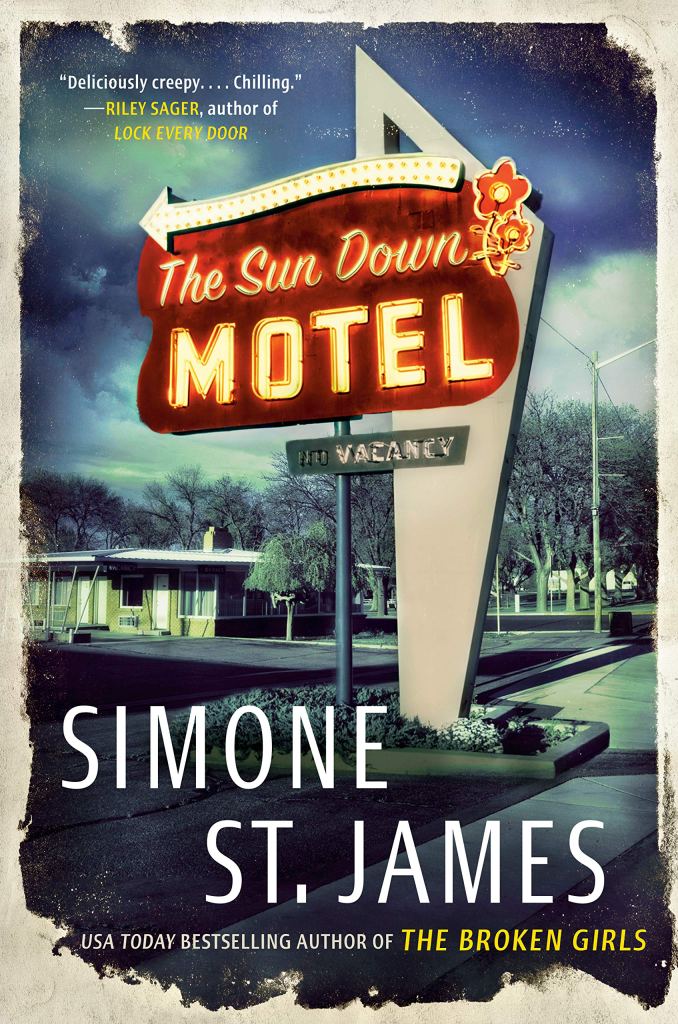
The Sun Down Motel is a recent novel that plays around with these fears. It opens in 1982 when the young night clerk disappears. Thirty-five years later her niece pulls up, determined to solve her aunt’s disappearance. She moves into her aunt’s old apartment, takes her old night shift, begins her own investigation. The otherwise unremarkable town of Fell, NY has a violent history. Several women were murdered and a local man inexplicably shot and killed his son. There are ghosts, sexist cops, and two love interests for the niece.

I have a feeling I will love the movie version of this novel. The midcentury motel, scary apparitions, and love triangle may come to life. I’m sorry to say the book didn’t quite do it for me. It may be a matter of timing: I have recently read two gripping, unputdownable novels. This one just didn’t grab me.

Listen to Me also features strange moments at a motel. A Chicago couple are driving east to visit his parents. They are in a bad place, figuratively, as the woman was recently mugged and her slow recovery is trying her husband’s patience. A heavy summer storm forces them to stop. Will the woman face her fears here? It ends with a peculiar confrontation involving some motel patrons and the couple’s dog. I enjoyed it without feeling fully satisfied. It’s the kind of book that makes you wish the author had waited a few years and done a few more revisions.

Close To #Me

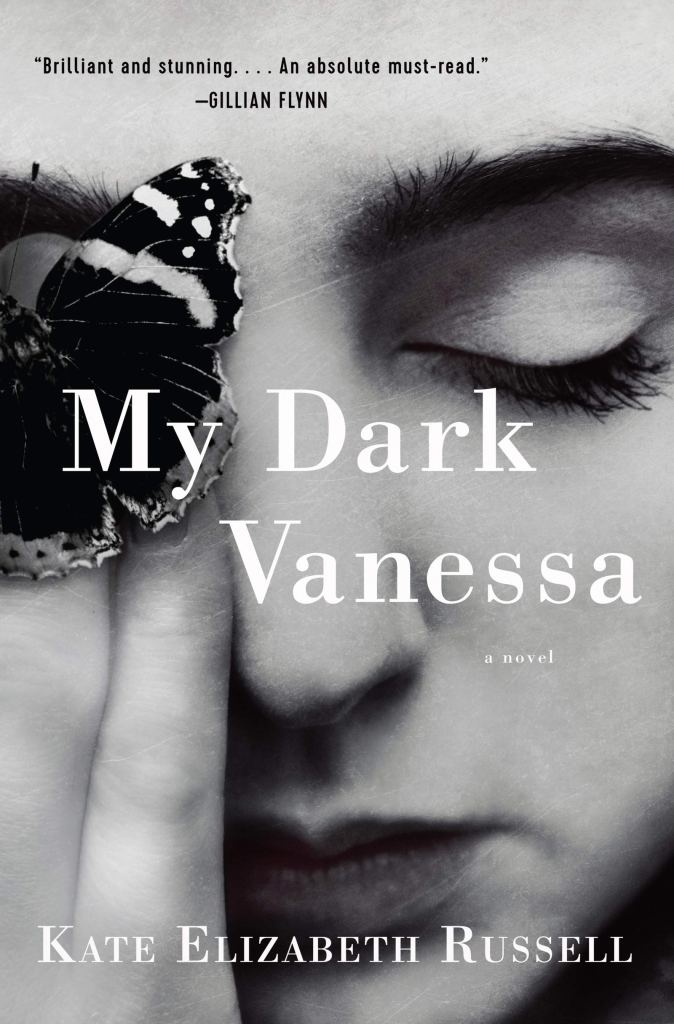
The #metoo movement has inspired a plethora of book titles, ranging from literary fiction to autobiography. The best known is Ronan Farrow’s Catch and Kill, an engrossing but repetitive account of his pursuit of sexual assault claims against Harvey Weinstein and Matt Lauer despite pushback from NBC, his then employer. A contender in the fiction realm is Kate Elizabeth Russell’s My Dark Vanessa. It is one of those books that grips you from the opening pages. I read half of it in one sitting, unable to look away.

In 1999 Vanessa and Jacob meet at a New England boarding school. She is fifteen and from a rural area nearby. He is forty-two and her English teacher. He begins by giving her books to read – Ariel, Lolita. Students notice that she stays after class. A faculty member alerts Jacob that Vanessa seems to have a crush on him.

In 2017 Vanessa works at a luxury hotel in Portland (the East Coast one). She is still a bit obsessed with a recent ex but not so much that she is out of touch with her former teacher. Jacob has bigger problems: he is facing disciplinary action after five current and former students accuse him of sexual assault.

The relationship between Jacob and Vanessa switches back and forth between the two eras. As their dynamic is revealed, the reader begins to understand something about the peculiar complicity that seems to accompany these situations. Why do people protect their abuser? As you read this narrative, you will begin to understand.

In addition to Lolita references, there are allusions to other pop culture. In one scene, Jacob tells Vanessa that she will have a brighter future because of their past. The speech is an almost direct crib from Woody Allen’s Manhattan as forty-something Issac tells seventeen-year-old Tracy that she will think of him fondly as she moves on to more passionate affairs. A coincidence? I doubt it.

The story is full of carefully chosen details that nicely underscore its main ideas. In one scene, Vanessa steals a black negligee from her mother. Later, when she sneaks off to spend the night at her teacher’s, she packs the nightgown. When she arrives, he has bought her a pair of strawberry print pajamas. Their different attitudes towards sleepwear tell you everything you need to know about this sick man. Vanessa sees sex as something adults do. Jacob does not.

Killing Time

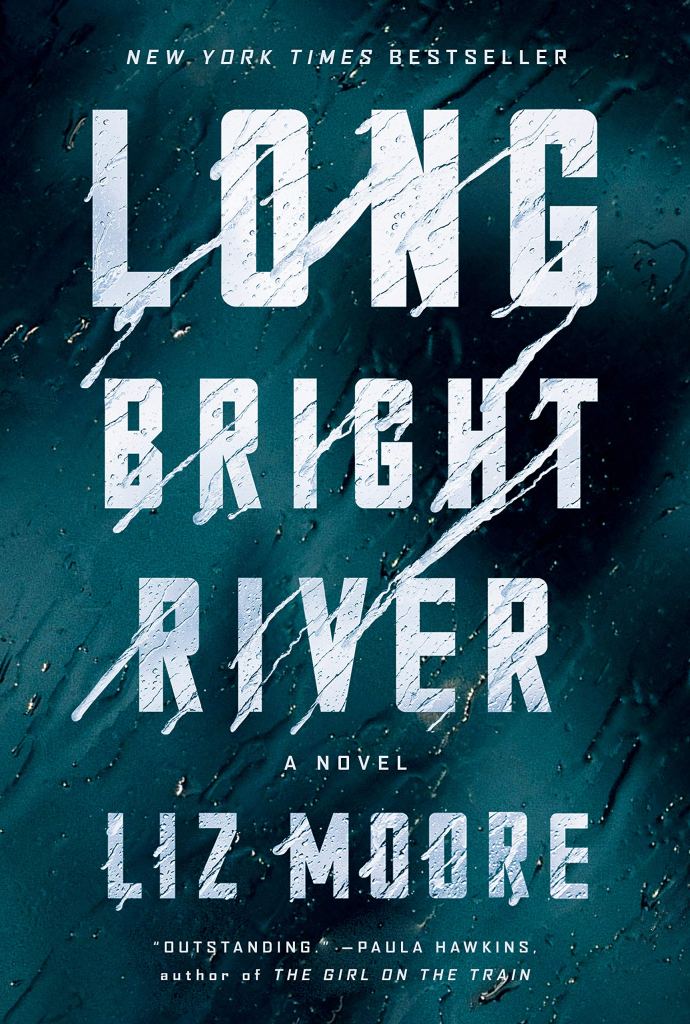
What are the qualities that make some mysteries better than others? Liz Moore’s Long Bright River offers some clues.

  1. The main plot reflects bigger themes in the story: Long Bright River is about the devastation of drug addiction. Specifically it is about two sisters, Mickey and Kasey, who are born to teenage addicts. Their childhood is fractured when one parent dies and the other can’t care for them. Mickey becomes a beat cop in part to keep an eye on her sister, who becomes homeless as a result of her own addiction. When the main plot opens, young women are turning up dead. There are standard procedural elements: corpses discovered, precinct politics. But this story also reflects the protagonist’s inner struggle. The case is both professional and personal.
  2. The setting is both particular and universal: The story is set in a neighborhood in Philadelphia called Kensington. It is vividly rendered: the river, the two main avenues, the Eagles fans. Take away the specifics, though, and this could be any number of working class communities ravaged by globalization and opiods. While it is the story of one place, it really is about larger societal issues.
  3. There are personal stakes in the outcome: As young women begin dying, the tension rises for Mickey. She must not only solve the case, but protect her sister as well. Mickey has a shot at a happy life with her young son which could easily be derailed by the events. I found myself really rooting for them.
  4. Social commentary is subtle: The author has some things to say about tensions between the police and residents. She wisely lets the reader decide for themselves. There is a scene early on when Mickey and her partner go to a coffeeshop. It is one of those hipster places that gentrify declining areas. The baristas are not very respectful to Mickey and her old-school partner. There is some effective subtext about differing class attitudes towards the police. How you react will tell you something about your own social location.

Random Facts You Didn’t Know About…

I have read my share of trashy books. I figure as long as I am reading a few serious books a year, I can do it guilt free. I don’t know that the rungs go any lower than celeb authors. Memoirs are supposed to be juicy. I mean, you don’t want to read philosophical essays by Debra Winger, do you? (Trust me, you don’t.) They are usually ghostwritten by journalists who understand what they are selling. So here are eight random facts I have learned from trash.*

  1. Britney Spears’ mother, Lynne, killed someone. It was a vehicular manslaughter.
  2. Woody Allen dated both of Diane Keaton’s sisters. (Perhaps inspiring Hannah and her Sisters?)
  3. As a teenager, Patti Smith gave birth to a baby girl and gave her up for adoption.
  4. Mindy Kaling and BJ Novak got into terrible turbulence in an airplane and thought they were going to die.
  5. Despite playing GI Jane, Demi Moore can’t do pull ups.
  6. Before he formed The Mamas and the Papas, John Phillips worked as a postman. He was so bored on the routes that he dumped handfuls of mail down street gutters.
  7. After she divorced Quincy Jones, Peggy Lipton spent weeks in bed watching old movies.
  8. After a performance of Who’s Afraid of Virginia Woolf, Judi Dench went backstage and told star Kathleen Turner that it was the finest acting she had seen.

* I will exempt Patti Smith from the trash label. Her two memoirs are very good.

Hidden Worlds

From time to time, I find myself drawn to stories of Orthodox Judaism. Something about the austere customs and ancient theology appeals to me. I would guess I am not alone in this as there are multiple titles to select from, both fiction and memoir. Movies, too.

Tova Mirvis was raised in an Orthodox family in Memphis. It was expected that she would marry within the faith. She did so at a young age and relocated to New York and later the Boston area. Eventually she realized that she couldn’t be a part of the community anymore.

I loved the parts of the book where she talked about Jewish customs like pulling out plastic frogs at a Seder or building temporary outdoor shelter at Sukkot. She is very good at incorporating theological meaning into ritual. The richness of these moments contrasts with the cold treatment she is given when she petitions to divorce her husband. Some people shun her; others challenge her integrity.

As is often the case with memoirs, it is not always clear what the full story is. The author is a bit coy about the private details of her marriage, which she characterizes as miserable. It is also peculiar that the book is marketed as an independence story because we learn at the end that Ms. Mirvis remarried within a year.

In a different light, Julia Dahl has written an engaging crime series that incorporates the Orthodox world. The protagonist, Rebekah Roberts, is a tabloid journalist whose birth mother abandoned her as a baby to return to the community that she tried and failed to leave. While Rebekah covers murders in the area, she is forced to come to terms with her past.

In addition to the winning premise, the crime stories are pretty good. My favorite is the third, Conviction, that details the tensions in Crown Heights that led to violence in the early ’90s.

If you don’t have time for any of those, I recommend Menarche, an indie movie. The protagonist is forced to give up his young son after his wife dies. It turns out it’s not just women who are stifled by law: he is not allowed to raise his child as a single father and must hand over his son to a married couple while he seeks a new wife. It’s a fascinating look into tribal customs and modern practicality.

The Rules

Back before I learned how to read, I had an aversion to the idea of fiction written by co-authors. Surely writing was a solitary pursuit, the result of a singular vision, and not something done through consultation. I held onto that idea for a long time. Then last year, browsing through an airport bookstore before a flight, I decided to break my own reading rules. I bought a copy of The Wife Between Us by Greer Hendricks and Sarah Pekkanen. By the time I got to my destination, I was so hooked that I spent my weekend stealing away to read snippets of the story. These two women know how to keep the pages turning.

A year later, I have read all three of their books. They have become the equivalent of appointment television. So what is about these books that appeal? I have a few ideas.

  1. The Anonymous Ingenue. Each of the books feature an attractive single woman living in New York City. I don’t think any of these details is incidental. The authors create a central character with the kind of bland appeal of a print model. You would notice her on a subway platform or walking down the street with her yoga mat and wonder about her. (Or if you were James Blunt, you would write a song about her.)
  2. The Foreboding Surveillance. One underlying theme of the books is watching. There is an unsettling observation in every story, from outright stalking to creepy psychological research. The authors are pushing the reader’s comfort level in the age of social media.
  3. Woman Vs. Woman In middle school English we learned about three common themes in fiction: man vs. man, man vs. self, man vs. nature. It’s time to add a fourth category: woman vs. woman. The suspense category is full of women at each other’s throats, often in competition for men. This is my biggest concern about these authors. What does it say about them that they view women this way? And why is there such a market for it?

I don’t like to know too much about the authors I read. I rarely Google them and often don’t even read their bios. There is something to be said for letting the work stand for itself. What I would guess, though, is these are savvy women who understand something about subliminal fears underlying glossy exteriors. No matter what reservations I have about these types of books, I can’t resist them. The authors understand something about me that I don’t understand about myself. It’s why they are good at what they do.

Three Sides Now

You are winning at life if no one has ever written a memoir about you. This is the takeaway after seeing what Michael Mewshaw does to Pat Conroy in The Lost Prince. By turns mesmerizing and exploitative, it might require a psychologist to unpack it.

The book starts off innocuously when the two men meet as expats in Rome. Both are married with children, living enviable lives as literati. We are clued in that the idyll won’t last. For the first third, though, the book is a sumptuous Roman feast. Mewshaw and Conroy are brothers in arms, sharing a peculiar intimacy rooted in their insecurities.

The story makes an abrupt shift when the families relocate back to the States. Conroy’s life goes into a tailspin after a divorce alienates him from his younger daughter. He stops speaking to the author, revealing only after a five-year silence that he didn’t feel properly supported by him.

If you are confused by this, so was the author. He claims that he was blindsided by Conroy’s take on things. And, then, as if to defensively get the reader on his side, he reveals a petty, ugly side to Pat Conroy in the form of abusive emails sent to his daughter. In short, Pat Conroy was no Tom Wingo.

At this point I would like to summon the spirit of Dr. Lowenstein to explain all of this. While claiming innocence on the disloyalty charge that led to their estrangement, the author horribly maligns his friend’s reputation by revealing private correspondence. It is not clear why he casts himself as the arbiter of this ugly family dispute, but it is hard to see him as a true friend after what he unveils. The lack of self-awareness is astonishing.