Mother Ersatz

In 1993 Anne Lamott published Operating Instructions, about her first year as a single, sober mother. It started a publishing trend of sorts: the authentic mother memoir. At their baby’s birth, mothers were stamped with the expectation of perfection and it took real courage to admit your missteps.

Lamott was successful enough that she spawned a cottage industry of imitators. Probably the most famous is Glennon Doyle. When I first encountered her, she had a mom blog called Momestary. Much like Lamott, she wrote about the challenges of parenting small children while maintaining sobriety, overcoming bulimia, and following a spiritual path. She was successful enough to have her own TedTalk and to appear on best-seller lists.

But it turned out that her authentic life was a bit of a facade. Her handsome husband was cheating on her and Glennon was harboring a secret. She was not attracted to him. With three kids and a Christian foundation, she wanted to keep her family together.

At a book show, sitting amidst other best-selling authors, Glennon was struck nearly mute when an attractive woman entered the room. They didn’t talk much that night but stayed in touch via text and email. A few months later, Glennon decided to leave her husband and join her life with the woman.

All of this makes for engrossing reading. I have devoured all three of Doyle’s books and enjoyed seeing her spiritual transformation. And yet there is part of me that feels a little uncomfortable with these oversharing memoirs. The publishing industry has capitalized on the insatiable public appetite for gossip. By turning “real” women into celebrities, they have created a new type of entertainment. With this third book, Doyle casts herself as a kind of New Age guru. She has been unleashed into her true authentic self and we have sat back with popcorn watching it unfold. I don’t like the sideshow approach to transformation.
Twister

The promise of a twist in domestic suspense is the marketing equivalent of a shirtless hunk on an erotic romance cover. If you are going to move books, you have to deliver what you are selling. Suspense fans expect the unexpected.

That said, there is nothing new under the sun. I have been reading in this genre for a while and am starting to see a few trends. Here is a list of some common twists. (Don’t worry: I won’t reveal what books they are in.)

  1. Someone Presumed Dead Is Really Alive. This has become a suspense staple. After spending the first half of the book grieving for a loved one, the protagonist is in for a shock when they discover they aren’t dead. I have seen people emerge from plane crashes, alley stabbings, lakeside attacks. Alas, these reunions often turn sour when it is revealed why they disappeared.
  2. Someone Presumed Alive Is Actually Dead A lot of suspense writers owe a debt of gratitude to M. Night Shymalan. There are a lot of heart-to-hearts that turn out to be hallucinations with dead people.
  3. The Narrator Is Mentally Ill. A fraternal twin of #2 and a distant cousin of the unreliable narrator, this twist can be an effective mind f#@k.
  4. A Lawyer Has Been Hired Because The Client Knows They Are Incompetent. I think Hitchcock’s Scottie Ferguson is the inspiration for this surprise. The reader is conditioned to think that no one would hire someone who is bad at their job. It turns out that that depends on what outcome they’re reaching for.
  5. Unbeknownst To The Reader, The Timeline Is Nonlinear. I think of this as the This Is Us twist. A seemingly straightforward story is actually being presented to the reader out of sequence. The day will come when I get tired of it, but for now I have only seen it done effectively.

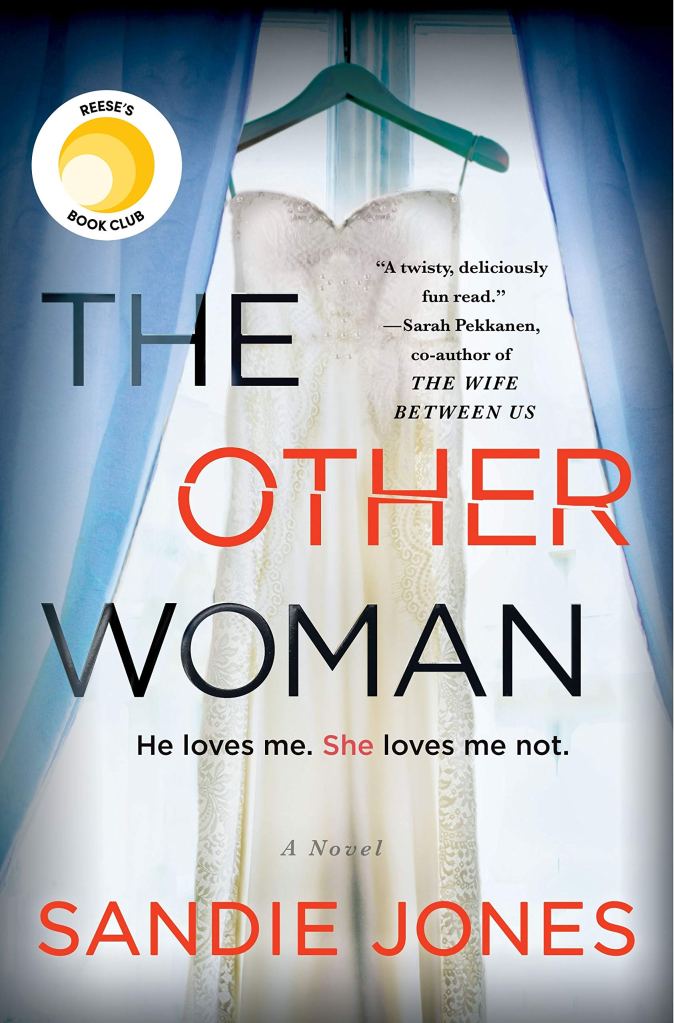
This week’s book, The Other Woman, promised “the twist of the year” which is no small achievement. It is a page-turner with some tonal problems. For the first third it felt like a mashup of Bridget Jones and Fatal Attraction. The protagonist, Emily, is a London headhunter who falls quickly and madly for Adam, an IT consultant she meets in a bar. The problem is his mother, Pammie, who conspires to split them up while gaslighting her never-to-be daughter-in-law.

As Adam and Emily’s relationship progresses, the tension rises. It was engrossing enough that I was willing to go with it.

Lagos, Lagos

Armchair travel is one of the pleasures of reading. Recently I discovered two books set in Nigeria, a country I know almost nothing about. It is the seventh most populous country in the world, an oil rich nation with a GDP of $568 billion. Over half its citizens live in poverty.

By coincidence, the stories tell of the two contrasting economic realities of this West African nation. What they have in common is a critical eye towards the patriarchy and the many ways it holds women back.

It’s early still but I predict this will be one of my favorite books of the year. It’s a completely original addition to the suspense genre. The narrator, Korede, is a nurse in Lagos living with her mother and sister. They belong to the affluent class, something Korede tries to hide occasionally by speaking in a dialect. Korede’s sister is the titular serial killer, a woman confident enough in her beauty to accept a gift of orchids from a suitor with the reply, “I prefer roses.”

This book is a scathing satire of the way beauty is a natural resource in Nigeria every bit as valuable as the crude oil they export. Korede is the long-suffering plain Jane, forced to watch her crush fall head over heels for her indifferent sister. She confides in a comatose patient about her sister’s life of crime, pines for a handsome doctor, and suffers the slings and arrows of the beauty myth. I loved every minute.

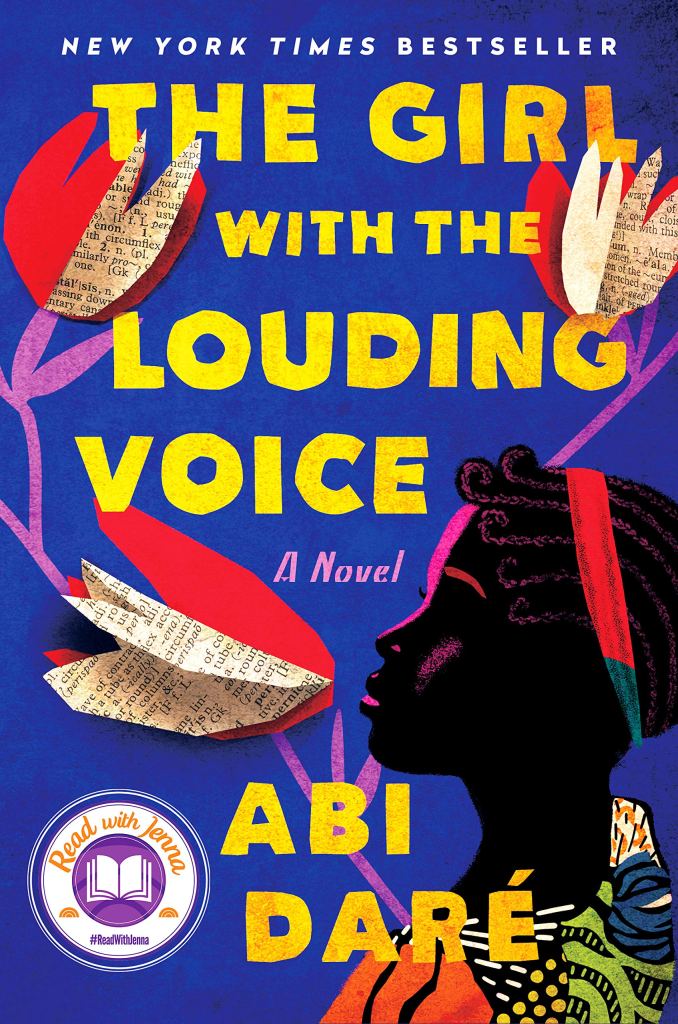
On the other end of the economic spectrum is The Girl With The Louding Voice. Adunni is a teenage girl in a village where thieves are strung up by trees at the command of the tribal chief. She is betrothed to a man she doesn’t love and longs to get an education. Her family is so poor that a salvaged broken TV sits in their house like a piece of art to be admired. Her father listens to radio broadcast from Lagos, a world apart from the lives they’re living.

I am not always a fan of coming-of-age stories, as I find the predictable arc of innocence to experience a bit tedious. This one is fresh, though. Adunni faces a genuine struggle and you can’t help but root for her. She is the proverbial original voice.

Descent from Donahue

Growing up in the ’80s I watched a fair number of daytime talk shows. The genre has almost completely disappeared, as rare these days as a soap opera, replaced by chat shows, cooking demos, and DIY home projects. The emphasis in the last twenty years has been on selling: actors hawk movies, lifestyle gurus sell books, and DIY shows peddle Home Depot and its competitors.

The best example of the talk show relic is Phil Donahue. During a much more innocent time, his studio broadcast Ku Klux Klan members, abortion rights activists, polyamorous couples. His shows were highly topical, raising moral questions and exposing his audience to communities and ideas they had never thought about. There is no equivalent to him on TV today in part because the Internet has fully unleashed the Pandora’s Box that he was dipping into at the time. No one is surprised by much of anything anymore. Nothing is new; novelty is gone.

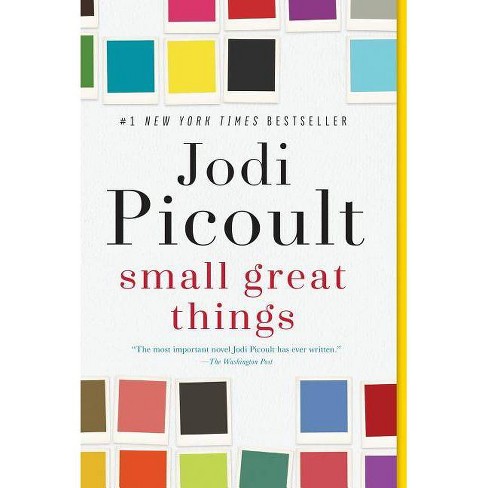
Instead what we have these days is topical fiction. An author like Jodi Picoult is very much a descendent of Phil Donahue, taking on the same kinds of characters that he used to.

In Small Great Things, we get to know both a white supremacist and a Black nurse he encounters at a hospital. We see the ideology that shapes hate groups – the man marries into a family led by a David Duke type – and we also see the life of a Black nurse who is implicitly affected by his views. The ways the author lays out both sides and lets the reader figure it out is reminiscent of Donahue as well. (Missing, of course, is the audience of mouthy New Yorkers opining on the proceedings.)

She does this again, less effectively, in A Spark of Light. The topic this time is abortion. There are characters on all sides: women seeking medical help, doctors, protestors, and a lone gunman. The problem here is not the characterization but the structure, which is told mostly backwards. I would love to reread it in chronological order.

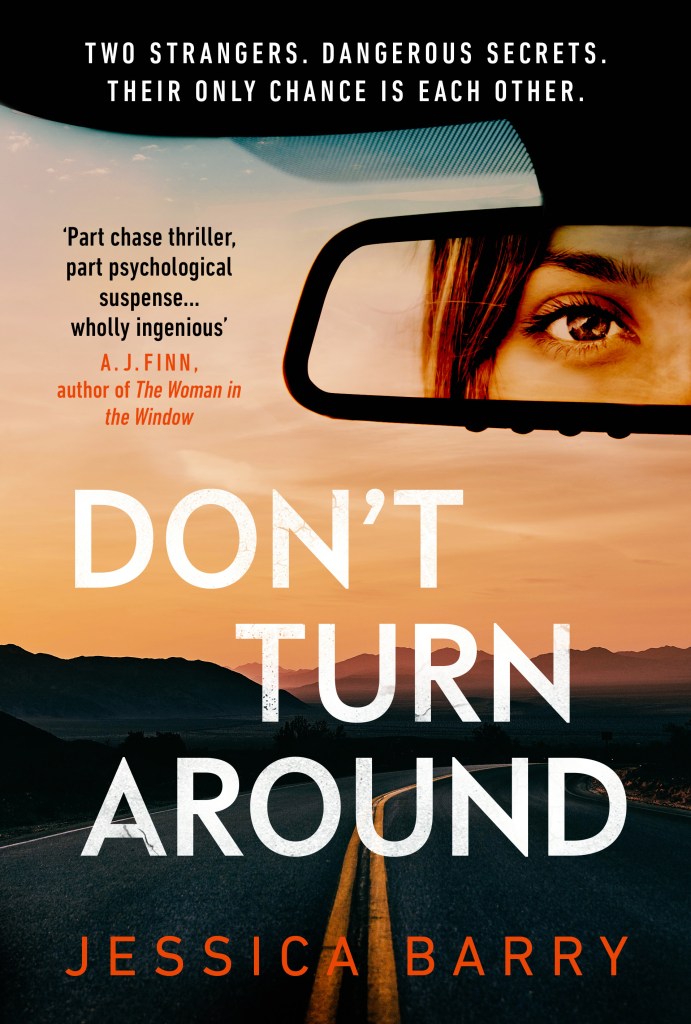
It’s not just Jodi Picoult who is delivering topical fiction. My book this week, Don’t Turn Around, was like a fusion of women’s suspense and topical fiction. What’s not to love?

The story centers on two women, Cait and Rebecca, who are driving from Lubbock to Albuquerque. Cait works for an organization that assists women. To say more would be to expose the topical plot. Suffice is to say, she is helping Rebecca. The chapters alternate between the present night drive and flashbacks of the events that got them there. It’s the second good #metoo novel I have read this year (after My Dark Vanessa). Cait’s story is especially nuanced, featuring a Beto-like politician, a viral video, and a reputation ruined. It raises questions about due process on the Internet.

I’m glad the publishing world has picked up where Donahue left off. It makes my reading life very satisfying.

Adaptation

A certain number of movies released each year start as books. There is a segment of readers who view movie adaptations with disdain, quick to point out how the nuanced, interior experiences of reading are lost when translated to cinema. There is a flip side, too, when movies require a certain tension and palpable transformation that books do not. A truly faithful adaptation of some narratives might result in a desultory and unsatisfactory viewing experience.

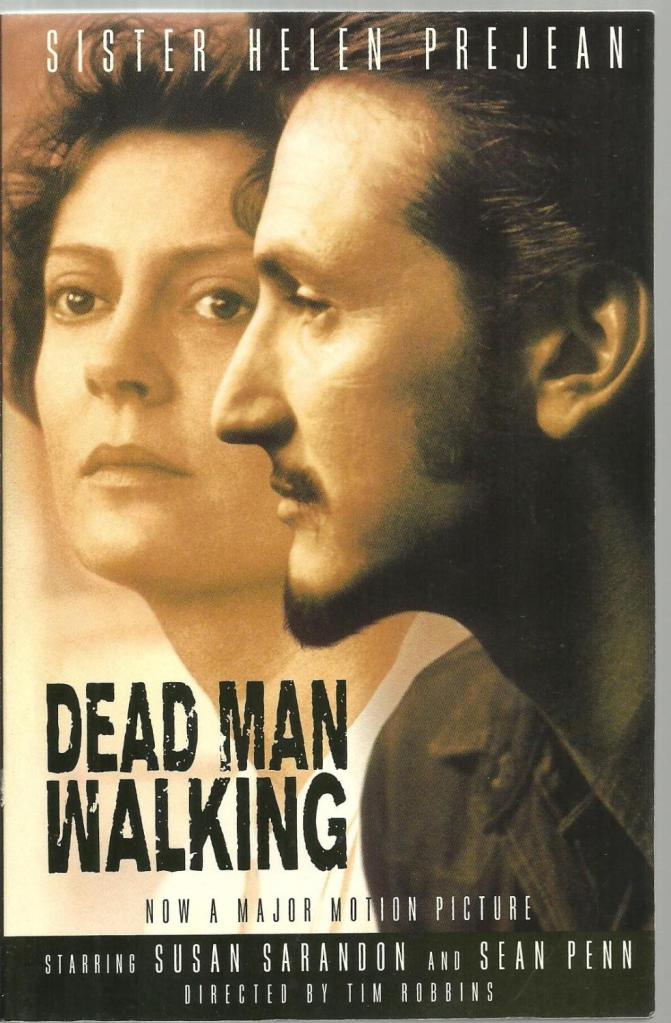
One interesting example of this is Sister Helen Prejean’s memoir Dead Man Walking, which was turned into an Oscar-winning movie. I was drawn to the book recently and enjoyed it. Then I rewatched the movie and things got really interesting.

In the early Eighties, Prejean had taken a vow to live and work among the poor in a neighborhood in New Orleans. I was immediately drawn into this story: the swamp heat of a Louisiana summer, the palpable danger of the area. What an inspiring sacrifice. Soon Prejean was exchanging letters with a death row inmate named Elmo Sonnier. She found herself drawn into Elmo’s story, eventually visiting him and acting as his spiritual advisor.

Elmo was convicted of participating in a double murder with his older brother Eddie. When his final appeal was denied, he was executed. His last words were an insistence that Eddie was the lone killer.

If you saw the movie, you are probably experiencing the opposite of deja vu right now. If this is not the movie you remember, no cause for concern.

A book like Dead Man Walking presents a challenge to adaptation. Elmo’s story, while intriguing, is not particularly cinematic. He doesn’t go through any kind of catharsis: there is no religious conversion, no last minute confession, no grieving family saying goodbye. In fact, he dies about a third of the way through the book. Later, Sister Helen encounters another death row inmate who went on an In Cold Blood type killing spree.

These two real life experiences are stitched together into one story with some crucial edits. In the movie, the killer and the victims’ families are composites of these two stories. They are given fictional names. Much of their dialogue is lifted directly from the book, but it’s as if two real life people become one character.

There also are some movie flourishes that aren’t present in the book. Early on in the movie, Matthew openly hits on Sister Helen. No surprise that this didn’t happen in real life.

There is also the matter of Matthew’s religious conversion. In the film, Matthew spends most of the time denying that he was more than an accomplice in the murders. Much of the tension comes from Sister Helen trying to get him to admit the larger role he played. They both have to reach a spiritual catharsis for the story to work: Matthew has to confess and repent, and Sister Helen has to get him there.

I suspect that this needed emotional arc may be why Matthew’s co-conspiritor in the film is largely absent. They do mention him, and he is seen in flashbacks of the crime. In real life, it was Elmo’s brother who masterminded the crime. Sister Helen visited with him, too. None of this happens in the movie.

The family connection complicates the story ethically and dilutes the intensity between the leads. Imagine the cover above with Sean Penn playing dual roles. It would be a different movie. By paring down a book to its best parts, Tim Robbins achieves a better story. It’s an inspiring example of editing.

Trapped In A History

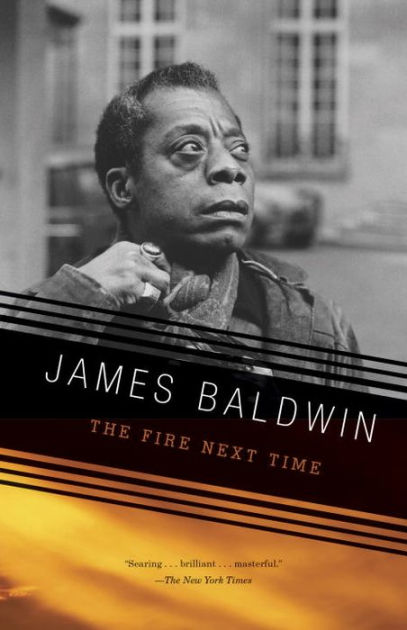
“You were born where you were born and faced the future you faced because you were black and no other reason. I know your countrymen do not agree with me about this… they do not know Harlem, and I do. For these innocent people have no other hope. They are, in effect, still trapped in a history which they don’t understand; and until they understand it, they cannot be released from it. You know, and I know, that this country is celebrating one hundred years of freedom one hundred years too soon. We cannot be free until they are free.”

In 1965, when James Baldwin wrote those words to his nephew, he was a literary rock star of sorts. He had appeared on the cover of Time, he was a contributor to The New Yorker, and he and a group of other Black notables had met with Robert F. Kennedy to strategize how the Democratic party could better serve the Civil Rights cause. This is a level of celebrity rarely achieved by any writer. (I’m hard-pressed to recall any writer I have seen in the past twenty years on the cover of a news magazine.)There was a paradox to his success: at a time of deep racism, he achieved uncommon access.

Reading his essay The Fire Next Time recently, I was struck by how little has changed since he wrote the words above. The “innocent people” he speaks of are White Americans who refuse to acknowledge the truth of his witness. We know more now about white fragility – the knee-jerk defensiveness that masks greater systemic issues – but it is still pervasive. Watch any conservative media and you will see a deliberate effort to minimize racism and mute testimonials like the one above. Corporate media (which is sometimes labelled liberal, although I think it’s more accurate to call it politically moderate) often tries to put a feel-good spin on even the most serious matters. It is in their interests to keep people shopping. There are many forces keeping people from honest reflection on these issues.

This is one reason why reading books is so important right now. To sit for an hour or two with a text like this is to hear a voice that is rarely considered in American media. Baldwin speaks in poetic language about the Harlem that he knows, about the casual racism he experiences when he travels below 125th Street, and about the competing temptations that the Church offers refuge from. There is a spare beauty in the language that puts you there.

You also read it now with the knowledge that Baldwin was a gay man in a world that didn’t accept him. It is impossible to read about his religious struggles without considering how his sexual identity intersected with ideas about salvation and punishment.

There is hope in reading this, too, with the awareness that his voice somehow rose above the conditions he so vividly depicts. Even in a time as obstusely racist as 1965, James Baldwin was a part of the literati, dining with artists and politicians. Someone was listening.

For The Defense

There is a subset of suspense in which a protagonist is asked to solve a crime involving someone they know. Often this is the premise for an amateur sleuth: a loyal friend is motivated to do a separate investigation when the police seem stalled. There are also books where the protagonist is a defense attorney who is asked to take the case of someone they know.

Just last week, I reviewed A Good Marriage. Lizzie is a bored lawyer hired by a college crush to defend him when his wife is found dead in their home.

Zach is a tech millionaire who may or may not have done it. Is he using Lizzie because she feels guilty for once rejecting him?

In a similar vein is Alafair Burke’s The Ex. Olivia Coleman is fledgling as a ninth-year associate. A friend’s uncle agrees to take her on when it is clear she can’t cut it on the partner track. Soon after, Olivia’s college boyfriend, Jack, is suspected of a triple homicide. He has gunshot residue on his clothing and a clear motive. Can Olivia get an aquittal? Should she?

While far fetched, the premise has some obvious appeal. In this scenario, the protagonists’ legal futures are in doubt; they need a win. There is also a chance that they are being played by an ex, which raises the stakes further. An average lawyer and a romantic fool? Nobody wants to experience that at midlife.

They both have clever plotting. Jack was possibly catfished into showing up at the crime scene and the details here are fun. He also has an understandable motive and may have hired Olivia as revenge for their breakup. There is also the sense that Olivia is just one drunken night away from ruining her career. In The Good Marriage, Zach seems like the obvious culprit. But readers know never to suspect the most obvious character, right?

One fictional scenario I have never seen: a protagonist is asked to prosecute a friend or ex. I guess that’s just too much of a stretch.

Lenses

With the exception of a daytrip to Harlem when I was nineteen, my first experience of a black-majority community was a class I took in grad school on the theologies of Malcolm X and Martin Luther King Jr. The instructor and half the class were African-American. The teacher, a Baptist minister, recontextualized the Christian religion I was raised with through the lens of antiracism. Exodus was the story of Black slaves being freed from institutional oppression. Moses was a social justice warrior. Jesus of Nazareth was a person of color.

Until I had that experience, I’m not sure I had thought much about race in America. It did not occur to me that the majority of my workplaces were disproportionately White and that a lot of my vacation spots were, too. It did not occur to me that many of the books I was reading excluded minority viewpoints or that the television I devoured often reinforced capitalist values. As a student in that class said at the time, “There is something about privilege that blinds people.” That was true for me, much more than I realized.

In the last five years, it has become harder and harder to ignore the reality of racism in America. Cell phone videos show us images of unarmed Black men being murdered by police. The president has a petty, transparently racist grudge against Obama and sixty-three million Americans voted for him anyway. Stories of the racist criminal justice system fill our news feeds.

At a moment like this, a lot of us are looking for some guidance, a rulebook of sorts to lead us to higher ground. Enter Ibram Kendi’s How To Be An Antiracist. He doesn’t mince words: he used to be a racist, homophobic unwoke dude. In chapters centered around a theme – everything from sexuality to biology to culture – he weaves his own autobiography into a broader discussion about race matters. Kendi was raised by activists schooled in the same kind of theological ideas that I was exposed to at Berkeley. He was an indifferent student stung by racist aptitude tests. At an all-black university, he was briefly seduced by the anti-white writings of Elijah Mohammed. He talks openly about his discomfort with a gay friend. There is an optimistic undercurrent: if he has come this far, can’t we all?

He is much less confrontational than Robin D’Angelo in White Fragility. The book is mainly about mindset, a lens through which to see race relations. I’m sure there will be plenty of people – White and Black – who don’t agree with him on every issue. What the book offers is a brief immersion into the antiracist worldview. Whether you ultimately embrace it or not, it is important to consider it.

Origins

I once knew a woman who hadn’t spoken to her family in twenty-five years. She described the death of her father as the greatest blessing of her life because it had allowed her to sever all ties with her abusive mother and her miserable childhood. When she talked about her origins, she was often vague in details. I knew the general geographical area she was from but she would never tell me the specific location.

Brit Bennett’s The Vanishing Half features a character who goes to similar extremes. At seventeen, Stella and her twin escape the tiny Louisiana hamlet they grew up in. She then abandons her sister, Desiree, having no contact with her for decades. Her twin, after a stint in DC, returns to their hometown with her young daughter.

The girls’ hometown was founded by a relative of theirs, a freed slave with light skin. In the present, the residents are all light skinned black people. We learn just how important this is to them when they spot Desiree’s daughter. She is blueblack, soon nicknamed Tar Baby, and shunned by her peers because of her dark skin. Later, like her aunt before her, Jude escapes her hometown and works to form an identity free of the prejudice she had experienced.

Alice Walker coined the term colorism to describe a prejudice within a race that privileges lighter skin color over darker, creating a caste system based on shade. Many of the characters in this book are colorists, gaining a sense of identity by the degree of their blackness. Stella passes as white, terrified that her pregnancy will expose her past. She is overtly racist, concerned that any contact with black people might reveal her origins. Her niece, Jude, is treated terribly so she escapes to LA. There she forms a family of choice and strives to explore intimacy.

Throughout the book there is a suggestion that identity is partly performative. A drag queen, Barry, puts on make up and sequins, taking the stage to forget himself. What is the difference between him and Stella? Can we ever truly transcend our past or does it lurk around us always? This book will have you thinking about these questions and more. It is an absorbing and compelling story of race privilege.

Window Gazing

The picture perfect age of social media has resulted in a literary backlash of sorts. There is a plethora of books centered on pulling back the curtain on all the curation to reveal the dark side of domestic perfection. I’m not sure that any character is as widely used these days as the casual stalker. Characters Facebook stalk each other with surprising ease. Catfishing is just another tool of amateur sleuthing.

There is some social commentary going on here: what exactly is the line between refreshing an Instagram feed and peering over your neighbors’ hedges? And what is this curiosity really all about? The tyranny of expectations? The inevitability that appearances are deceiving?

There is a theory that a narcissist conceals the truth about herself by projecting the opposite image. Maybe the moral here is about the narcissism pandemic.

Whatever the reason, spying on your neighbors makes for good suspense. Here are a few books about window gazing and how they stack up.

1.

I’m sure somebody somewhere has described Lisa Jewell as the British Liane Moriarty. Both authors deal chiefly with the secrets that lurk beneath domestic gloss. This book is set in a Bristol neighborhood. The characters live in brightly colored houses (I had serious housing envy about the location) that belie a personal tension. Joey, the protagonist, is infatuated with her married neighbor, a school superintendent. Another neighbor is convinced that she saw the superintendent yelling at a woman not his wife. And, in intermittent sections, we see transcripts of police interviews. There has been a murder and they are closing in on a suspect. There is also a literal peeping Tom: a teenage boy with an attic bedroom and pair of high powered binoculars.

This was one of those books that I liked up until the final reveal. There is one secret that should have been placed later in the narrative: it gave away the possible motivation early on so the killer was only partly surprising. There was a secondary twist about the peeping Tom that I liked better.

2.

The protagonist is a depressed, childless woman living in Brooklyn who becomes obsessed with a gorgeous actress who lives in a brownstone near her. It is more about a descent into mental illness than a mystery. What I liked about it were the witty social observations. Forced into a dinner date with someone she doesn’t like, the protagonist says, “I agreed to meet with her because I didn’t have the energy to tell her that I never wanted to see her again.”

3.

This was my latest read in this subgenre. Set in a Brooklyn where green juice is as popular as coffee, the community is rocked by a murder of one of their own. And, to make matters worse, the killing stands to expose a dirty secret they all share. The protagonist, Lizzie, is pulled into this when a college crush, Zach, hires her to defend him.

The pacing was just right: the pages kept turning without scrimping on exposition. The characterization was spotty; I had trouble keeping all the lithe moms apart. I didn’t much care about Lizzie’s domestic dilemma. All in all, though, it delivered on the core promise of these books: it made a boring afternoon disappear.