Original Copycats

Every literary agent will tell you that they are looking for original voices: writers who have the ability to breathe fresh air onto the blank page. There is a loophole, though. If you are skillfully deceptive enough, copycats are also welcome.

How does it work? No one wants to read a knockoff. But some gifted writers peruse popular genre pieces and figure out a way to take the same basic ingredients and mix it up a bit. They are like wraps to the original voices’ burritos.

Here are three recent examples of original copycats.

  1. The Body Positive Protagonist

Although she may not have been the first, Helen Fielding gets credit for crafting the original desperate singleton, Bridget Jones. Readers gobbled up her daily diaries, featuring her calorie intake, alcohol units, and search for the inner poise to attract a partner. The book spawned sequels and a film embodiment by Renee Zellweger.

The plot itself was nothing new, but the execution was fresh and timely. The ’90s were a time when women had a more tenuous grasp on equality. Feminism was not trendy. Bridget struck a chord.

Fast-forward to the present. Women are fed up with the futile quest for perfection. Why can a fat man be both president and married to a super model but a woman can’t? Women are in open rebellion right now and that is turning up in books.

Enter One To Watch, chick lit that would have been unthinkable in the Clinton years. The protagonist is a non-normative fashion blogger living in LA. Like Bridget Jones, she is imperfect. Unlike Bridget Jones, she is (mostly) OK with it. While her happiness is hard-won (there would be no story without it), it is not conditioned on her dress size. It is, in a way, progress.

2. The Relatable Fuck-Up

Back before Bridget Jones was finding love, Anne Lamott was barely surviving. An alcoholic with an eating disorder, she found herself pregnant by a man she hardly knew. At her lowest point, she stumbled into a church in Marin City, CA. Her spiritual journey finding God and raising her son were turned into a string of best-selling books, starting with Operating Instructions and continuing on to a publishing subgenre that fused recovery with relatable parental struggles.

She was popular enough to gain imitators. Jenna Elfman starred as a single mother in a short-run sitcom based on a Lamott-like memoir called Accidentally on Purpose. Blogs appeared everywhere with mommy influencers who were striving to seem real.

The clear winner thus far is Glennon Doyle, who has built on and arguably surpassed Lamott’s relatable fuck-up persona. Her first two memoirs tell a remarkably similar story to Lamott’s, complete with a hookup pregnancy, recovery from alcoholism and bulimia, and anecdotes of the deep love and bitter frustration that accompany parenting.

In her latest book, she has upped the ante, blaming the patriarchy for the ubiquity of experiences like hers. More so than Lamott, she is about turning the camera away from herself to her audience to say, “I see you there. We are one.”

Time will tell if this Oprah-esque posturing will endure or be supplanted by something new.

3. Hitch Your Wagon To Hitchcock

In the last two years, no fewer than three best-sellers have blatantly cribbed from Hitchcock. Ruth Ware and AJ Finn created successful stories from the classic Rear Window scenario. Julie Clark opted instead for Strangers on a Train.

In Hitchcock’s famous story, two strangers meet and discover their problems would be solved if each committed a crime for the other. In Julie Clark’s variation, two women meet in an airport. Both are trying to escape dangerous situations. They agree to swap identities and tickets. By doing so, Claire can get away from her abusive husband and Eva can have a new life.

In a twist, the flight carrying Eva-as-Claire crashes, so the real Claire is in a bind. With the national media covering the story of her death, she has no choice but to impersonate Eva. As it turns out, Eva’s life was no less dangerous than Claire’s.

I didn’t much care for this book. It was — spoiler alert — Sleeping with the Enemy meets Breaking Bad. Its popularity – a 4.1 overall score on goodreads – may lie in a fantasy some women have of escaping their choices and commitments for a different life. The author has deftly updated a classic Hitchcock plot and fused it with a contemporary fantasy.

When Writers Lie

I once knew a pathological liar. She appeared at my doorstep, crying, the night she was fired unjustly from her job for stealing. She told me many warm stories about her mother, who took her to Indigo Girls concerts and gave her carefully selected gifts every time they met, like a leather-bound journal and brown velvet pants.

At some point I put together that my friend was a thief with a spotty job record. She had been abandoned by her mother as a small child. The stories she told served some kind of mysterious psychological purpose. If she could convince me of them, maybe they were true.

Authors who lie are an ignominious bunch. Claiming fiction as the truth is a mortal sin. Curiously, when Patti Davis or Nora Ephron thinly veil their domestic grievances in a roman a clef, passing off memoir as fiction, the criticism is comparatively benign. But lying about your autobiography is not OK.

Here are some infamous examples of authors who were also pathological liars.

  1. It’s hard to imagine now, but in the mid-aughts James Frey was a literary sensation. Lindsay Lohan never left home without a copy of his book. Oprah teared up on air talking about how moved she was by his harrowing battle with addiction. He told of long stints in jail, reading the classics aloud to his illiterate buddy. His troubles, he claimed, were rooted in a train crash in his hometown, in which two young women were killed.

As he reached the peak of literary fame, an investigative journalist blew open the real story: while Frey was an addict in recovery, much of his story was fabricated. While two young women had been killed in a trainwreck in his hometown, he was not present as he had claimed. While he had been in jail, it was short-term. Leonard, the illiterate friend, was fictional.

2. Few fiction writers achieve the level of fame that Jeremiah Terminator LeRoy did in the 1990s. Everyone from Madonna to Courtney Love glommed onto the transgender son of a truck-stop sex worker who wrote beautiful stories about his rough life. When fame reached its apex, there was a high demand for media appearances. A laconic person in a blond wig showed up, always accompanied by an assistant.

For six years, JT LeRoy made appearances with his assistant. Eventually, though, people realized that he was basically a hoax, a performance piece put together by writer Laura Albert. When Albert’s fiction was in high demand, she asked her then sister-in-law to don a wig and play a role. JT LeRoy was not real.

3. The most recent inductee to the Literary Hall of Shame is AJ Finn. A literary sensation when The Woman in the Window was released in 2018, he achieved a level of success few authors do. In the midst of his glory, though, media reports exposed him as a compulsive liar. He had claimed that he lost his mother to cancer and a brother to suicide. In fact, both were still alive. His stories of surviving a brain tumor were fabricated. When exposed, Finn claimed that he was bipolar and that his mental illness sometimes caused delusions.

A psychologist could weigh in with an analysis of the role mental health might have played in any of these circumstances. As it stands, though, they are infamous. And I haven’t spoken to my friend in years.

Mismatches

Romance is the best-selling genre, but I have yet to read a title from it. There is something about the notion of a perfect match that rubs me the wrong way, at least in long form. (By contrast, I’m happy to watch romance unfold in episodic television. Maybe I prefer visual representation?)

There is another kind of story that I better appreciate. I think of it as the misfit love story. While the purpose of romance is to show the slow torture of two soul mates finding each other, the misfit love story shows two people who will never be cheered at a wedding reception, at least not by anyone who knows the full story.

Sigrid Nunez’s The Friend is one such tale. The protagonist is grieving the suicide of a writer and friend. She is not one of his three wives, but a former student who is tasked with taking care of his great dane. While she does, she ruminates on writing and her unresolved feelings for the man. We are not clear on what he thought of her.

Nunez deservedly won the National Book Award for this work. It is full of wisdom about a writer’s life and the nature of being human. Quoting Rilke, her character says this about the creative process: “Do not search for answers but rather love the questions. Do not run away from sadness or depression for those might be the very conditions necessary for your work.” And she calls companionship “two solitudes that border and greet each other.”

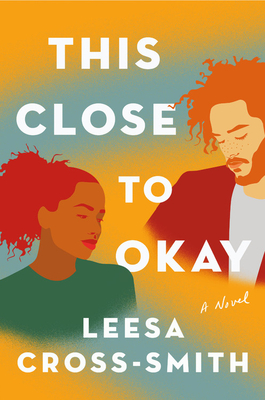
In the opposite of a meet cute, therapist Tallie spots a man about to jump from a bridge in Louisville and convinces him not to do it. He then moves in with her. She is still smarting from a divorce and he is finding a reason to live again.

Somehow author Leesa Cross-Smith keeps the tone from getting too mortibund. I was reminded a bit of some of Oprah’s book picks from the ’90s like Elizabeth Berg’s Open House. There is a rom-com twist that will get you thinking about deal breakers. Should Tallie forgive Emmett for the peculiar transgression? Reactions may vary.

Ah, love. Ain’t it grand. As it turns out, not always. That makes for compelling reading.

January

We have come to the end of what promised to be a better month in a better year. In addition to watching a televised attempted insurrection and a subsequent inauguration, I finished the following books.

  1. LA noir with some good twists. Kirkus starred review.

2. A black queer YA manifesto. Confession: I bought it accidentally, but parts of it were interesting especially all the stuff about Abe Lincoln being a racist.

3. A female vet, a meth lab, and a small Pacific Northwest town. PW starred review.

4. Confessions of a Christian pop princess. Being pregnant made her want to have sex four times a day.

5. A reimagined Six Degrees of Separation with some TMI sex scenes. Beautifully written, though.

6. A whiny memoir by a woman who may have inspired Anne Hathaway’s character in The Devil Wears Prada.

7. A short primer in fascist techniques. Trump’s name came up a lot.

8. A Manhattan father tries to save his daughter from a cult. Good twist ending.

9. A mostly silly manifesto with nothing new to say. Not sure why it’s controversial in France.

10. The first BLM novel. Loved most of it.

11. A charming short essay about finding your place in life. Loved it.

When History Becomes Fiction

Recently on social media an acquaintance posted the following exchange:

Officer: Why were you going 100 in a 60 zone?

Me: You see, if your foot presses down on the gas petal, the car moves faster.

Officer: Get out of the car.

Obviously, the man who posted it was white. This scenario is humorous to some people. White teenagers don’t receive a talk from their parents about how to behave if they are ever pulled over. Hands visible in the ten and two position on the steering wheel. Tell the officer clearly if you are going to move your hands. And don’t talk back no matter what he says.

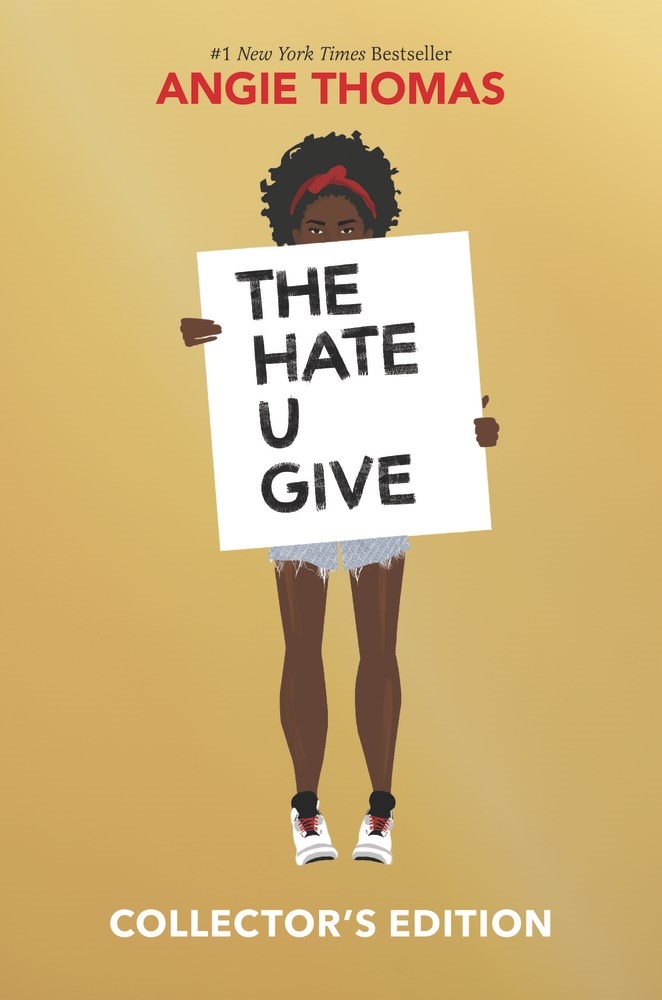
Starr, the protagonist of Angie Thomas’s The Hate U Give, is given this talk. It isn’t enough to spare her the trauma of watching her friend, Khalil, be murdered by a cop after a routine stop. She is a witness to an injustice that happens too often: a young black man is murdered because he is seen as a threat.

Anyone reading this story will have a parallel narrative in their mind of the many media stories they have heard about similar incidents. Phone cameras have captured the images of Eric Garner, Philando Castile, and George Floyd being murdered for relatively benign police interactions. Khalil is another black life taken too soon with little chance of justice.

Starr and her family are not pillars of society. Her grandfather was a drug dealer. Her father has done time. They live in a neighborhood where drive by shootings are not uncommon.

Although the words Black Lives Matter are never stated outright, this is a definitely a BLM novel. Starr is forced to contend with the police, ignorance from white peers, and her own feelings for Khalil.

There is a scene early on that captures what I loved about the author’s craftsmanship. In the early morning, Starr waits as her father cuts roses and vegetables from their backyard. They then drive together to the bodega her father runs. Once there, you realize that their neighborhood is a food desert and the family garden provides greens for locals. The earlier scene suddenly makes sense.

She is also a good stylist. Sample sentence: “Right as we cross the street, a gray BMW pulls up beside us, bass thumping inside like the car has a heartbeat.”

I especially liked the characterization. Starr’s father is a devoted dad who missed her early years due to some time in prison. There is some tension between him and Carlos, her uncle who is both a police officer and was once a surrogate father to Starr.

Overall I liked this book a lot. It takes a topical plot and fully fleshes it out. It’s not perfect, but it rightfully takes its place as the first BLM novel.

Once More

I have a friend who once described her religious beliefs as, “God, yes. Bible, no.” I see her point. Some are left cold by The Good Book. In addition to its considerable length, there are repetitions in plotting that are confusing (why does God create Adam and Eve twice?) and moral inconsistencies that clash with the popular image of religion as a force for good.

I fall into a different camp: a spiritual person who enjoys reading the Bible. I understand why people don’t like it: it has been used to justify slavery and Apartheid, the subjugation of women, and to bash LGBTQ people. We have just cleared four years of neo-fascism wrapped in insincere evangelicalism. I am not naive about the myriad ways the Scriptures have been weaponised.

And, yet, I continue to be inspired by the Social Gospel and its influence on civil rights. I see spiritual truth in the Exodus story: God works on the side of justice. I like (some) religion.

For these and other reasons, I have set a goal to re-read the Bible in its entirety this year. I have done this once before, just before I started a Master’s degree in theology. Fifteen years have passed since then. I have changed. The times have changed. I’m curious what I get from it as I hit fifty.

If you’re curious to read along but short on time, I have included a condensed reference book I sometimes use. It is a faithful synopsis.

This essay is the first in a six-part series that will look at the parts of the Bible that seem most significant to me. I will attempt to contrast historical facts with my own subjective literary analysis. It should be noted that this is a year-long goal, so the essays will be infrequent. There are many more books than just this one.

So what exactly is the Bible about? Its narrative arc was described by CS Lewis as “the reversal of Adam” – a thousand-page epic journey of humanity’s deliverance from original sin. It is also a written history of the Israelites, an ancient tribe, up until the time they split over the existence of a Messiah.

I will start at the beginning. The first book, Genesis, is arguably one of the most influential. It has inspired many Sunday school teachers with the creation myth and the global flood. The story of Dinah topped best-seller lists as The Red Tent. Andrew Lloyd Webber took Joseph and his colorful coat to musical superstardom.

In generality, it depicts the origins of a god-man relationship. The god of these scriptures breathes life into Adam (the Hebrew word adamah means earth) and speaks directly to him. God continues to interact with Adam and his descendents, sending word to Noah that a global flood will wipe out humanity, and promising several patriarchs that they will be blessed into the next generation.

And, yet, curiously, there are other moments when God does not seem omniscient, such as when he asks Cain about his missing brother, whom Cain has murdered. Could this be the start of the mystery of free will?

One theme that emerges is rivalry among brothers. In addition to murderous Cain, Jacob disguises himself as his hirsute twin, Esau, and steals his birthright. In the final story, Jacob’s son Joseph is sold into slavery by his jealous brothers.

There is also the foundation of a pact between God and his creation. There are moral contracts, or covenants, that must be followed. This will be important in the next essay, on Moses in Exodus.

Stars in Their Eyes

In the COVID age, the knowledgeable book-seller has been deemed nonessential. And I get that: books are not as important as health care, food, and education. Booksellers do serve an important function, though. With over 300,000 new titles published each year, they can guide a buyer through the legions of available reads.

Consider, for instance, the difference between books and movies. Pre-Covid, there were about fifteen new movies released per week for a total of about 800 per year. By contrast, there was one recent Tuesday on which booksellers grappled with 600 new titles being released into stores. Let that sink in: there are as many new book titles published on one day as there are movies in a year. This is why it is numerically impossible to feel caught up on reading. Give up on that fantasy. It will never happen.

And, yet, there are a few tricks to navigate the stacks even without an available book-seller. One is to identify someone in your life whose taste you share. If you love books, you probably know someone who does too. Take recommendations from them. I often ask bibliophile friends to tell me their three favorite books. I’ve gotten some great ideas that way.

It’s also a good idea to bookmark a favorite blog. I read one from a woman my age who lives in TX. Although I don’t know her personally, we often have similar taste.

Finally, another useful shorthand are starred reviews. Unlike their sketchy first cousin, the blurb, starred reviews separate the wheat from the chaff in a comparatively objective way. The starred review is the equivalent of a knowledgeable book-seller: someone whose livelihood is dependent on assessing book quality without as much need to curry favor with professional contacts.

Two of the most famous starred reviews are Publishers Weekly and Kirkus. As it happens, two of my 2021 reads thus far have earned this accolade.

  1. This LA noir caught my eye in part because of the Kirkus starred review on its back cover. The protagonist works for the titular crime boss, a woman who sets up sting operations for show biz scoundrels. After successfully taking down a Weinstein type, they set their sights on a local politician. Because it’s noir, you can expect a double cross. What’s different here is that the betrayal has some genuine resonance. The style also had some bite. Getting nowhere in her pursuit of the Newsom-like mark, the narrator says, “What did I need to do, stick a hand down his pants?”

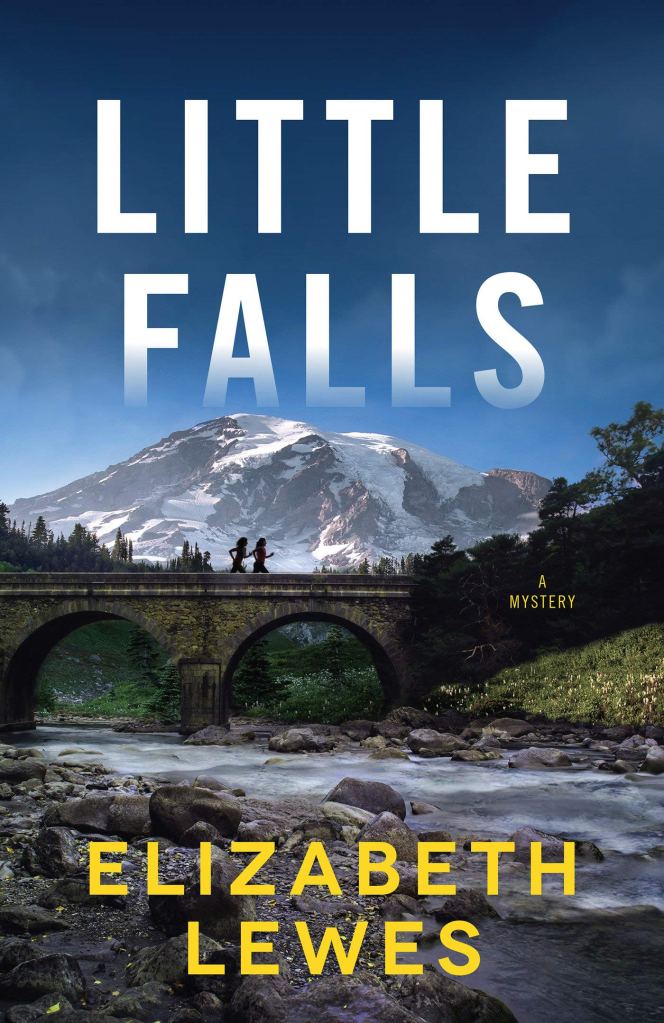
2. This novel got a starred review from Publishers Weekly, the trade magazine for the book world. Its protagonist, Camille, has returned to a small town in WA after serving in Iraq and Afghanistan. After she discovers the corpse of a young man, she is pulled into a local crime operation. Complicating matters, Camille suffers from PTSD. Her flashbacks are harrowing, as is the reality of her fractured family back home. Camille is a flawed protagonist with a certain grit. Her estrangement from Sophie, the daughter she left behind, is realistic and compelling. I also enjoyed the Pacific Northwest setting. What is it with small towns? They always have an underbelly.

Girls, Girls, Girls

In literature, you never have to look far for a girl. They are everywhere. They have pearl earrings, dragon tattoos, and no shadows. They are on trains, in bands, or in the ominous cabin 13. They are pretty, good, painted. They are lost, missing, or gone.

And often they are not girls. A lot of women protagonists are stuck in novels with “girl” in the title. So what is behind this publishing trend? I will look at three famous adult girls and attempt to get to the bottom of this.

1.

Blunt plays Rachel, a commuter who passes by a house on her daily route. She sees a young couple inside and becomes concerned about the other woman after she seems to go missing. If you’ve seen Rear Window or its many knockoffs, you know what comes next. The police find nothing amiss and begin to suspect Rachel may be up to something. This is not helped when — spoiler alert — it is revealed that the house Rachel is gazing into was once hers. Rachel is a depressed, alcoholic divorcee pining for her previous life.

So why exactly is a thirty-something protagonist referred to as a girl? Is it meant to convey that Rachel’s unhealthy attachment to her ex is rooted in childhood trauma? Or that her current dependence on him makes her childlike? Either way, Rachel’s central dilemma is about her man. Not exactly empowering.

2.

Here is another story about an urban professional woman who is somehow a “girl.” Jess is a makeup artist who is drawn into a peculiar psychological experiment that is not what it appears to be. A therapist hires her to answer questions and take directives. What Jess doesn’t realize is that the therapist has nefarious ulterior motives.

By falling into this trap, Jess has presumably had the proverbial loss of innocence. Or does the title refer not to Jess but to the other central character, the unstable therapist who is obsessed with keeping her man faithful? Either way, we are again seeing dependent women linked to men.

3.

All roads lead back to Gillian Flynn. The girls being interrupted before 2003, the year this seminal work launched, usually were underage. This is an early example of an adult protagonist defined by peculiar terminology.

The story starts with Nick narrating the morning that his wife Amy went missing. He becomes the central suspect. Interspersed with his narration are excerpts from Amy’s diary, chronicling their sweet courtship and slow decline into domestic abuse. And then — spoiler alert – we learn that Amy isn’t missing. She has staged her abduction, and forged her diary, to frame Nick.

By crafting a woman-in-peril persona, Amy uses gender roles to gain power over Nick. The use of girl is ironic. It’s unfortunate that the legions of copycats don’t seem to understand that.

All of that being said, I am getting tired of the girl trend. For my first read of the new year, I am moving on…

The Six

I read between fifty and sixty books a year, a mix of serious writing and trash that captures my fancy. I am definitely a mood reader. Books comfort me by transporting me to other places, times, and perspectives.

My overall rating for the books I read is four stars. In practical terms, this means that I like but don’t love most of what I read. There is a reason for this. To get published in the highly competitive market, most books meet a baseline of readability. They have already been pre-checked first by an agent and then by an editor. Book reviews and bloggers take it up from there. By the time I select my next read, hundreds of people have given it the thumbs up.

Scores of readers can certainly disagree on quality, but they will catch and flag the things that make something unreadable: incomprehensible prose, preposterous characterization, and sluggish pacing. The high standards of the industry also guarantee that nothing truly terrible gets launched.

When it comes to star ratings, I’m the equivalent of an easy B. You don’t need to be the voice of your generation to earn my praise. As a panel judge, I’m more like Mel B than Simon Cowell.

It’s another thing entirely,though, to sustain my recommendation over time. By the end of the year, I usually can’t fill a top ten list of five-star reviews. I do try. But over time, some works fall by the wayside.

So as we prepare to close 2020, what are the books that have sustained my interest?

Here are six.

6.

This is one of those love-it-or-hate it books, tempered perhaps by whether you have read Lolita. In addition to being a compelling page turner, it challenges the reader on notions of consent. I kept thinking of Soon Yi Previn and how she maintains to this day that she made the choice to be with Woody Allen. But did she?

5.

I read a lot in the mystery/suspense genre. This was a truly outstanding narrative, with a vivid setting, compelling characters, and a surprising plot. I am still thinking about the storefront that rented out a back room to let homeless junkies get high, and about the high emotional stakes for the woman detective. This is a good example of strong execution.

4.

Passing – the ability of light-skinned people of color to gain access to white privilege – is something I hadn’t thought much about before reading this beautifully written story of twin sisters with different options. Stella, the light skinned one, lives her life as a white woman, severing all ties to her Black family in Louisiana. The moral compromises she makes raise uncomfortable truths that we all need to be addressing.

3.

The term original voice gets thrown around a lot. This book is the real deal, an insightful deconstruction of the social value of beauty. Vividly set in Lagos, I truly rooted for the narrator, a plain Jane living in the shadow of the titular killer.

  1. (tie)

Sometimes a book gently corrects a reader’s ignorance. That was the case for me reading this story of Felix, a transgender teen and artist who falls in love for the first time. By getting to know this character, I understood his identity and struggles, and could relate to him as well. It’s also a satisfying rom-com with some unexpected twists.

  1. (tie)

A boring Friday afternoon disappeared before my eyes as I opened this story. Written in transcript, it tells the Behind The Music rise and fall of an LA singer named Daisy Jones who joins a ’70s super group. By mid-point, I had to Google to confirm that this wasn’t a real band. Completely satisfying as a book, it also begs for visual and aural representation. The songs, in particular, will now need to be written to satisfy the audience. That’s quite an accomplishment. I imagined a younger Sienna Miller in the TV role. Turns out Elvis’s granddaughter has been cast instead.

Reasoning

Many of us are first introduced to books through school. We learn how to read, and at a certain point we discover information and facts from them. By the time we are tweens, we start to deconstruct the structure of fiction, figuring out plot, metaphor, and characterization. By high school, we know how to write an essay using source material.

If you never get beyond assigned reading, you might conclude that the purpose of books is to teach facts and ideas, language and communication. And books certainly do all of those things. I have found, though, that none of these are among the main reasons I read.

Instead, my motivation is drawn from a combination of the following:

  1. Armchair Transport One of the chief pleasures of reading is the ability to slip through a wormhole of the present to another time and place. I often select my next read by asking myself a question, “Where do I feel like going today?” There are so many options: contemporary Lagos, New York in the ’80s, Jerusalem in 70 AD. Good writers create a world of small details that put you there. I can experience the rains in Nigeria, so heavy that you can’t safely walk outside. Or a fifth-floor walk up in the Village, where a makeshift family grapples with the spectre of HIV. Or the sand and clay of biblical times, when a temple was destroyed and a community sent into exile. Books are stamps in a passport.
  2. Window Gazing Another undeniable appeal of reading is the opportunity to gain access to the private thoughts and confessions of others. Books are a curious alternative to the age of social media curation. While people go to great lengths to craft an image of their best moments on Instagram and Facebook, reading offers a view into what’s really going on. While scrolling past picture perfect images of weddings and babies, memoirs and fiction about pill popping mothers and secretly sadistic husbands tell a different story.
  3. Killing Time Unless you are a very lucky or very dramatic person, life gets dull at times. Books offer an escape from a long Sunday afternoon. The mystery/suspense genre is one of my favorite ways to spice up a boring weekend. Good writers know that readers are looking to have their choices validated. No one wants to finish a book bereft with the awareness of a life unfulfilled. This is why so many books feature relatable protagonists whose lives are just a little worse than average. You may root for your heroine, but when you finish her story, you are glad to go back to your comparatively easy life.

This week’s book combined elements of all three of the reasons I read. Set in the dusty Australian outback, a place I have briefly visited but probably won’t get back to, it is the story of a hometown boy forced to confront his past. Working as a Melbourne financial crimes investigator, Aaron Falk is drawn back home after his childhood best friend dies in an apparent murder-suicide. Years ago, the friend, Luke, provided Aaron with an alibi after a young woman drowned. All of this coalesces into a transporting story that made me appreciate what I have. I grew up in a small town, so it was interesting to contrast my own impressions with the Aussie counterpart. I was compelled to keep turning the pages to figure out what had happened to Luke and his young family. The author did a good job of incorporating past events into a present third-person narration. The whole thing is a look behind the tourist-friendly Aussie curtain of sunny beaches and barbeques. As a friend said after finishing it, “Outback? No thanks.”