Information is competing for people’s attention constantly, often with the goal of selling. Algorithms cater to preferences, and every keystroke you make sends a signal that impacts what you see.
Books provide information in a different way. While every writer is selling their conclusion, they do it with little or no aim at consumption. Without the immediate concern of pleasing the reader, books present information for information’s sake.
And by doing this, we often get fresher takes. Here are some moments from books that made me see the world in a new way.
1.

With the rise of the populist MAGA movement in 2016, intellectuals with knowledge of recent political history took note. Yale professor Timothy Snyder put out this short guide for the warning signs of fascism.
Among the ideas presented was this one:

Political movements unite people through images like flags and symbols. Even a cursory look at history will show you burning crosses, swastikas, and uniforms that convey propaganda through images.
I had thought less, though, about the way language creates uniformity. Repetition through hashtags, buzzwords, and memes can lead to problems of groupthink. In the worst forms, it can weaken democracy by creating artificial allegiances.
One solution is to strive for originality with language.
2.
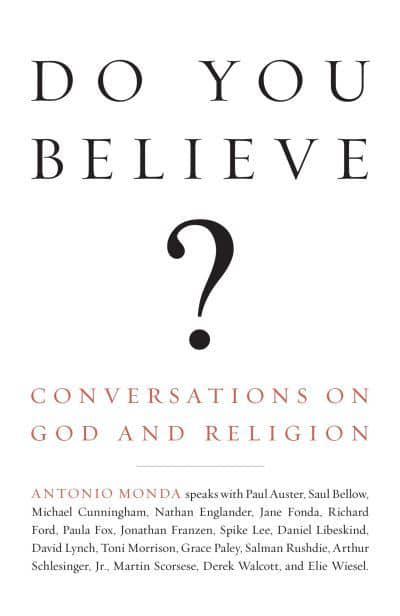
Not all uniformity is bad. This collection of interviews features a standard set of questions which different artists and writers answer. The variety is not in the form but in the responses. I will never forget Jane Fonda saying, “I have experienced the grandeur of Christianity and am surprised at the ignorance about it. Jesus was the first feminist.”
Another notable moment came when writer Paula Fox answered a query this way:

The author is adroitly using logic to deflect the question. What is popular isn’t always right, said Einstein. Her stranger in a strange land follow up is nice too.
3.

While we’re on the subject of religion, a few years ago I took a fascinating online class on the ancient world. Among the revelations was that there were many people who claimed to be half-human/half-god or demi-gods. It wasn’t an idea original to Jesus.
Most famous is Alexander the Great who claimed to be the son of Zeus. In one story a thunderbolt hit his mother; in another Philip sees a serpent penetrating Olympia on their wedding night.
In another story Alemena is impregnated by Jupiter when her husband is away at war. Jupiter morphs into an image of her spouse (an early shape shifter?) and they conceive twins. Hercules is a demigod. His brother Iphicles is mortal.
While information overload is a modern problem, it should not be confused with the importance of gaining fresh perspectives through reading.
 Books Smitten