We are living in undeniably turbulent times. We follow the news at our own peril: stories of mass murder, political assassination, and illegal war fill our social media feeds on a regular basis. What can one do, other than absorb the blows and be thankful for comparative good fortune?
Since my own faith is tenuous, traditional religion offers me almost nothing in times like these. It does not help me to think of spiritual solutions, partly because I see so few examples of them working in my own life. What does sometimes help, though, is to read about people who have endured hardship.
Here are three books about people who have made it through the unimaginable with inspiring grace.
1.

In this and an equally good follow-up memoir, the author recounts the sudden loss of her husband, who leaves their apartment one night to walk their dog and is hit by a car. She never really sees him again. It’s complicated: his death is not instant but he also is never the same again.
Like Joan Didion’s excellent The Year of Magical Thinking, this is a story of a marriage and its demise through forces outside a woman’s control. It’s as much about living as it is about dying.
2.

In her previous work, the author recounts her failures as a teenage mother. Her Catholic faith ultimately absolves her of the guilt. There is a moving scene when a performance of “Ave Maria” acts as a balm and a revelation to her son’s cross to bear.
In this later book, she has moved to Mexico. One night a man breaks into her property and sexually assaults her. More so even than in her previous work, the author’s faith is surprising and sustaining.
3.
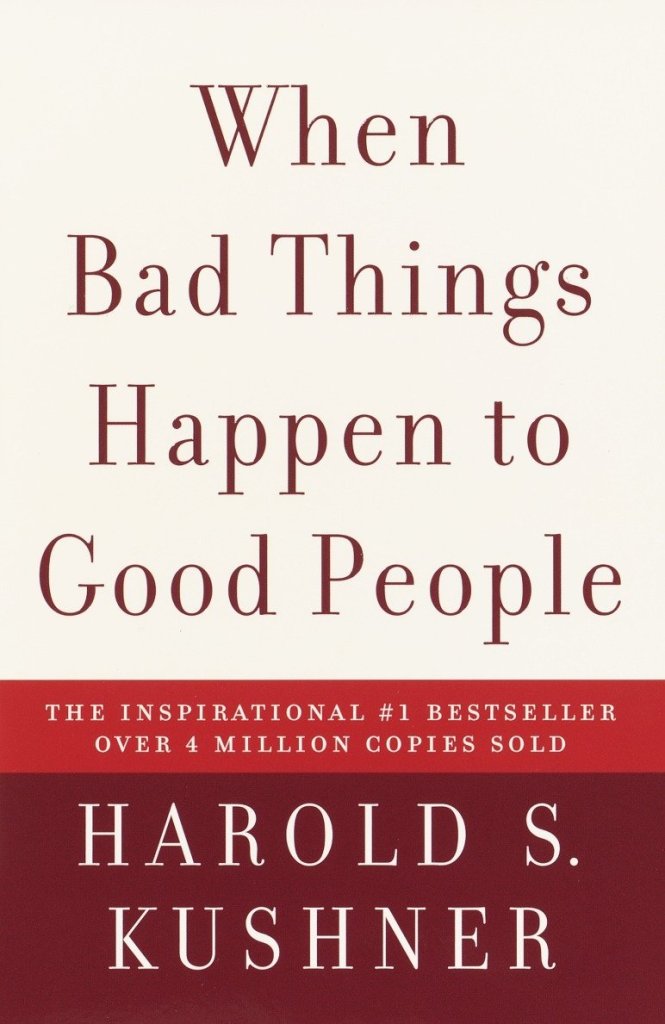
After spending years as a rabbi, Harold Kushner faced a crisis of faith when his son was born with progeria, a rapid aging disease in which a child rarely lives past age ten. Plunged into grief, he found that he could no longer rely on his faith tradition. He had been schooled to believe that good people were protected by God. It was impossible for him to understand how God could harm a child. As a faith leader, he felt like a hypocrite for guiding his community in a theology he no longer believed.
Kushner wrote this best-seller after he formed a new theology. As a result of his searching, he decided that an all-powerful God couldn’t also be a loving God. A loving God could therefore only have limited power; people were given agency greater than what he had previously believed. This changed the way he saw both God and himself. He was able to return to his vocation with a new understanding.
 Books Smitten