At certain moments in the mesmerizing spectacle of the Depp-Heard defamation trial, I envied those who had never tuned in. What bliss it must be not to realize that Johnny Depp is a vile misogynist, to have never witnessed the Sweetzer monster, and to have never considered that Amy Dunne might not just be a fictional character. As far as brain-bleaching experiences, this one is up there.
In a split decision, a seven-person civil jury in Fairfax, VA found that Heard defamed her ex-husband in a 2018 op-ed in which she claimed to be a public figure representing domestic abuse. They also found that Depp’s lawyer defamed her when he called one incident a “hoax.” When you split the difference, she now owes him eight million dollars, just slightly more than she got in their 2017 divorce. She also has more than six million in lawyers’ fees.
The decision is puzzling for several reasons. A UK judge reviewed the same evidence in a 2020 trial and determined that twelve of fourteen claims were substantially true. Therapist notes over several years reveal sexual and physical abuse claims by Heard long before their marriage. A nurse’s contemporaneous texts claim that she and Depp’s bodyguard had to physically restrain both of them, contradicting his testimony that he walked away from a fight on a staircase. And, in a final audio recording before they went to divorce court, he doesn’t deny that she could have died by accident in one of their fights.
It appears that the jury was swayed by Depp’s narrative. Testifying over a period of days, he recounted a horrific childhood of physical and psychological abuse at the hands of his mother, Betty Sue. When he met Heard in 2009, she seemed too good to be true. They were happy for a while. Soon, though, Depp realized that he was once again in the hands of a malicious abuser. She was constantly critical, had sudden outbursts of anger, and threw things at him. She started their fights and he never threw a punch. After he left her in May 2016, she filed a false restraining order and embellished claims to make herself look like the victim. His team contends that she has borderline personality disorder, a mental condition in which fear of abandonment leads people to make false accusations.
This is in direct contrast to sixteen incidents of alleged abuse that Amber recounted on the stand. (For some reason, two of these were left out of the UK trial, probably because the tabloid Depp sued didn’t write about them.) They were partially corroborated by photos, contemporaneous therapist’s notes, and texts to friends and family. But it wasn’t enough to convince the jury.
In short, they seem to have concluded that Amber Heard is an unreliable narrator. Or more to the point, Depp is a slightly more credible narrator than his ex-wife. This is remarkable given how much he lied on the stand: about substance abuse, drug orders, infidelity, and a text in which he said a woman’s vagina was “rightfully mine.” (He suggested that her team had fabricated it, a ludicrous claim given that it came from his phone and was submitted by his legal team.)
I wonder if popular fiction is partly to blame for this travesty. Pulp fiction has never fully modernized and relies on many one-dimensional stereotypes. It’s not always about gender but often it is. I have grown tired of the suspense genre for this reason.
There are many possible reasons that people don’t believe Amber Heard. It may be because she is lying. It may be because people don’t want to believe Johnny Depp has a dark side. It may be because of unregulated Internet echo chambers or that people formed opinions too soon. It may be because in complicated times we want simple narratives. It may be about the intricacies of domestic violence and stereotypes we hold about victims. Amber Heard is a strong woman. She isn’t always likeable. Some people may believe she deserved to be beaten.
It may also be because we have all internalized too much far-fetched storytelling. Best-seller lists teem with abusive men, gold-diggers, psychopaths, and femme fatales. Mental illness is used as a plot point to explain motives or trick the reader. Many of these books are made into movies and limited series. The landscape is oversaturated with statistically unlikely pathology.
Here are three books in which someone is shading the truth for psychological reasons or monetary gain, just as Amber Heard has been accused of doing. They are highly entertaining but logically implausible stories. Their effect may be more corrosive than we realize.
1.

Paul Strom narrates this novel, set in Ohio. While on a road trip to a lake house, he recounts his perfect life with wife Mia, their two boys, and his successful career. Paul and Mia are going to have a splendid weekend on Lake Erie. It slowly becomes clear that Paul is a narcissist, then a psychopath. He is planning to kill Mia at the lake house. Most of what he has told the reader is not true.
This is an entertaining page-turner. Parts of it are predictable; others are not. I didn’t like the ending, but overall it’s a wild ride.
2.
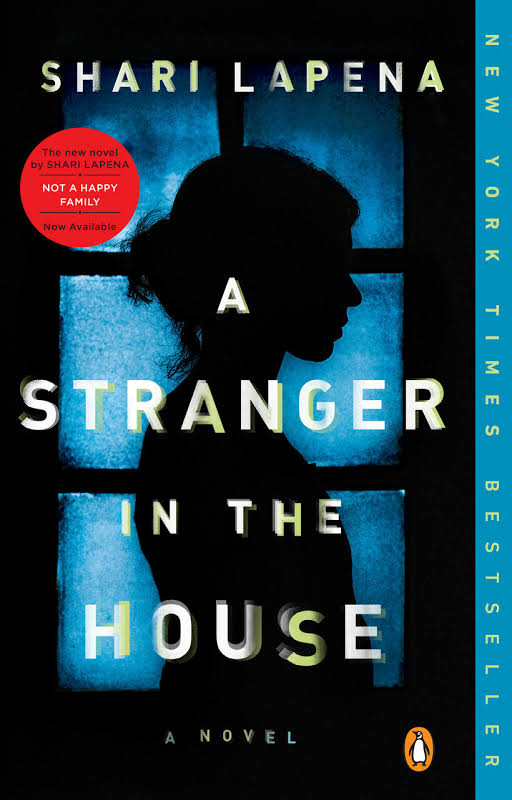
Karen Krupp flees the scene of a murder and crashes her car. She loses her memory of why she was there. The police are suspicious of her. Her husband, Tom, is concerned that his seemingly perfect life is tarnished. We learn that before they met, Karen was in an abusive marriage. These factors coalesce into good page-turning suspense with a surprising twist.
The problem here is the flat characterization. Both Tom and Karen are poorly developed, as is their neighbor Bridget. The author uses the worst possible misogynistic stereotypes to achieve her plot. This one stopped me cold from reading this author again.
3.

Thursday is in a plural marriage. Her husband, Seth, divides his time between Seattle and Portland and the homes he shares with Thursday, Hannah, and Regina.
Thursday visits Hannah and sees that she has bruises. Is Seth beating her? She finds a dating profile Regina had posted and poses as a suitor to reveal her duplicity. And the house Hannah lives in is registered in Thursday’s name. How could that be?
This is all edge-of-your-seat entertainment until a final twist that is so misogynistic and ableist that I wanted to scream. It’s unfortunate that this genre often trades on soapy characterizations of mentally unstable women. Surely there are ways to depict mental illness in ways that humanize the characters instead of ridiculing them.
I ended up hating this book. This entire genre is incredibly limited in nuanced characterization.
 Books Smitten