If you are a fiction writer, chances are you have read a few books about writing. The ability to put words together to form a story is both a talent and a learned skill. Fortunately, help is available in honing your craft. There are good sources on everything from inspiration to publication.
Here are five good books about writing fiction and what they taught me.
1.

While she is more famous these days as a spiritual writer, Anne Lamott produced one of the seminal books on the craft. I have read it enough times to quote it from memory. Her advice? Take it bit by bit, giving yourself short assignments each day. Write a “down draft” in which you dump all your ideas and an “up draft” in which you fix them up. She also prepares readers for the disappointment of publication and the inevitably of professional jealousy. She is a funny, brilliant writer with a mean streak that may turn some people off.
2.

I was skeptical of this project and ignored it for years. It seemed so New Agey and hokey. When a friend suggested doing it together, though, I was game. The author was a screenwriter (she shares a child with Martin Scorsese) who eventually burned out on the business side of the industry.
This book is her guide for tapping into the creativity that she believes we are all born with. Each chapter ends with a list of creative assignments, such as going to an art store.
As a result of working through this book, I wrote my first piece of fiction since college. A few years later I completed my first novel and began the submission process to literary agents. I wrote a second novel as well.
These days, call me a believer.
3.
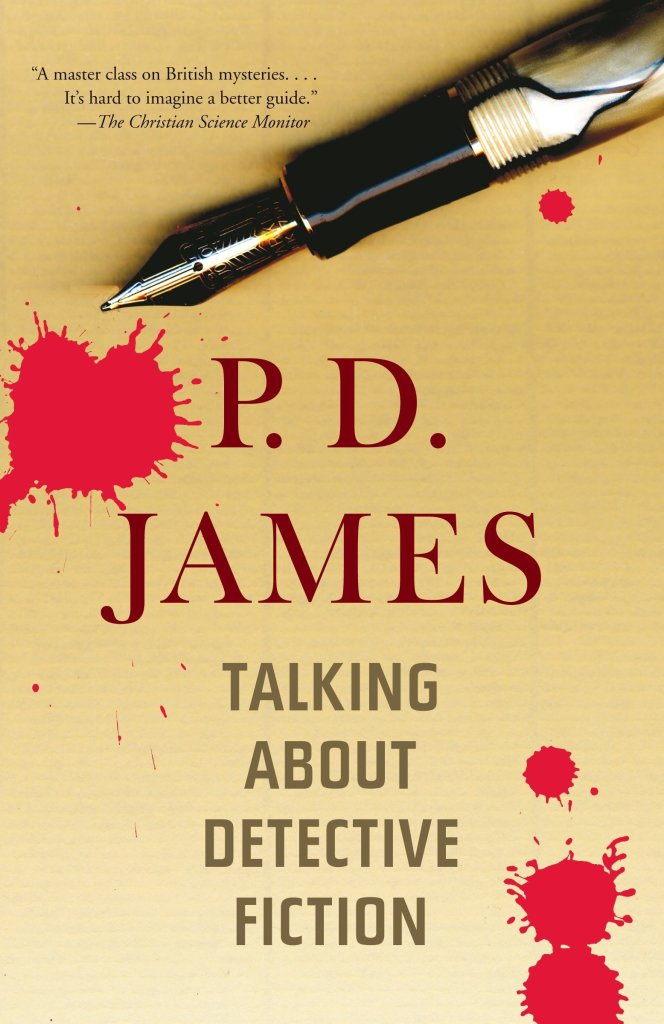
PD James is arguably the best suspense writer of recent times, right up there with Agatha Christie. This book is her brief examination of the fundamentals of the genre.
Mysteries, she tells us, became popular in World War 2. The appeal of the story had less to do with gruesome curiosity than it did with a desire to see a puzzle worked out and to see order replace chaos.
James assigns the writer with the task of creating a singular world populated with at least five plausible killers. Unlike the movies, which require that the culprit appear in the first act, she says you can wait until the end of the second act (about the two-thirds mark) to introduce your villain. Everything has to make sense, especially the motive and means of the crime.
If you’ve ever read a PD James novel, you will trust her word. She practices what she preaches.
4.

I read this guide after my first novel was reviewed and rejected by three agents. I was genuinely surprised by their apathy. I had a lot to learn about just how jaded readers are and how oversaturated the market is.
This book is an interesting look into the fundamentals of popular writing. The author returns again and again to the notion of the three-act structure. After absorbing the ideas, I realized how many movies I have seen that follow the structure.
The first act introduces the heroine and her world. You might see her home, job, and a friend or lover. At the end of the first act, an inciting incident takes place. This is a dramatic occurrence from which the rest of the plot unfolds. In a mystery, a murder happens. In a romance, a roadblock enters the path to true love.
In the second act, the protagonist is presented with obstacles to her pursuit. There are reversals of fortune, when luck runs out or things turn around. An ally might be introduced, either a person or event which helps or comforts. At the end of the second act, the hero experiences a dark night of the soul, a low point in which hope seems to be lost.
The final act presents the biggest barrier yet. There is often the threat of demise, either through death or separation. The final reversal of fortune brings the protagonist improbable success.
After act three, there is usually an epilogue that ties up the story. In romance, it is a wedding or coupling. In a mystery, it is the hero returning to a mundane life. Some writers throw in a final twist.
While I loved this book, writing according to the three-act structure in no way guarantees success. Just look at all the professionally written, unproduced screenplays there are.
5.
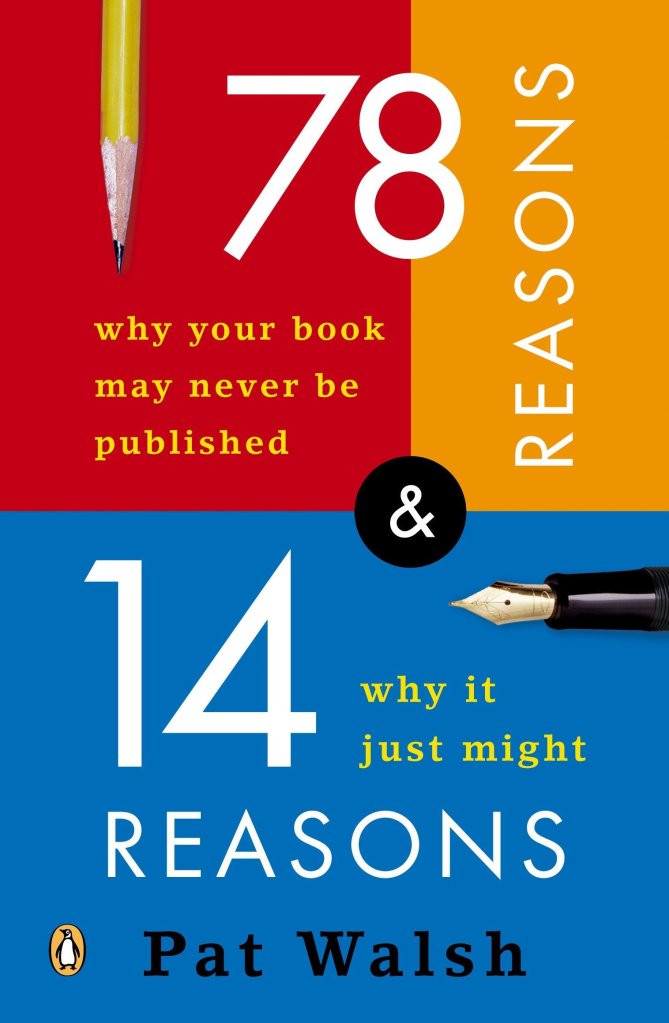
The author is famous for plucking The Time Traveler’s Wife off a slush pile after it went through dozens of rejections from the big publishing houses. In this work, he condenses his knowledge of the aspects of successful submissions. (Ironic, perhaps, given that a quality project like TTW almost went unpublished.)
Pat Walsh is an idealist, convinced that quality projects are more likely to find a home. He mentions an author who faced years of rejection with mediocre offerings. The man gave up writing, read hundreds of books in his genre, and then developed a wholly original concept based on what he’d learned. Walsh was blown away by the man’s subsequent submission.
It’s a nice idea, but it doesn’t explain the boffo success of truly average writers like Dan Brown and Danielle Steel. Clearly you don’t have to be good to be published.
 Books Smitten