I was raised Catholic in a small town. There were half a dozen Catholic churches and as many Protestant ones. Most people I knew belonged to a church, with a few Jews and atheists who didn’t.
I remember two things about my faith from these years – a kindly priest who comforted me after I was bullied, and a comically biased effort in CCD to keep teenagers from having sex. (I don’t know if the movies they showed us are still around, but they were like public service announcements for the dangers of trusting boys.)
I didn’t think deeply about religion and spirituality until I was preparing to graduate college. Something about launching into the unknown terrified me and I was looking for a rock to lean on.
As it happened, this became a pattern in my life. In times of difficulty or uncertainty, I often reached to books that dealt with spiritual themes. I think of these books as training wheels that brought me to a different level of development.
Here are three books that shaped and challenged me.
1.

College was a mixed bag for me, a combination of independent fun and turbulent growing pains. I had a lot to learn about myself, including the fact that I am an introvert and that I have a hard time with rejection. Before I figured any of that out, I was drawn to the gentle purple cover of A Return to Love. Marianne Williamson was an AIDS activist who hit it big after Oprah endorsed this book on her show. It is Williamson’s take on a large book of channelled material called A Course in Miracles.
The core message is a reversal of the Christian idea of original sin. Williamson believes that babies are born perfectly with an innate focus on love. As we get older, we fall from grace by adding bad characteristics like competition, greed, and hatred. The solution is to return to our inherent state through prayer and meditation.
I used the techniques in this book for years without seeing many results. Eventually I came to doubt its thesis. While children are pure, they are not programmed perfectly. From a young age, they can be selfish and competitive. I don’t believe they are born with the stain of original sin, as Christians do, but human nature is more complicated than this.
2.
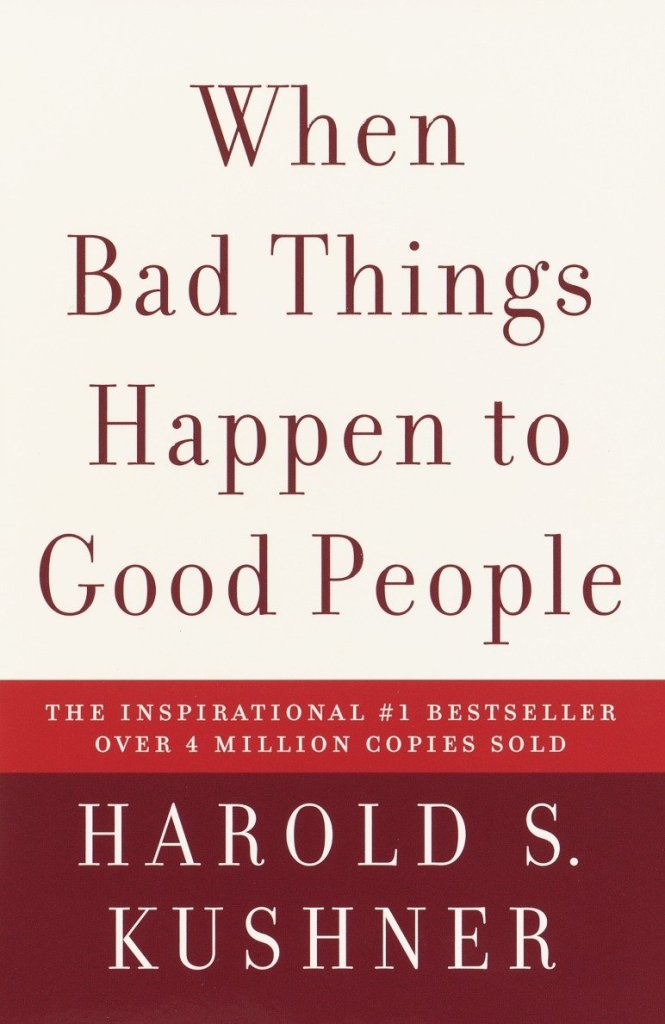
By my late 20s, I had met some people who had truly suffered. I saw the pain of their lives and how it hardened them. I began to think more about fairness. It was clear to me that life was unfair and that you couldn’t blame people for their afflictions. A friend suggested this book and I read it several times.
The author is a rabbi who lead a good life of faithful service. He was shattered when his son was born with progeria, a rapid-aging condition in which children are born with a ten-year life span. Kushner lamented his son’s fate and questioned his own faith. How could a good G-d allow children to suffer and die?
Kushner’s conclusion was radical for his traditional faith: he decided that G-d could not be both all-good and all-powerful. God created free will to give humans agency over their lives, but by doing this He gave up his own power to control outcomes. His spirit could work through people, but He could not himself intervene.
By embracing this new faith, the rabbi was essentially turning his back on Scriptural literalism. I’m sure some would accuse him of pride for transforming his own faith because of his personal tragedy. I liked this book, though, and the fact that he resolved his dilemma without giving up hope.
3.
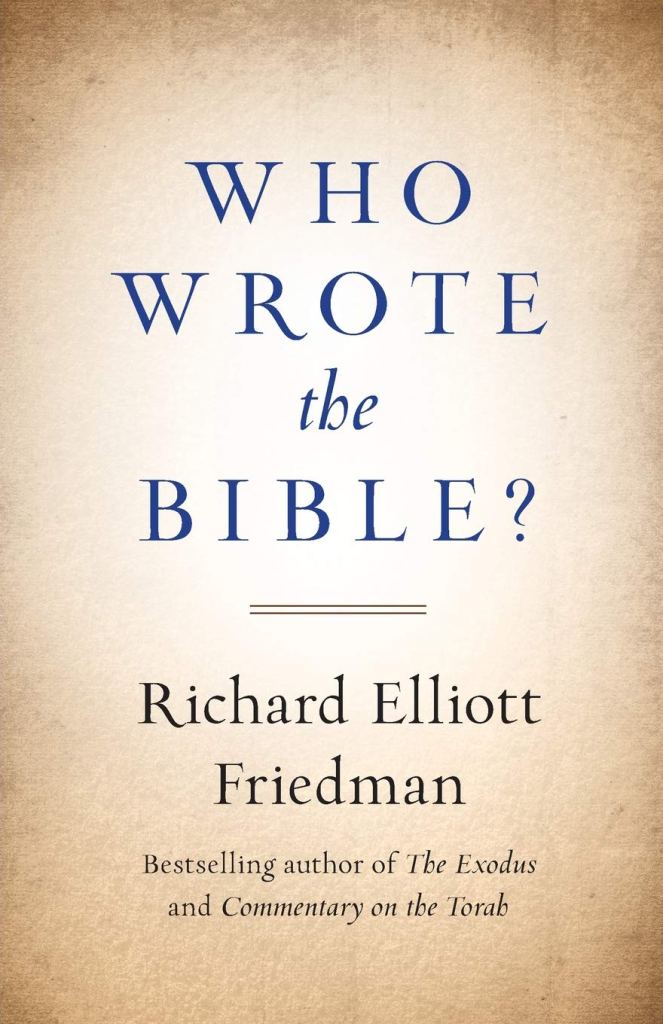
By my thirties I was feeling a pull back to traditional religion. I decided to read the Bible and try to better understand its origins. This was an excellent introduction.
Many years ago, tribes of people throughout the Holy Land passed stories from generation to generation. (I like to imagine a circle of people around an open fire, tents flapping in the wind.) There were different tribes with slightly different stories that they had heard from elders.
Eventually literacy and writing allowed the tribes to write down their stories. These became the sources that formed what is now the Hebrew Bible. There are four sources, each known by a letter: J, E, D, and P. Stitched together, they form a coherent but repetitive story. (The Christian Scriptures were formed from a different source, as well as writings from the first Christians. They are meant to be the fulfilment of the Hebrew Bible and are added to it to form the Christian Bible.)
Because of rudimentary editing in ancient times, the same story sometimes repeats twice with different details. One famous example is in Genesis, when the creation of Adam and Eve occurs twice. (In one story, Adam and Eve are created simultaneously. In the second, Adam is created first with Eve being formed from Adam’s rib. Jewish scholars have explained this lacuna by stating that Adam had two wives, Lilith and Eve. More likely it was a primitive editing error.)
I loved learning about the formation of the Bible. It definitely killed any lingering belief about the inerrancy of Scripture. But it also gave me a solid respect for community-based religion. I came away from this book with an awareness of the difference between literal and spiritual truth.
 Books Smitten