I once knew a woman who had no trouble meeting men. At parties she disappeared into dark rooms with attractive strangers, emerging the next morning with a sly grin on her face. In the six months that I knew her, she had no fewer than half a dozen lovers. In my social circle, this behavior was somewhat unusual. Most of my friends either had steady boyfriends or went months or even years without any kind of dating.
What made it especially unusual was that my friend was fat. She had discovered something that many of her peers didn’t know: that there are plenty of men who don’t care about size. In fact, some men prefer larger women.
This was all rather revolutionary to me at the time. Growing up in the ’80s, the only fat representation I saw was on daytime talk shows, where the message was certainly not that big is beautiful. Oprah lost sixty-eight pounds and pulled a wagon of fat onto her stage, declaring with disgust, “I can’t even lift it.” Fat activists yelled and cried on Donahue. You rarely saw fat characters on sitcoms or soap operas. (Roseanne Barr was an exception.) Fat was a problem to be solved, not a difference to embrace. And if you failed at that, no one wanted to hear from you.
Things have changed a bit since then. The current culture seems to fall into two camps: those who believe sustained weight loss is possible and those who don’t. In the first category, people don’t see size as a diversity issue, but rather a condition to be altered. In the second, people see size as something analogous to race: a mostly immutable factor that should be respected and accommodated.
Not surprisingly, the current state of publishing reflects both attitudes. There are dozens of memoirs by people (famous and not) who have lost significant amounts of weight and also memoirs by people (mainly women) who have given up dieting and embraced their size.
Here are a few:
1.
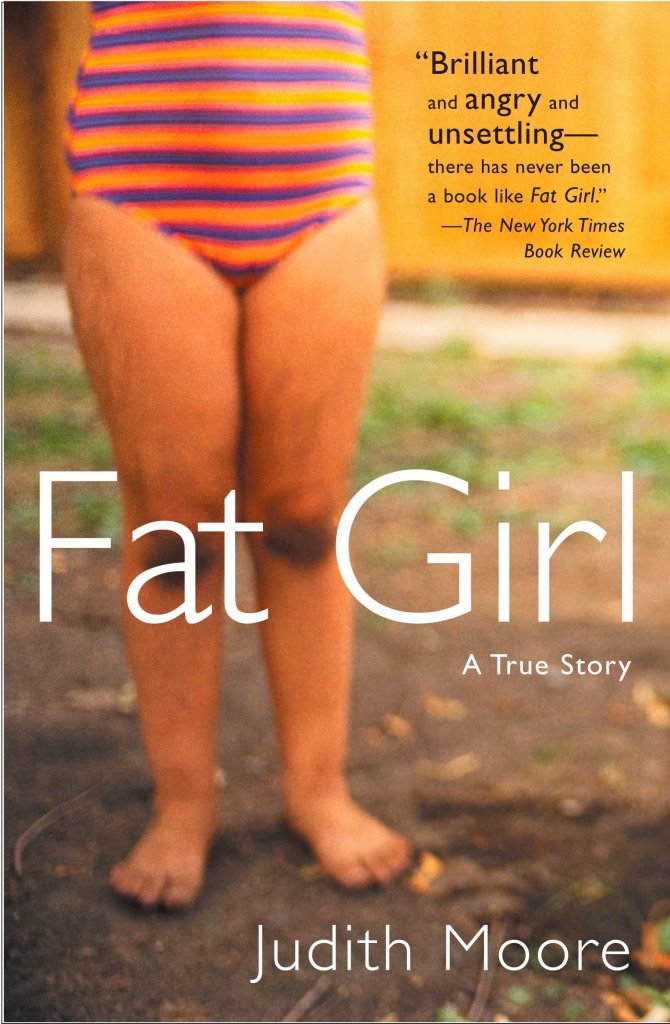
This is one of the better books I’ve read in this middling subgenre, simply because the author refuses to put a positive spin on her life. Abandoned by her father at a young age, she is raised by a bitter, abusive mother who tells her things like, “You have a face not even a mother could love.” Food becomes a saving grace, but never without the price of self-hatred. With its harrowing live-to-tell quality, it belongs in the dysfunctional childhood memoir category popularized by Augusten Burroughs and Jeanette Walls.
2.
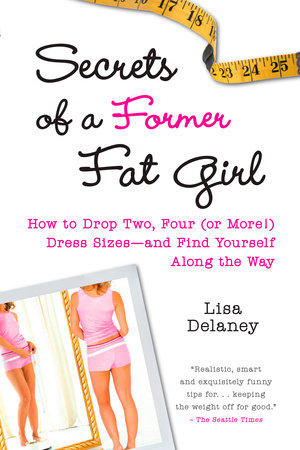
The author, a writer for Health magazine, does little to endear herself to readers by opening her memoir with the line, “You don’t know me, but you probably hate me.” It sets the tone for an obnoxious self-help book that convinces the reader that they can be so-called normal-sized if they just follow her seven tips. The author once hit 185 lbs by eating soft tacos and a pint of ice cream every night. Eventually she changed her habits and has maintained a svelte 117 ever since. None of her advice is new and her competitive appeal to self-hatred is embarrassing. She comes across as the insufferable co-worker who looks askance at your lunch choices.
3.

On the other side of the spectrum, Kim Brittingham has embraced her size and is making no apologies for it. Her memoir is a mixture of cringe-worthy revelations (a phone call to a high school crush is especially ghastly) and ruminations on the mixed messages that all fat people live with. There are some good stories here, such as her recollections of working for an exploitative weight loss company. Unfortunately, though, it lapses too often into blog-style anecdotes that seem tangential and superfluous.
Having read a fair amount in this subgenre, I am often struck by the mediocrity of the category. I look forward to reading a literate standout that plumbs the depths of these issues without engaging in freak-show voyeurism and tired platitudes.
 Books Smitten