Setting in fiction is one of those optional ingredients, like walnuts in chocolate chip cookies. While you can’t power a story without a protagonist, there are plenty of novels that give scant detail about the location. You may learn more about the main character’s house than their town. The story may be set in a major city, but you learn little about it.
And, yet, setting can still create a lingering effect. It’s hard to imagine The Bridges of Madison County set in California or The Prince of Tides in the Midwest. Place matters.
With that in mind, I have decided to examine the region of certain books and what, if any, effect they have on the reader.
Despite growing up just a few miles from the Wisconsin border, I haven’t spent much time there. I have met family a few times in Spring Green, a town Frank Lloyd Wright left his mark on. I drove through Madison once, catching a glimpse of the Capitol building. And as a teen I visited Door County, dipping into the water on hot days. All in all, though, it is a region I probably know as well from books as from lived experience.

In 2008 candidate Barack Obama visited a Janesville GM plant, looking to shore up the blue wall. Things were dire: the plant had just announced that it was shutting down, taking thousand of union jobs with it. Hometown boy Paul Ryan (and later Obama political rival) was bereft: this company was the backbone of the community. Residents braced to give up $28/hr factory line jobs for whatever else was available. This is the kind of Middle American town that politicians love because the bedrock Christian values dovetail nicely with political posturing.
There is a strong sense of place throughout the book that rang true to me as a native of the Midwest. At times I was reminded of my hometown just over the border and a certain congenial grit the region is known for. I have no way of knowing how accurately an outsider journalist captured the natives, but it seemed about right to me.
2.
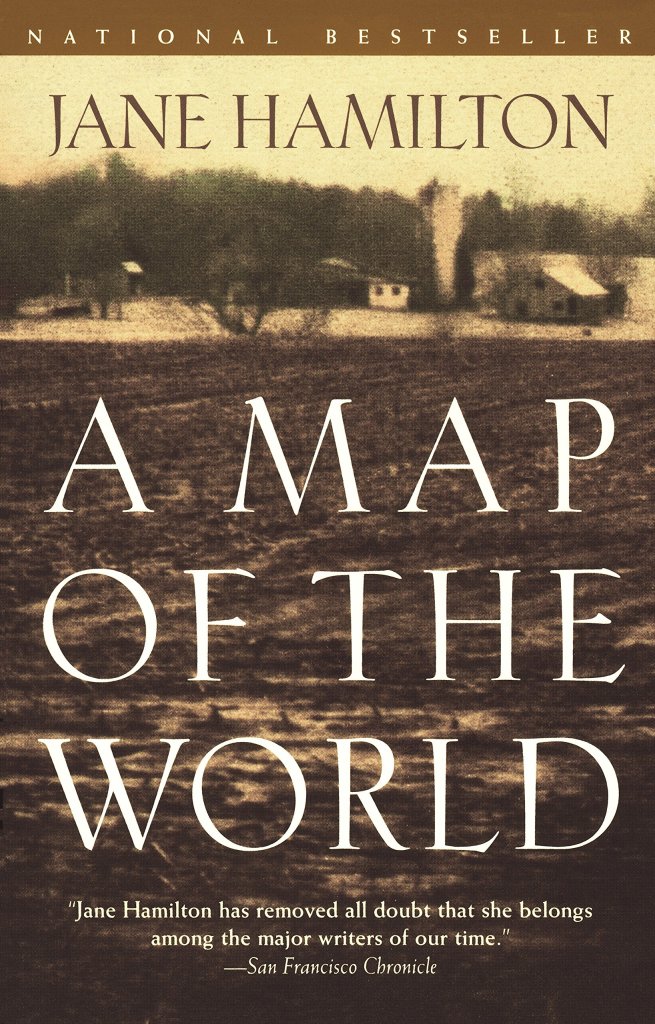
Wisconsin farm life is vividly depicted in Jane Hamilton’s excellent A Map of the World. The protagonist, Alice, lives on a farm with her husband Howard and their two little girls. As the story opens, Alice hears a siren screaming out over the land, not knowing that it is the last time she will hear the sound without thinking of her own tragedy.
There is a feeling of the area in the prose: the vegetables, the dirt, the butterfat. Alice’s stoic personality also seems right for the location. I don’t know that this novel couldn’t have been set elsewhere in the Midwest, but it’s hard to imagine it anywhere else.
3.

Although a good portion of this novel is set in New York, the catalyst events are distinctly Midwestern. Carrie has spent her entire life in Madison, getting engaged to her high school sweetheart just after they graduate college. Carrie is ambivalent about her recent choices. Just when she is considering breaking up with Mike, the titular tragedy leaves him paralyzed. Carrie’s desire for freedom is complicated by her obligation.
The events around the dive – friends socializing on a pier- reminded me of my own high school years, specifically the lead up to graduation. When the spring breaks, there is a distinct feeling of optimism in the air. The physical location, including the weather, add to the tragedy.
 Books Smitten