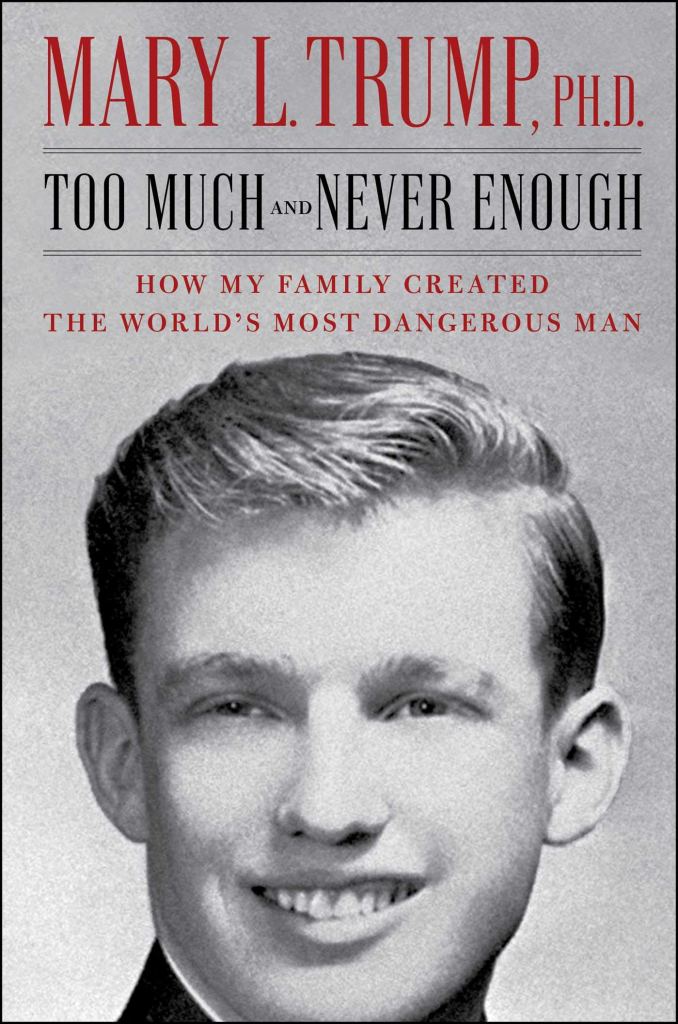
Freddy Trump haunts this memoir every bit as much as if his ghost occupied the second floor of his family home in Jamaica Estates, Queens. Banished to a room in his parents’ home at the end of his brief life, a transistor radio keeping him company, he is denied a final goodbye when his daughter leaves for boarding school. A short time later, he is dead.
Freddy was the black sheep in a family of five. His dream was to be a pilot, a goal he briefly fulfilled when he got a job flying Logan to LAX with TWA. He married a flight attendant, had two children, and eventually wasted away to alcoholism. His children were regulars at their grandparents’ holiday get togethers although their mother was not. She was seen as a gold digger, too working class to ever be fully welcomed.
With their first son content for a time as a “bus driver in the sky,” the family focus fell to the spoiled second son. He was brought into his father’s real estate business. His increasingly reckless business ventures were often bailed out by his father and later the banks. Anyone reading this book knows what happened to him after that.
When Fred Trump Sr. died in 1999, his grandchildren by his pilot son were left out of the will. They each lost out on about $68 million. (To put that in context, that is about the net worth of Ed Sheeran or Kristen Stewart.) There were contentious moments after that, but none so terrible that the author wasn’t greeted warmly at subsequent family weddings.
Memoirs, of course, contain the truth as the author sees it and have to be absorbed with some caution. Mary Trump, the president’s only niece, is clearly not objective. She makes no outlandish claims against her uncle and that may lend her some credibility. She sounds a lot like the typical Trump opponent: concerned about his grandiosity, lack of fitness for his job, and impressionability. Her only outrageous moment is when she speculates that Trump probably wished he could have traded places with the officer who killed George Floyd.
Sometimes memoirs speak volumes by what they don’t say. The implicit image here is of a man who rode a populist wave to the White House while holding classist views, an elitist who shunned his blue-collar brother. But the author is also strangely silent about her own mother, the aforementioned flight attendant who was cut out of the family. Is it possible that there is more to this family dynamic than we are privy to? Maybe.
 Books Smitten