With the exception of a daytrip to Harlem when I was nineteen, my first experience of a black-majority community was a class I took in grad school on the theologies of Malcolm X and Martin Luther King Jr. The instructor and half the class were African-American. The teacher, a Baptist minister, recontextualized the Christian religion I was raised with through the lens of antiracism. Exodus was the story of Black slaves being freed from institutional oppression. Moses was a social justice warrior. Jesus of Nazareth was a person of color.
Until I had that experience, I’m not sure I had thought much about race in America. It did not occur to me that the majority of my workplaces were disproportionately White and that a lot of my vacation spots were, too. It did not occur to me that many of the books I was reading excluded minority viewpoints or that the television I devoured often reinforced capitalist values. As a student in that class said at the time, “There is something about privilege that blinds people.” That was true for me, much more than I realized.
In the last five years, it has become harder and harder to ignore the reality of racism in America. Cell phone videos show us images of unarmed Black men being murdered by police. The president has a petty, transparently racist grudge against Obama and sixty-three million Americans voted for him anyway. Stories of the racist criminal justice system fill our news feeds.
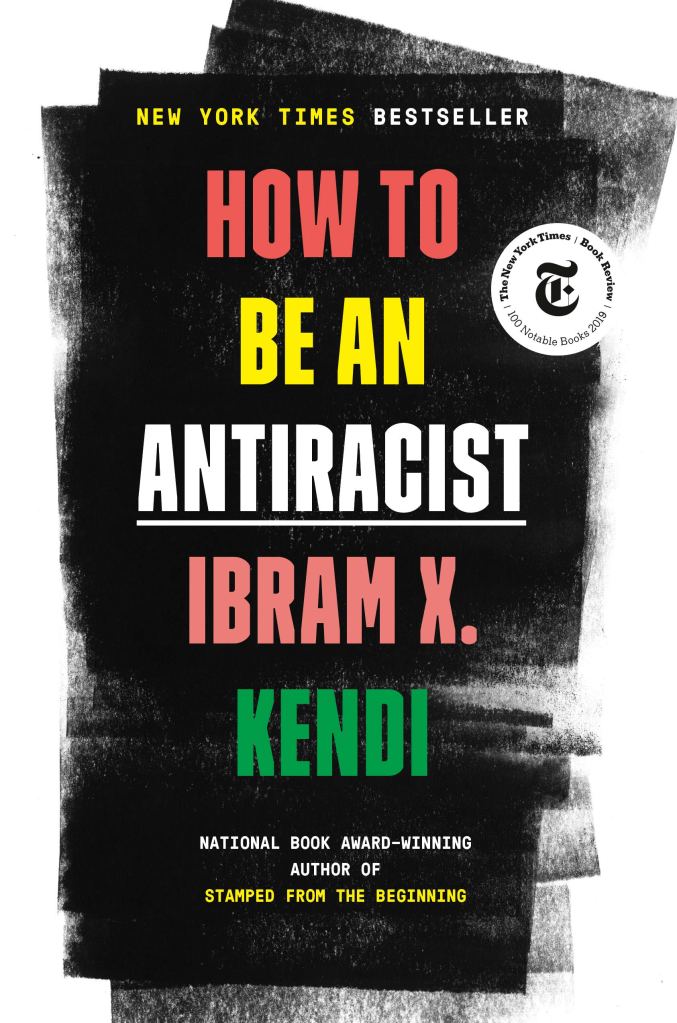
At a moment like this, a lot of us are looking for some guidance, a rulebook of sorts to lead us to higher ground. Enter Ibram Kendi’s How To Be An Antiracist. He doesn’t mince words: he used to be a racist, homophobic unwoke dude. In chapters centered around a theme – everything from sexuality to biology to culture – he weaves his own autobiography into a broader discussion about race matters. Kendi was raised by activists schooled in the same kind of theological ideas that I was exposed to at Berkeley. He was an indifferent student stung by racist aptitude tests. At an all-black university, he was briefly seduced by the anti-white writings of Elijah Mohammed. He talks openly about his discomfort with a gay friend. There is an optimistic undercurrent: if he has come this far, can’t we all?
He is much less confrontational than Robin D’Angelo in White Fragility. The book is mainly about mindset, a lens through which to see race relations. I’m sure there will be plenty of people – White and Black – who don’t agree with him on every issue. What the book offers is a brief immersion into the antiracist worldview. Whether you ultimately embrace it or not, it is important to consider it.
 Books Smitten