Without question, many intriguing premises collapse in the execution. A gripping opening gives way to flat characterization, unnecessary subplots, or a sluggish midsection. Fabulous twists don’t hold up to scrutiny when the culprit is revealed. Although the killer is a surprise, his motivation is implausible. If you read in the mystery/suspense genre, you know what I am talking about.
Good writers know how to execute a premise. Occasionally a good writer can even take a boring premise and do wonders with it. Here is a list of five brilliantly executed premises.
Unfortunately, to properly praise these efforts I have to reveal twists and culprits. STOP reading now if you don’t want to read SPOILERS.
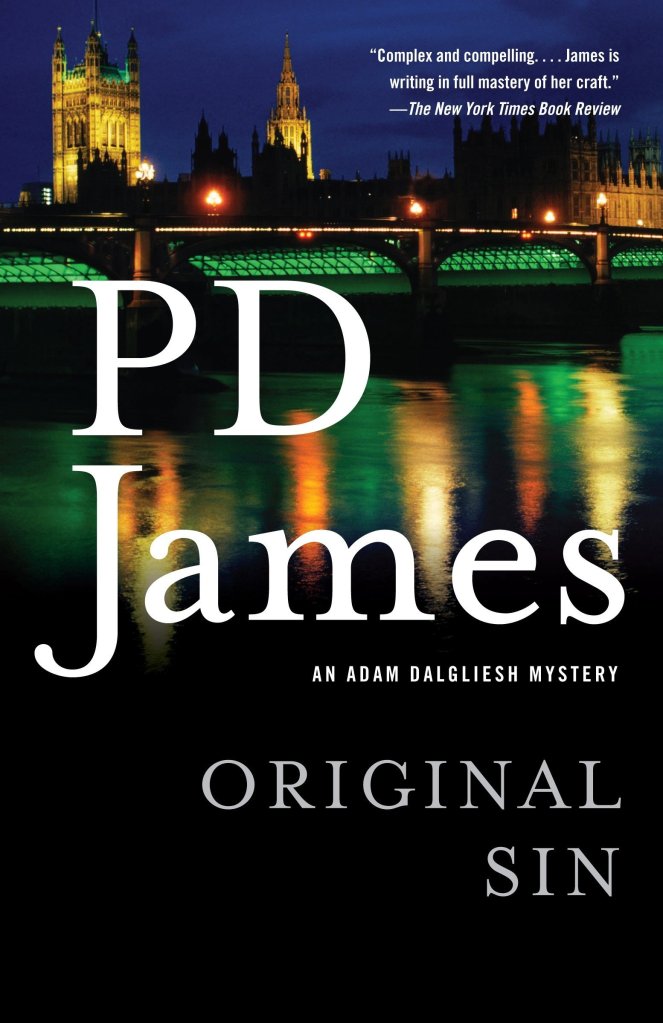
On the surface, this is a standard British whodunnit. The president of a London publisher is found dead in his office. We meet half a dozen employees and others who might have motivation to kill the victim. The skill here lies in a few small details and how they point to the killer. The publisher is found sitting upright with a stuffed snake around his neck. His manner of death is gas inhalation from a heater. There appears to be some kind of religious bent to the tableau: is the killer judging the victim for some moral flaw like adultery? In the end, it’s the manner of death that is the bigger hint. The culprit is a grieving father who lost two children in a Nazi death camp. The publisher was somehow complicit. The murder itself is revenge replicating a gas chamber. (Eye for an eye.)
There is a reason they called PD James the queen of crime. She was very good at executing a plot.
2.

This is another pretty standard premise. A gruff, seasoned detective is called to a Swedish fishing village to assist local police with two murders. It could be a serial killer or possibly a copycat. The local team includes an older chief of police and a younger female detective.
At the end of the book, there is a shocking reveal about the murderer. It’s one of those mind-blowing twists because the reader has been subtly tricked. Here’s how the author does it: in a scene midway through, the protagonist stops by a local restaurant for lunch. Seeing the chief of police, he nods a hello and takes a table on the other side of the room. The scene shifts to the female detective, who is kidnapped by the culprit and taken to a remote cabin.
When, at the end of the novel, we learn that the chief of police is the killer, it initially seems impossible. How was he both in that restaurant scene while simultaneously kidnapping the detective? A closer examination reveals a sleight of hand: the restaurant scene starts with the chief of police ordering his lunch. The visiting detective then enters and nods a hello. What isn’t clear until the re-read is that the reader assumed the friend being nodded to was the same man from the start of the scene. No name was given; the reader thought it was the same guy. In fact, the two restaurant scenes were on different days.
3.
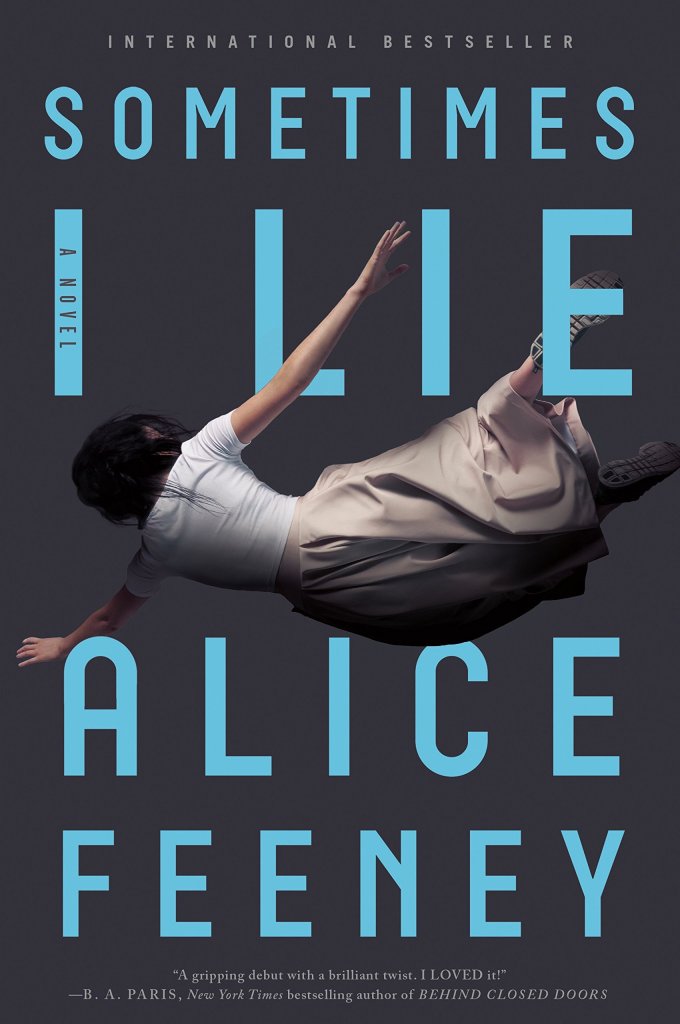
When I initially heard about this premise, I was skeptical. A story about a woman in a coma, who admits in the opening lines that she sometimes lies? It sounded a bit too high-concept for me.
Fortunately the author is a master plotter. While the protagonist lies comatose, we see her recent events in flashback. We also read intermittent journal entries of hers that she wrote as a teenager. She talks a lot about a girl named Taylor who has emotional problems. It seems more and more likely that Taylor is complicit.
Then – surprise! – it turns out the journal was not written by the protagonist but by her sister. “Taylor” was the name she went by in her teens. So, everything we know about this mysterious Taylor is actually about the woman in the coma. It’s a great twist.
4.

Some authors can pull off both premise and execution. This one grips you right away. Years after her college-age sister was abducted and murdered, Claire is living the good life. Married to a prominent architect named Paul, in the opening scene she meets him for an anniversary drink. As they leave the bar, they are feeling frisky and disappear into an alley. In a love scene that will never be imitated by fans, a robber approaches and demands wallets and jewelry. When Paul fights back, he is murdered.
Devastated, Claire must contend with an FBI team headed by a man she doesn’t trust. On her own, she roots around Paul’s computer and discovers something disturbing: a list of clients around the world who were paying him huge fees. When she digs a little deeper, she realizes that they were paying top dollar for snuff porn that shows the rapes and murders of college-age women. Could Paul have been her sister’s killer?
The story is well-constructed with a great twist at midpoint. By the end it was a little too vigilante for my taste. I must read this author again at some point. She’s really good.
5.

One of these authors was an editor at a NY publishing house for twenty years. I think all those years of reviewing manuscripts gave her a good foundation to plot in unusual ways.
This is another one with a standard premise. Vanessa has a life few would envy. Living with an elderly aunt and working in retail, she is wildly jealous of Nellie, the attractive elementary school teacher whom her husband left her for. She has taken to stalking her. We learn that Nellie is hiding from dark memories of her upbringing in Florida. The plot jumps around from the present to the events that led to Vanessa’s divorce.
And then – bam – the authors pull off a twist. Vanessa and Nellie are the same woman. “Nellie” was a nickname the husband have to her in their honeymoon stage. (She was afraid to fly – ergo nervous Nellie) It is only after this is revealed that the reader considers that the setting for Nellie’s sections never specified the era, and those sequences were twenty years before. It turns out the new wife being stalked is not Nellie but a different character.
Because of carefully selected detail and clever vagueness, the authors pull off an implausible twist. I was impressed.
 Books Smitten