Therapists in fiction often take on heroic qualities. Dr. Lowenstein in The Prince of Tides is a savior, immortalized in the last moments of the book like some kind of demigod; Dr. Berger plays a pivotal role in the family catharsis in Ordinary People. It gets a little more complicated, and interesting, when you look to nonfiction. Here are three works that examine the shrink-client dynamic in all its complexity.

When Boundaries Betray Us is one of the strangest and most mesmerizing books I have ever read. The author, an Episcopal priest, is going through a difficult time. She is an alcoholic and bulimic in recovery, her dog is dying, and her partner of seven years complains of being treated like “the wallpaper” in their relationship. She decides to enter therapy with a woman named Dr. Elizabeth Farro. What happens next is truly bizarre. The author becomes convinced that she and her therapist are falling in love. She believes that her therapist shares her feelings but can’t admit it due to the confines of traditional Western analysis. Eventually Dr. Farro cuts her off, terminating their sessions and refusing to speak to her again. We never know what her side of it is. The author uses this experience to critique Western therapy. She feels even more psychologically damaged by the artificial boundaries placed on their dynamic. Could they have been better able to resolve this if they were able to be more honest?
2.
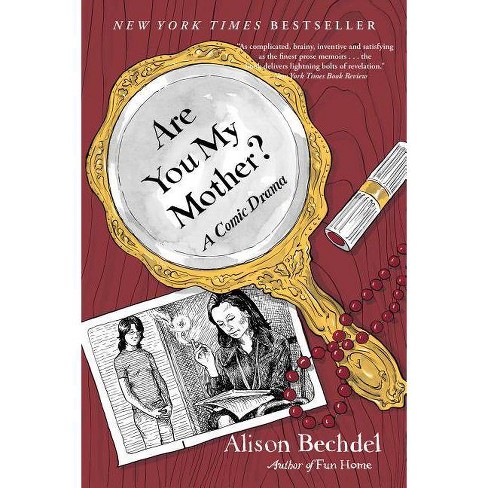
In a similar vein is Alison Bechtel’s Are You My Mother? In graphic novel form, the author recounts her complicated relationship with her mother. She sees two therapists, most notably Jocelyn, a warm woman who becomes a stand-in for her mother. At one point, Bechtel takes long summer night walks with her dog, stopping in front of Jocelyn’s house while she sleeps. In the sessions, Jocelyn violates a few boundaries herself, calling her client “adorable” and hugging her. It is all fascinating and a little uncomfortable. Eventually, the author and Jocelyn agree that they are in heavy transference, where the participants in therapy begin to represent absent figures from their lives. The title of the book says it all: Jocelyn has become her client’s surrogate mother.
3.

Another engrossing title in this realm is You Need To Talk To Someone. It is the story of four different clients on the couch. There is an elderly woman who is estranged from all four of her children. An angry TV producer who is convinced that most of his problems are a result of all the pinheads in his life. We go deeply into the sessions, witnessing the breakthroughs while also seeing the author’s colorful private life. I especially liked the segments about John, a stressed out father of two girls. At one point, he lets slip the name “Gabriel.” His therapist pushes him and he says, “I can’t believe I said his name. I haven’t in years.” Moments like that made this a gripping page-turner. By the end, I got a little tired of the author’s self-congratulary tone. She sees herself as a miracle worker. There is no denying that she is a good writer, but I suspect the results of these cases are not typical.
 Books Smitten