I only learned how to read a few years ago. Before that I was stuck in a contentious battle between my own particular preferences and a greater sense of obligation to read many books that I did not like, always assuming that the fault lay with me.
I’m not entirely to blame for this. I think much of academia take a shaming posture to those who don’t connect with certain great works. For me, it started in middle school. My English teacher taught from a standard curriculum that probably hadn’t changed in twenty years. We read Treasure Island, The Call of the Wild, Tom Sawyer. I hated all of them. I could not identify with the boy protagonists and the often outdoorsy themes.
At some point I internalized the idea that there were “good” books, like good foods I should be eating. This led to many years blaming myself when I didn’t enjoy certain works.
What I didn’t realize until about ten years ago was that reading is about chemistry. You click with books and authors just as you do with people. Imagine if someone forced you to spend time with someone who is not on your wavelength. I was doing this to myself every time I slogged through a book I did not appreciate.
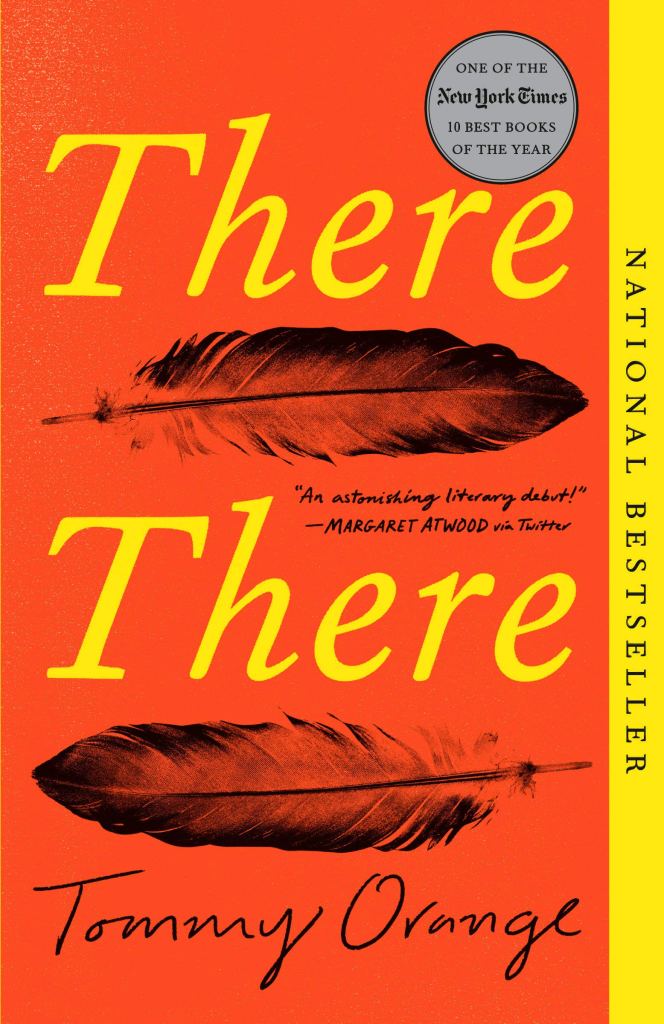
Which leads me to this week’s book, There There. After sampling a few acclaimed titles that didn’t grab me, I opened this one and felt the proverbial click. Any story about the Native experience promises to be harrowing, but I immediately trusted the narrative voice to carry me on.
This set of interconnected stories tells of twelve Native Americans with ties to Oakland. Some live there, others did at one point. Their lives reflect the many injustices their tribes have faced. Some are homeless, alcoholic, impoverished. As the stories progress, and the characters converge on a powwow, we learn of connections between them.
I was reminded a bit of Louise Erdrich’s Love Medicine, another collection of stories where it takes a bit of effort to keep everyone straight. I liked all the Oakland detail and the spare style.
The overall mood I was left with was bleakness. As one depressed housebound character says, “There is something about seeing Johnny Depp fail so badly (as Tonto) that gives me strength.”
 Books Smitten